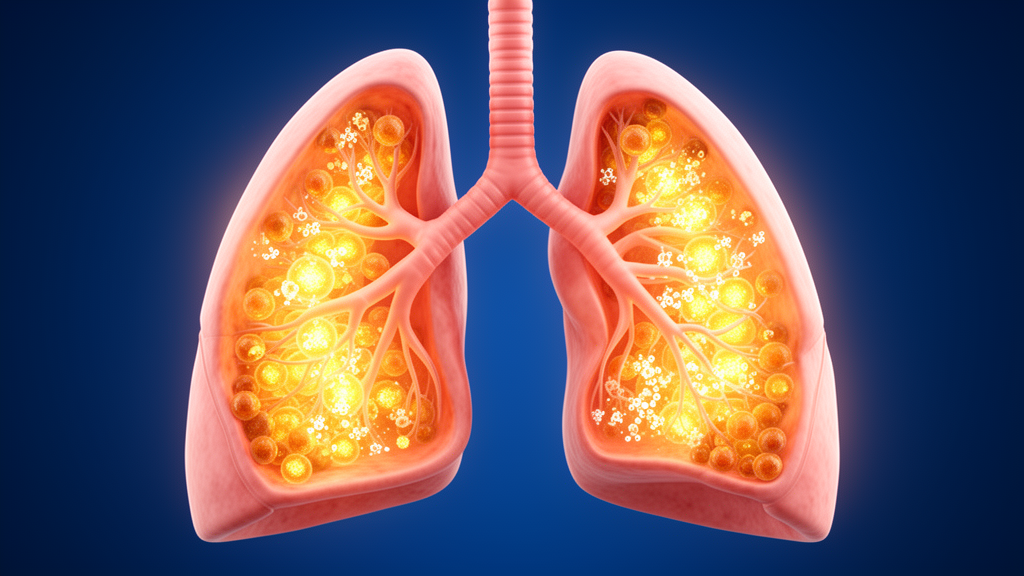
Children who fail to improve on macrolide antibiotics despite infection with Mycoplasma pneumoniae present one of paediatric respiratory medicine’s most stubborn puzzles. A new narrative review published in Frontiers in Cellular and Infection Microbiology argues that the answer may lie not in a single mechanism but in how the pathogen rewrites the metabolism of the cells it encounters. The authors, from Changchun University of Chinese Medicine, integrate clinical, experimental and multi-omics evidence to propose an immunometabolic framework for refractory Mycoplasma pneumoniae pneumonia, or RMPP. Crucially, they frame their proposal as hypothesis-generating rather than as a set of validated disease endotypes, noting that most human evidence remains cross-sectional and cannot yet separate causes from consequences of severe disease.
RMPP is defined clinically rather than biologically: fever, respiratory signs and radiological abnormalities continue to progress despite macrolide treatment. The syndrome is associated with dense consolidation, mucus plugging, plastic bronchitis, pulmonary necrosis and persistent structural lung abnormalities. Although macrolide-resistant strains are prevalent, particularly in East Asia, microbiological resistance and clinical refractoriness are not equivalent. Some children with resistant infection recover without severe injury, while others deteriorate despite receiving an active antimicrobial, and refractory disease can occur without any recognized resistance mutation. Current definitions rely mainly on persistent fever and radiographic progression after a variable duration of therapy, which means the same label may encompass delayed effective treatment, persistent inflammation despite microbiological control, or early necrotizing injury, each requiring a different therapeutic approach.
The review’s central claim is that metabolic reprogramming provides a framework for connecting these processes. Immune and structural cells reorganize glycolysis, mitochondrial respiration, tricarboxylic acid cycle activity, fatty-acid metabolism and amino-acid utilization to support cytokine production, redox regulation, antimicrobial activity and survival. These changes can be protective or pathological depending on cellular context and duration. In bronchial epithelial cells, M. pneumoniae-induced aerobic glycolysis promotes ATP-dependent inflammatory signalling but is also required for bacterial elimination. In neutrophils, experimental activation of the aconitate decarboxylase 1 (ACOD1)–itaconate pathway reduces mitochondrial reactive oxygen species, impairs bacterial killing and delays apoptosis. The authors caution that such observations should not be read as evidence that all children meeting clinical criteria for RMPP share a common metabolic mechanism, because persistent viable organisms, delayed therapy, co-infection, airway obstruction and established tissue injury may contribute independently or in combination.
The airway epithelium emerges as a key player under metabolic strain. M. pneumoniae increases glucose uptake and aerobic glycolysis in bronchial epithelial cells, promoting intracellular ATP production, extracellular ATP release, purinergic signalling, inflammatory cytokine production and bacterial elimination. Glycolysis therefore supports early defence while simultaneously amplifying IL-1β and IL-18 signalling. The review stresses an important limitation: the available epithelial evidence derives largely from in vitro systems maintained under normoxic, glucose-replete conditions that do not reproduce the spatial metabolic constraints of severely diseased lungs. Consolidated, poorly ventilated and mucus-obstructed regions likely differ substantially in oxygen availability, substrate delivery, extracellular pH and metabolite clearance, and direct spatial or cell-resolved metabolic measurements from affected paediatric airways are currently unavailable.
Macrophages occupy a similar double-edged position. Pulmonary macrophage depletion or disruption of MyD88–NF-κB signalling impairs early bacterial control, confirming that resident macrophages are essential for defence, yet the same pathway drives cytokine and chemokine production. The NLRP3 inflammasome sits near the transition between useful and harmful activation: CARDS toxin, the bacterium’s ADP-ribosylating and vacuolating cytotoxin, directly modifies NLRP3, promoting inflammasome activation and IL-1β processing. The authors suggest that a clinically important possibility is that RMPP macrophages fail to transition from inflammatory defence to resolution, remaining cytokine-producing yet ineffective at clearing bacteria or removing apoptotic neutrophils. They note, however, that severity-associated macrophage subsets identified by single-cell transcriptomics do not establish metabolic flux, and direct measurements of glycolysis, mitochondrial respiration and efferocytosis in bronchoalveolar macrophages are needed.
Neutrophils provide what the review calls one of the strongest experimental links between infection and altered antimicrobial function. In patients with severe M. pneumoniae pneumonia, bronchoalveolar lavage fluid itaconate concentrations correlated positively with neutrophil abundance, and increased ACOD1 expression was detected in human airway neutrophils. The functional evidence linking increased neutrophil itaconate to suppression of mitochondrial reactive oxygen species, impaired bacterial killing and delayed apoptosis, however, came predominantly from mouse loss-of-function and adoptive-transfer experiments. The authors emphasize that direct demonstration of the same metabolic-functional relationship in purified pulmonary neutrophils from children with RMPP is lacking, and that species differences limit quantitative extrapolation. The biological effect of itaconate is also cell-context dependent: in human macrophages, endogenous itaconate restrains innate cytokine production, arguing against systemic ACOD1 inhibition without cell-specific validation.
Neutrophil extracellular traps add a tissue-level dimension. M. pneumoniae induces NET formation but can degrade their DNA scaffold through the secreted nuclease Mpn491, escaping part of the antimicrobial effect while extracellular histones, myeloperoxidase and elastase remain in the airway. In children with MPP-associated plastic bronchitis, extensive neutrophil infiltration and NET formation in blood, lavage fluid and bronchial casts correlate with clinical outcomes. The review also addresses adaptive immunity, noting that CD4-dominant activation, compartment-specific Th17–T regulatory cell imbalance and vigorous but incomplete humoral protection may sustain disease. Bronchoalveolar IL-17A was paradoxically lower in severe and refractory MPP than in mild disease in two paediatric cohorts, illustrating that the Th17–Treg axis is a spatially and temporally variable state rather than a stable patient characteristic.
Multi-omics studies reinforce the picture of biological heterogeneity. Single-cell analysis of bronchoalveolar lavage fluid has identified coordinated remodelling of epithelial, myeloid and lymphoid compartments, including severity-associated macrophage and neutrophil programmes. Plasma multi-omics has demonstrated activation of the kynurenine pathway and suppression of indole-related metabolites in association with inflammatory severity, while bronchoalveolar lavage-fluid lipidomics identified thirteen lipid species differing between RMPP and non-refractory MPP, with three showing discriminatory potential. Urine metabolomics has independently implicated kynurenine-related, arginine-related and lipid-oxidation pathways in severe disease. The authors repeatedly caution that these findings are predominantly cross-sectional, may reflect disease severity, treatment exposure or established tissue injury rather than initiating mechanisms, and that kynurenine pathway activation is also seen in other severe infectious syndromes, so it cannot yet be considered RMPP-specific.
On the therapeutic side, the review organizes existing treatments around three objectives: removing microbial stimulation, suppressing disproportionate inflammation and relieving anatomical obstruction. Antibiotics reduce viable pathogen burden, corticosteroids suppress inflammation, and bronchoscopy removes mucus plugs or casts. Early doxycycline or minocycline is associated with faster defervescence and less progression in macrolide-unresponsive disease, and adjunctive glucocorticoids shorten fever and hospitalization in macrolide-refractory cases, though heterogeneous definitions and timing limit regimen selection. Host-directed candidates such as NLRP3 inhibition, neutrophil itaconate modulation, NET-directed interventions and specialized pro-resolving mediators remain provisional; the authors state that no clinical recommendation can currently be made for ACOD1 or itaconate modulation in RMPP.
The review’s conclusion is deliberately restrained. Paediatric RMPP should not be regarded as a single immunometabolic disorder, the authors write, because the clinical phenotype may arise from different combinations of persistent microbial stimulation, altered host responses and evolving anatomical injury. They propose four candidate research states—pathogen-persistent, host-inflammatory, neutrophil-inefficient and NET–mucus/obstructive—each with provisional operational definitions and candidate measurements, but insist that no assay-specific numerical thresholds have been validated and that fixed cut-offs should not be inferred from current case–control studies. The decisive validation, they argue, would measure a candidate classifier prospectively before treatment allocation and test whether treatment effects differ between biomarker-defined groups. Until longitudinal, cell-resolved studies integrating metabolic flux, pathogen trajectories, treatment exposure and anatomical evolution are completed, immunometabolic states in RMPP remain a framework for generating testable hypotheses rather than a basis for clinical stratification.
Subject of Research: Immunometabolic reprogramming in paediatric refractory Mycoplasma pneumoniae pneumonia
Article Title: Host immunometabolic reprogramming in paediatric refractory mycoplasma pneumoniae pneumonia: cellular circuits, multi-omics signatures, and translational opportunities
Article References: Yang, J., Cui, S., Li, W., & Liu, J. (2026). Host immunometabolic reprogramming in paediatric refractory mycoplasma pneumoniae pneumonia: cellular circuits, multi-omics signatures, and translational opportunities. Frontiers in Cellular and Infection Microbiology, 16, 1954451. https://doi.org/10.3389/fcimb.2026.1954451
Image Credits: AI Generated
DOI: 10.3389/fcimb.2026.1954451
Keywords: Mycoplasma pneumoniae, refractory pneumonia, immunometabolism, children, glycolysis, itaconate, neutrophils, NLRP3 inflammasome, multi-omics, macrophages, lung injury, macrolide resistance
Cite Scienmag News
Ophelia Keating. (October 28, 2026). How Metabolic Reprogramming May Drive Refractory Pneumonia in Children. Scienmag. https://scienmag.com/how-metabolic-reprogramming-may-drive-refractory-pneumonia-in-children/
Ophelia Keating. "How Metabolic Reprogramming May Drive Refractory Pneumonia in Children." Scienmag, 28 October 2026, https://scienmag.com/how-metabolic-reprogramming-may-drive-refractory-pneumonia-in-children/. Accessed 29 October 2026.
Ophelia Keating. "How Metabolic Reprogramming May Drive Refractory Pneumonia in Children." Scienmag. October 28, 2026. https://scienmag.com/how-metabolic-reprogramming-may-drive-refractory-pneumonia-in-children/