


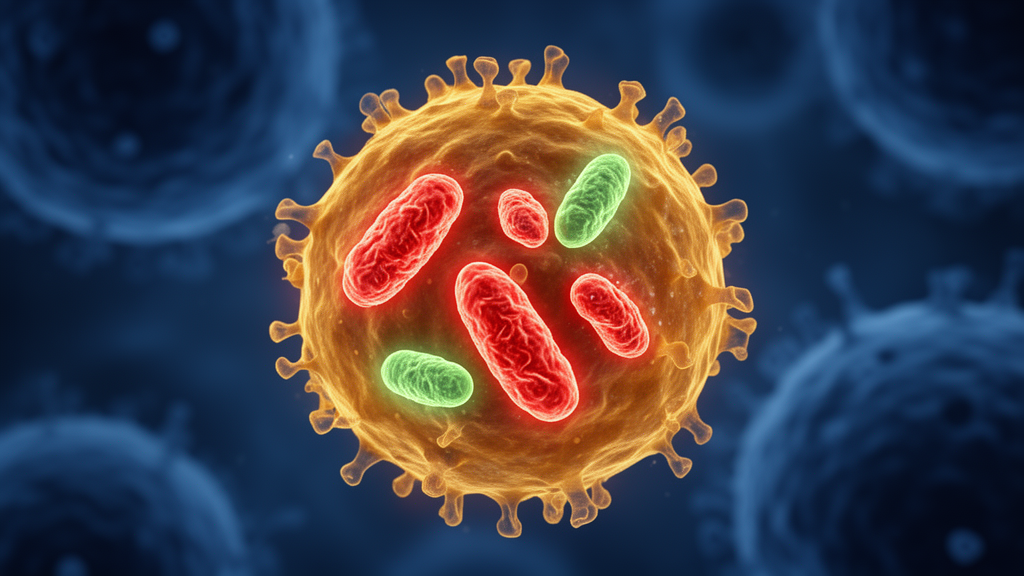
Mitochondria have long been caricatured as little more than cellular power plants, but a new review in Medical Oncology argues that they are far more like a command center whose distress signals can rewire the entire cell. The review, led by Pinya Liu and Zihan Wang of China Medical University together with colleagues in Shenyang, synthesizes evidence that disrupted mitochondrial homeostasis is not merely collateral damage in cancer but an active driver of tumor initiation, progression, and treatment resistance. When mitochondria falter, they dispatch retrograde signals from the organelle back to the nucleus, forcing wholesale changes in gene expression that tumor cells exploit to grow, evade death, and survive hostile conditions. The authors contend that these signaling networks, long studied in yeast and model organisms, deserve a central place in cancer biology and may offer a new generation of therapeutic targets.
The foundation of the argument rests on the remarkable genetic and biochemical alterations that mitochondria undergo in tumors. Unlike most organelles, mitochondria carry their own genome, a small circular chromosome that encodes essential components of the oxidative phosphorylation machinery. The review catalogs somatic mitochondrial DNA mutations in a striking range of malignancies, from primary brain tumors to breast, gastric, bladder, lung, colorectal, and ovarian cancers. In high-grade prostate cancer, for example, studies cited by the authors show that oxidative phosphorylation remodeling involves mitochondrial DNA mutations and increased succinate oxidation. Single-cell analyses in colorectal cancer reveal heteroplasmy, the coexistence of mutant and wild-type mitochondrial genomes within individual cells, adding another layer of variability that tumors can draw upon. Mitochondrial DNA methylation changes have even been linked to bone metastasis in renal cell carcinoma, suggesting that the organelle’s genome participates in epigenetic regulation of aggressive behavior.
Copy number alterations add a second dimension to this genomic instability. Across human cancers, mitochondrial DNA copy number varies widely, and the direction of change carries different prognostic implications depending on context. Some studies report that high mitochondrial DNA copy number predicts poor outcomes in advanced colon cancer, while others find that decreased mitochondrial DNA content accompanies colorectal cancer progression. Mendelian randomization analyses have even probed whether inherited differences in mitochondrial DNA copy number influence cancer risk itself. The review also highlights circulating mitochondrial DNA in serum as a potential biomarker in lung cancer, and altered copy number as associated with venous thromboembolism in cancer patients, underscoring how mitochondrial perturbation echoes far beyond the tumor cell.
Beyond the genome, the review emphasizes the dynamic behavior of mitochondria, their constant cycling between fusion and fission, as a hallmark of malignancy. The fission mediator DRP1 emerges as a recurring villain. In ovarian cancer cells, DRP1- and MFN2-mediated dynamics contribute to cisplatin chemoresistance. In colon cancer, DRP1 activation promotes fatty acid-driven metabolic reprogramming that potentiates WNT signaling. Head and neck cancers exploit DRP1 to induce glycolysis through a FOXM1/MMP12 axis, while KRAS-mutant lung cancer cells use DRP1 to enhance lactate utilization. In hepatocellular carcinoma, DRP1-driven fission promotes proliferation through crosstalk between p53 and NF-κB pathways, and in glioblastoma, Rab32 regulates ERK/DRP1-mediated fission to drive migration and invasion. On the fusion side, OPA1 and MFN1 support liver tumor cell metabolism and growth, and OPA1 inhibition curtails breast cancer expansion. A notable study in Nature Cancer showed that limiting mitochondrial plasticity by targeting DRP1 reduces breast cancer brain metastases, hinting that the fission machinery itself is druggable.
The review then turns to mitochondrial enzymes as oncogenic actors, a theme crystallized by the tricarboxylic acid cycle proteins. Mutations in isocitrate dehydrogenase, IDH1 and IDH2, produce the oncometabolite 2-hydroxyglutarate and are now established drivers in glioma and acute myeloid leukemia with dedicated inhibitors in the clinic. Succinate dehydrogenase subunit mutations predispose carriers to familial pheochromocytoma and paraganglioma, and SDH deficiency underlies the Carney triad and related syndromes. Fumarate hydratase mutations cause hereditary leiomyomatosis and renal cell cancer, and loss of this enzyme triggers combined respiratory chain defects while the accumulated fumarate inhibits DNA demethylases, producing epigenetic dysregulation. These examples demonstrate a profound principle: when mitochondrial metabolism is broken, the metabolites themselves become signaling molecules that reshape the epigenome and activate programs of transformation.
Central to the review is the concept of mitochondrial retrograde signaling, the communication route by which a stressed organelle instructs the nucleus. The authors describe how dysfunctional mitochondria induce changes in gene expression through several converging pathways. Reactive oxygen species occupy a paradoxical position here. At moderate levels, mitochondrial ROS act as proliferative signals essential for KRAS-mediated tumorigenicity, but excessive oxidation damages macromolecules and can trigger cell death. The review details how ROS regulate proliferating cells, shape the breast tumor microenvironment, influence tumor-infiltrating immune cells and immunotherapy responses, and, through the LON-PYCR1 axis, maintain an immunosuppressive milieu that promotes metastasis. ROS also engage the Nrf2 antioxidant transcription program, which tumors frequently hijack, and modulate autophagy and mitophagy, the quality-control systems that cancer cells repurpose for survival under metabolic stress.
A second major arm of retrograde communication is the mitochondrial unfolded protein response, or mtUPR, a stress pathway mediated in mammals by the transcription factor ATF5. When protein folding inside mitochondria fails, ATF5 activates a transcriptional program that restores organelle function, but tumor cells co-opt this response to survive proteotoxic stress. The review notes that mtUPR activation is associated with HER2-overexpressing breast cancer and that ATF5 is overexpressed in epithelial ovarian carcinomas, where its interference increases apoptosis through BCL-2 downregulation. The integrated stress response, including the GCN2-ATF4 branch that allows tumor cells to withstand nutrient deprivation, further extends this survival network. Relatedly, pharmacological disruption of IRE1α has been shown to reprogram the tumor microenvironment and enhance anti-tumor immunity in prostate cancer and to cooperate with antiangiogenic therapy in triple-negative breast cancer, illustrating how stress signaling pathways intersect with treatment strategies.
Calcium handling constitutes a third retrograde channel, and the review gives it detailed treatment. Mitochondria buffer cytosolic calcium at mitochondria-associated ER membranes, and dysregulation of ryanodine receptor calcium channels has been shown to initiate mitochondrial retrograde signaling. In cancer cells, the LON protease upregulation triggers NCLX-mediated mitochondrial calcium release, contributing to cisplatin resistance, while calcium/calmodulin-dependent protein kinase II drives colon cancer proliferation and migration through ERK1/2 and p38 pathways. A FGF19/SOCE/NFATC2 circuit facilitates self-renewal of liver cancer stem cells, and mitochondrial dysfunction induces radioresistance in colorectal cancer by activating a calcium-dependent PDP1-PDH-histone acetylation signaling cascade. Single-organelle imaging studies showing oxidative bursts propagating from mitochondria toward the endoplasmic reticulum reveal how precisely these signals can be timed and localized. The review also describes mitochondrial-encoded peptides such as MOTS-c, which translocate to the nucleus to regulate gene expression during metabolic stress, and the cofactor GPS2, which physically shuttles from mitochondria to the nucleus in mammalian retrograde signaling.
Perhaps the most provocative section concerns intercellular mitochondrial trafficking. Tumor cells do not keep their damaged organelles to themselves. Recent work shows that cancer cells transfer damaged mitochondria to cancer-associated fibroblasts, promoting tyrosine kinase inhibitor tolerance in EGFR-mutant lung cancer, and that intercellular nanotubes mediate mitochondrial exchange between cancer and immune cells, subverting anti-tumor immunity. This horizontal movement of organelles within the tumor microenvironment adds a social dimension to mitochondrial dysfunction, suggesting that retrograde signaling operates not only within cells but across them, reshaping the ecology of the tumor as a whole.
The review closes by mapping therapeutic opportunities and honest gaps in knowledge. Emerging strategies include small-molecule modulators of the mitochondrial calcium uniporter, ROS-scavenging nanomedicines, mitochondrial-targeted antioxidants such as MitoQ derivatives that inhibit breast cancer and glioma proliferation, mitochondrial HSP90 inhibitors with activity in gliomas and prostate cancer models, and ClpP protease activators such as dordaviprone that show promise in KRAS-mutant pancreatic cancer. Combination regimens with immune checkpoint inhibitors are highlighted as a particularly promising frontier, given the immunomodulatory effects of mitochondrial stress. Yet the authors are candid about what remains unknown: the spatiotemporal dynamics of retrograde signals, the context-dependent dual roles of mitochondrial stress responses that can either suppress or promote tumors, and the integration of multi-omics data to identify predictive biomarkers all demand further work. Their conclusion is measured but forward-looking: mitochondrial retrograde signaling stands as a plausible target for new cancer interventions, and the task now is to translate mechanistic insight into clinically actionable approaches.
Subject of Research: Disrupted mitochondrial homeostasis and retrograde signaling in cancer progression
Article Title: Cancer-associated mitochondrial homeostasis disrupted and retrograde signaling activated
Article References: Liu, P., Wang, Z., Xi, S., & Wang, Y. (2026). Cancer-associated mitochondrial homeostasis disrupted and retrograde signaling activated. Medical Oncology, 43(11), Article 309. https://doi.org/10.1007/s12032-026-03405-4
Image Credits: AI Generated
DOI: 10.1007/s12032-026-03405-4
Keywords: mitochondria, retrograde signaling, cancer metabolism, mitochondrial DNA mutations, reactive oxygen species, mitochondrial unfolded protein response, calcium signaling, DRP1, tumor microenvironment, oncometabolites, immunotherapy, ATF5
Cite Scienmag News
Nathaniel Bowman. (October 8, 2026). How Broken Mitochondria Send Cancer Cells Into Survival Mode. Scienmag. https://scienmag.com/how-broken-mitochondria-send-cancer-cells-into-survival-mode/
Nathaniel Bowman. "How Broken Mitochondria Send Cancer Cells Into Survival Mode." Scienmag, 8 October 2026, https://scienmag.com/how-broken-mitochondria-send-cancer-cells-into-survival-mode/. Accessed 8 October 2026.
Nathaniel Bowman. "How Broken Mitochondria Send Cancer Cells Into Survival Mode." Scienmag. October 8, 2026. https://scienmag.com/how-broken-mitochondria-send-cancer-cells-into-survival-mode/


