


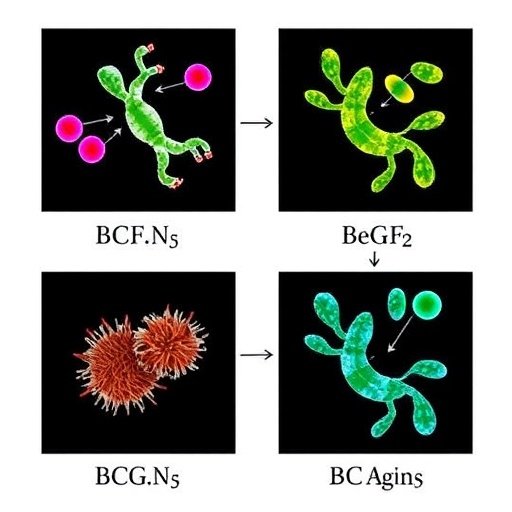
In the intricate battlefield of plant-pathogen interactions, a groundbreaking study has uncovered an unprecedented mechanism through which bacterial pathogens sabotage plant defenses at the cellular level. Researchers Suayb Üstün and Manuel González-Fuente have revealed how the notorious bacterium Pseudomonas syringae skillfully disrupts the vital protein synthesis machinery in plant cells by manipulating intracellular structures known as P-bodies. This stealthy attack effectively paralyzes the plant’s immune response, shedding new light on the sophisticated tactics employed by pathogens to undermine host resilience.
Protein synthesis is central to a plant’s ability to mount an effective immune response, rapidly producing specialized proteins that detect and neutralize invading microbes. The new research shows that Pseudomonas syringae interferes with this critical process by inducing the formation of P-bodies—microscopic, droplet-like assemblies within the cytoplasm that sequester RNA molecules, rendering them temporarily inactive. By commandeering this cellular system, the bacterium causes many RNA transcripts to be withdrawn from active translation, thereby limiting the plant’s capacity to produce defense proteins when they are needed most.
P-bodies, previously understood primarily in the context of RNA regulation and turnover, have now emerged as pivotal elements exploited by bacterial pathogens to subvert host defenses. The research team demonstrated that the formation of these RNA-protein condensates is not a random occurrence but a directed outcome of bacterial invasion, mediated by two specialized effector proteins secreted by Pseudomonas syringae. These effectors act synergistically to reorganize host cellular processes, steering the immune machinery into a compromised state and ensuring bacterial colonization success.
Delving deeper into the cellular orchestration behind this phenomenon, the study reveals that the bacterial effectors first suppress a crucial stress response pathway associated with the endoplasmic reticulum (ER). The ER serves as a central hub for protein folding, quality control, and homeostasis. Its stress response system is vital for recognizing cellular perturbations and mobilizing corrective actions. By dampening this ER-linked pathway, the bacteria create a permissive environment that facilitates the efficient assembly of P-bodies, which in turn exacerbates the blockade of protein production.
“This coordinated manipulation showcases how pathogens do not merely block single signaling pathways but instead engage in a comprehensive reprogramming of key cellular functions,” explains Suayb Üstün, highlighting the depth of bacterial influence over fundamental host biology. This insight redefines the paradigm of host-pathogen dynamics by illustrating the layered strategies employed to usurp cellular mechanisms from within, transcending simplistic models of pathogen interference.
In an additional dimension of complexity, the researchers uncovered the involvement of autophagy—a cellular recycling mechanism—in the regulation of P-body formation. Autophagy typically helps maintain cellular equilibrium by degrading and recycling damaged or unneeded cellular components. Its regulatory interplay with P-bodies suggests that bacterial pathogens not only impinge upon protein synthesis but also on the pathways that govern cellular quality control and homeostasis, further tipping the balance in favor of infection.
The implications of these findings extend beyond plant biology. Since P-bodies and comparable RNA-protein aggregates are conserved across eukaryotic species, including humans, this research holds significant promise for a broader understanding of how diverse pathogens may exploit similar strategies to evade immune responses in various hosts. These insights pave the way for novel therapeutic approaches focused on regulating the dynamics of intracellular condensates to bolster resistance.
Manuel González-Fuente emphasizes, “Our discovery provides new molecular insights into infection biology, indicating that the control of P-body condensates can be a critical factor in enhancing host resistance.” This understanding opens exciting avenues for future research into the modulation of these condensates as a lever for protecting crops from devastating diseases, with potential parallels in medical science.
With global agriculture continually threatened by evolving pathogens, this study introduces a vital piece of the puzzle in the quest to engineer more resilient plants. By deciphering the molecular tactics of Pseudomonas syringae, researchers can now explore targeted interventions that prevent the bacterium from hijacking P-body formation. Such strategies may preserve the translation of immune-related proteins, ensuring that plants maintain robust defenses during critical periods of microbial attack.
Ultimately, this research not only reveals the extensive reach of bacterial manipulation but also highlights the intricate cellular tug-of-war that underpins pathogenic success and host survival. It underscores the fact that pathogen virulence is not the product of isolated biochemical interactions but arises from the systematic commandeering of host cellular architecture and stress management systems.
Future studies will likely focus on unraveling the precise molecular interactions between bacterial effectors and host cellular components, as well as exploring the potential for breeding or engineering plants with enhanced control over P-body dynamics. This could revolutionize the field of plant immunity by shifting the focus towards cellular condensate regulation as a central aspect of disease resistance.
Moreover, the identification of autophagy’s role in this process introduces additional targets for enhancing plant defense. By better understanding how autophagy intersects with RNA metabolism and protein synthesis during infection, researchers can conceive multi-pronged strategies that reinforce the plant’s capacity to sustain normal cellular functions despite pathogen pressure.
In conclusion, these findings from Üstün, González-Fuente, and colleagues chart a new course for the study of host-pathogen interactions by spotlighting how bacteria manipulate condensate biology to suppress immunity. This knowledge not only enriches our understanding of plant immune evasion but also holds transformative potential for agricultural biotechnology and beyond, offering innovative paths toward safeguarding the world’s food supply against microbial threats.
News Publication Date: 24-Apr-2026
Web References: DOI: 10.1126/sciadv.aec4477
Cite Scienmag News
Kristina Jarvis. (April 28, 2026). How Bacteria Outsmart Plant Immune Defenses. Scienmag. https://scienmag.com/how-bacteria-outsmart-plant-immune-defenses/
Kristina Jarvis. "How Bacteria Outsmart Plant Immune Defenses." Scienmag, 28 April 2026, https://scienmag.com/how-bacteria-outsmart-plant-immune-defenses/. Accessed 3 September 2026.
Kristina Jarvis. "How Bacteria Outsmart Plant Immune Defenses." Scienmag. April 28, 2026. https://scienmag.com/how-bacteria-outsmart-plant-immune-defenses/


