


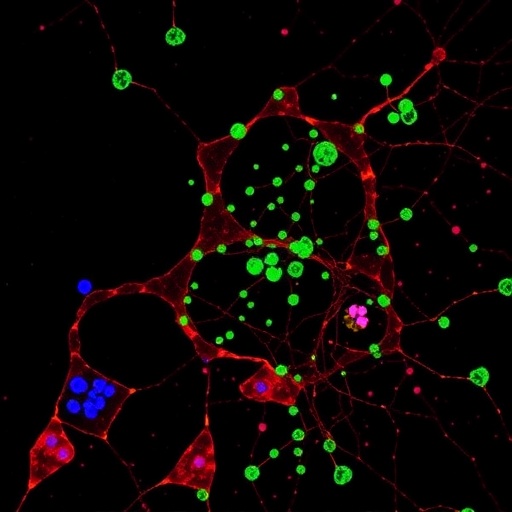
In a groundbreaking study published in Nature Communications, a team of scientists led by Steemers, van Roosmalen, and Hagelaar has unveiled unprecedented insights into the evolutionary dynamics of Burkitt lymphoma through the lens of single-cell whole-genome sequencing. This pioneering research provides a detailed map of genetic alterations at an individual cell level, uncovering the convergent evolutionary pathways that drive this aggressive form of cancer. As Burkitt lymphoma remains a clinical challenge due to its rapid progression and complex biology, these findings mark a significant leap forward in our understanding of tumor evolution, potentially steering future therapeutic strategies toward more precise and effective interventions.
The hallmark of Burkitt lymphoma lies in its rapid cellular proliferation, often fueled by translocations involving the MYC oncogene. However, the full spectrum of genetic changes and how these alterations evolve in tandem within a tumor mass has remained elusive. By harnessing the power of single-cell sequencing, the researchers dissected the tumor genomes of individual malignant cells, circumventing the averaging effects of bulk sequencing methods. This approach revealed a mosaic of subclones within tumors, each exhibiting unique combinations of mutations and genomic rearrangements, yet converging on shared evolutionary trajectories that promote tumor expansion.
Delving into the detailed genomic architecture, the study illuminated multiple instances of convergent evolution—a phenomenon where distinct subclonal lineages independently acquire similar genetic changes. This phenomenon suggests strong selective pressures shaping the lymphoma’s genetic landscape, with key oncogenic pathways repeatedly targeted across different clones. Such redundancy in genetic strategies underscores the tumor’s adaptability and resilience, complicating treatment efforts that target single molecular alterations. By identifying these convergent mutations, the research opens new avenues for the development of therapies that can simultaneously disrupt multiple critical pathways, potentially overcoming the tumor’s evolutionary escape mechanisms.
The single-cell sequencing platform employed in this study combined whole-genome amplification with high-throughput sequencing technologies, enabling comprehensive detection of copy number variations, structural rearrangements, and point mutations at unprecedented resolution. This capability allowed the scientists to build phylogenetic trees charting the evolutionary relationships between subclones within individual patients. These trees not only map the chronological acquisition of mutations but also highlight key genomic events linked to the transition from indolent to aggressive disease states, thereby providing valuable prognostic markers for clinical management.
Furthermore, the study’s findings challenge the previously held notion that Burkitt lymphoma evolves primarily through linear expansion of a dominant clone. Instead, the data indicate a branching evolutionary pattern characterized by genetic diversification and competitive clonal selection. This complex tumoral heterogeneity may explain the variability in patient responses to chemotherapy and underscores the necessity for treatment regimens adaptable to intratumoral genetic diversity. The elucidation of these evolutionary pathways at a single-cell level thus promises to refine prognostic models and encourages the exploration of combination therapies tailored to intercept multiple evolutionary routes.
Importantly, the study also reveals the impact of the tumor microenvironment on shaping the evolutionary course of Burkitt lymphoma. Interactions between malignant cells and surrounding stromal or immune cells likely create dynamic selective landscapes that influence which genetic alterations confer survival advantages. Through single-cell profiling, subtle genetic adaptations aligned with microenvironmental pressures were detected, suggesting a co-evolutionary process that nurtures tumor growth and evasion. Understanding these reciprocal interactions might illuminate new therapeutic targets aimed at disrupting the supportive tumor niche.
The implications of this research extend beyond Burkitt lymphoma, setting a methodological and conceptual precedent for studying cancer evolution in other malignancies. It vividly demonstrates how single-cell genomics can decode complex evolutionary patterns obscured in bulk analyses, enabling a more granular understanding of tumor biology. This approach has the potential to revolutionize oncology by fostering the design of adaptive therapies informed by real-time evolutionary dynamics, ultimately improving patient outcomes.
Moreover, these findings resonate with the broader field of evolutionary biology, highlighting convergent evolution as a pivotal force in cancer adaptation. The repeated emergence of similar driver mutations across distinct subclones mirrors evolutionary strategies observed in nature, where unrelated species independently develop analogous traits in response to shared environmental challenges. This parallel accentuates the sophistication of cancer evolution and emphasizes the importance of evolutionary principles in guiding cancer research and treatment.
Beyond the laboratory, the translational potential of this work is immense. By pinpointing convergent mutations as common vulnerabilities, it may become feasible to develop pan-subclonal therapies that preemptively target the evolutionary “bottlenecks” leveraged by Burkitt lymphoma cells. Such precision therapies would represent a paradigm shift, moving away from the traditional one-size-fits-all model toward highly individualized, evolution-aware interventions designed to suppress multiple resistant clones simultaneously.
The research also paves the way for integrating single-cell genomics into routine clinical diagnostics. With the continuing refinement and cost reduction of these technologies, it is foreseeable that comprehensive single-cell genome profiling could become a standard tool for diagnosing Burkitt lymphoma, monitoring disease progression, and tailoring therapies with unprecedented specificity. These advances would represent a major leap forward in personalized oncology, offering hope for improved survival and quality of life for patients afflicted with this aggressive cancer.
In conclusion, Steemers, van Roosmalen, and Hagelaar’s study represents a tour de force in cancer genomics, unveiling the intricately convergent evolutionary landscape of Burkitt lymphoma at a single-cell resolution. This novel perspective highlights the adaptive complexity and heterogeneity inherent in cancer, revealing new molecular vulnerabilities and informing the future design of therapeutic strategies. As this research reshapes our understanding of tumor evolution, it brings us closer to a future where cancer treatment is informed by the evolutionary tactics of the disease itself, enabling more effective and durable responses for patients worldwide.
Steemers, A.S., van Roosmalen, M.J., Hagelaar, R. et al. Single-cell whole-genome sequencing reveals convergent evolution in Burkitt lymphoma.
Nat Commun (2026). https://doi.org/10.1038/s41467-026-74121-w
Cite Scienmag News
Nathaniel Bowman. (June 8, 2026). Single-Cell Sequencing Uncovers Burkitt Lymphoma Evolution. Scienmag. https://scienmag.com/single-cell-sequencing-uncovers-burkitt-lymphoma-evolution/
Nathaniel Bowman. "Single-Cell Sequencing Uncovers Burkitt Lymphoma Evolution." Scienmag, 8 June 2026, https://scienmag.com/single-cell-sequencing-uncovers-burkitt-lymphoma-evolution/. Accessed 4 September 2026.
Nathaniel Bowman. "Single-Cell Sequencing Uncovers Burkitt Lymphoma Evolution." Scienmag. June 8, 2026. https://scienmag.com/single-cell-sequencing-uncovers-burkitt-lymphoma-evolution/


