


When a 10-year-old boy began exercising one day, nothing suggested that his heart was structurally different from anyone else’s. Within minutes he was struggling with chest pain and shortness of breath, and within hours he had progressed to pulmonary edema and cardiogenic shock that resisted every conventional therapy. The cause, hidden since birth, was a malignant anomaly of his left main coronary artery, the vessel that supplies nearly the entire left ventricle. A team of pediatric intensivists, pediatric cardiologists, and cardiovascular surgeons at Akdeniz University Faculty of Medicine in Antalya, Turkey, has now documented the full course of this rare and dangerous condition in a case report published in BMC Pediatrics.
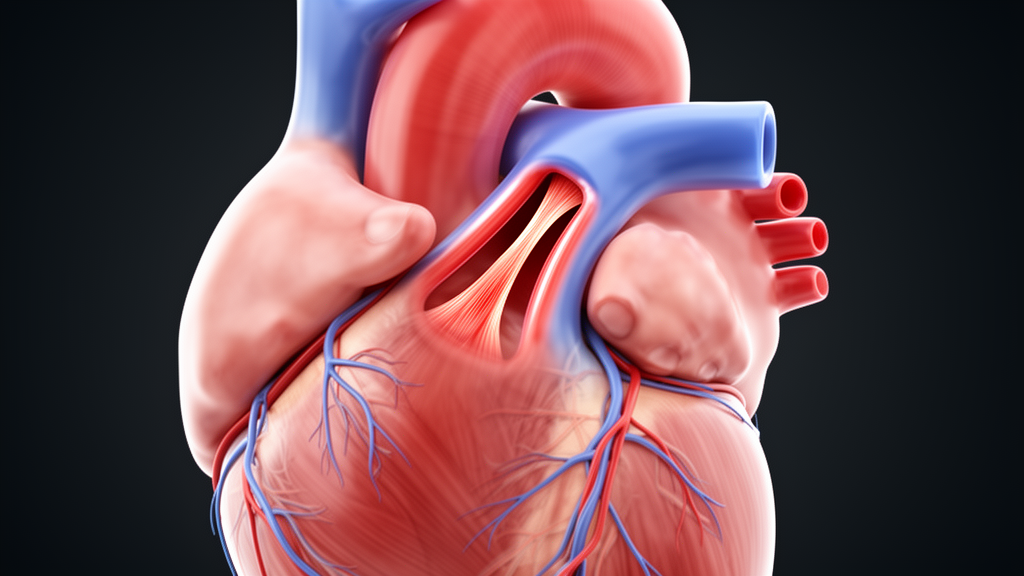
The anomaly in question belongs to a family of congenital defects known as anomalous aortic origin of a coronary artery, or AAOCA. In the normal heart, the left main coronary artery arises from the left coronary sinus of the aortic root, and the right coronary artery arises from the right sinus. In children with AAOCA, one of these vessels instead originates from the opposite sinus and must then travel to reach the territory it serves. The route it takes determines whether the defect is benign or potentially lethal. When the vessel courses between the aorta and the pulmonary artery, the so-called interarterial course, every beat of the heart subjects it to compression from two great vessels expanding with blood pressure. When the vessel additionally runs an intramural course, embedded within the wall of the aorta itself, the lateral compression during exertion can become severe enough to shut down flow entirely.
These malignant variants are rare but disproportionately dangerous. In otherwise healthy children and young athletes, an interarterial, intramural coronary anomaly is one of the leading identifiable causes of exertional syncope, myocardial ischemia, ventricular arrhythmia, and sudden cardiac death. The left main coronary artery is particularly critical because it divides almost immediately into the left anterior descending and circumflex arteries, which together supply the bulk of the left ventricle. A flow-limiting lesion in this single vessel can therefore starve most of the pumping chamber of oxygenated blood at once, and the clinical consequences escalate from chest pain to acute heart failure within minutes.
In the case now reported, the boy developed chest pain and dyspnea while exercising, followed rapidly by pulmonary edema and refractory cardiogenic shock. At the referring hospital, coronary angiography revealed a critical lesion in the proximal left main coronary artery, and the electrocardiogram showed persistent ST-segment elevation, the electrical signature of ongoing myocardial injury. Coronary computed tomography angiography performed at the Akdeniz University centre then confirmed the anatomy: the left main coronary artery arose high from the aortic root and followed an interarterial and intramural course between the aorta and the pulmonary artery. This imaging finding converted what might have been mistaken for an acquired lesion into a clear diagnosis of a malignant congenital anomaly.
Despite maximal medical therapy, the boy’s shock could not be stabilized with conventional means, and the team had to institute emergent central veno-arterial extracorporeal membrane oxygenation, or VA-ECMO. In this form of mechanical circulatory support, blood is drained from the central venous circulation, oxygenated outside the body, and returned to the arterial system, effectively taking over the work of the failing heart and lungs. For a child in refractory cardiogenic shock, VA-ECMO buys time by restoring systemic perfusion, reducing ventricular preload, and lowering myocardial oxygen demand while the underlying cause is addressed. The team also employed continuous renal replacement therapy during the acute phase, reflecting the multi-organ support such patients often require.
Once the boy was hemodynamically stable on ECMO, the surgical team reimplanted the left main coronary artery to its anatomical position in the left coronary sinus. This operation, known as surgical re-anastomosis or coronary artery reimplantation, involves unroofing the intramural segment and creating a new ostium in the correct sinus, thereby eliminating both the interarterial compression and the intramural narrowing that had made the vessel flow-limiting. The procedure was performed with the support of cardiopulmonary bypass, which allowed the surgeons to work on a still, bloodless field while the machine maintained circulation to the rest of the body.
The outcome was remarkable. The boy was weaned from ECMO in the operating room, immediately after the surgical correction, and his recovery proceeded steadily. Cardiac enzymes normalized, the electrocardiogram returned to normal, and he was discharged on the thirteenth day after admission. Two months after discharge, he underwent elective coronary stenting for a residual narrowing of the left main coronary artery, a percutaneous procedure intended to address the residual lesion that had persisted despite the surgical correction. The combination of emergent mechanical support, timely surgical repair, and a planned secondary intervention ultimately saved his life and preserved ventricular function.
The authors of the report emphasize that the case highlights the importance of maintaining a high index of suspicion for malignant left main coronary artery anomalies in children presenting with exertional chest pain. Exertional symptoms in a child are never trivial, and the differential diagnosis must include congenital coronary anomalies alongside myocarditis, arrhythmias, and other structural heart diseases. Because these anomalies are silent at rest, standard resting electrocardiograms and echocardiograms may fail to reveal the defect, and the diagnosis often requires coronary angiography or coronary computed tomography angiography, which can directly visualize the origin and course of the vessel.
Prompt hemodynamic support with ECMO and timely surgical correction can be lifesaving in these rare but high-risk conditions, the authors conclude. The sequence of interventions in this case, from emergent VA-ECMO to surgical reimplantation and elective stenting, illustrates a multidisciplinary pathway that pediatric intensive care units, pediatric cardiology services, and cardiovascular surgery teams can follow when confronted with a child in cardiogenic shock from a congenital coronary anomaly. The report also underscores the value of coronary computed tomography angiography in confirming the anatomy before surgery, since the precise course of the anomalous vessel determines the surgical strategy.
For the wider pediatric and sports medicine communities, the message is clear. Children who develop chest pain, syncope, or unexplained dyspnea during exercise deserve urgent evaluation, and clinicians should consider congenital coronary anomalies even in the absence of other risk factors. Early recognition and timely intervention are crucial to prevent catastrophic outcomes, and this case demonstrates that with prompt diagnosis, mechanical circulatory support, and definitive surgical repair, even a child in refractory cardiogenic shock from a malignant coronary anomaly can survive, recover, and return to a normal life.
Subject of Research: Pediatric Cardiology
Article Title: A hidden coronary cause of cardiogenic shock after exercise in a child: a case report
Article References: Kıymık, E., Erdal, M., Tekerek, N. Ü., Köker, A., Kardelen, F., Özçobanoğlu, S., Kocabaş, A., & Dursun, O. (2026). A hidden coronary cause of cardiogenic shock after exercise in a child: a case report. BMC Pediatrics. https://doi.org/10.1186/s12887-026-07654-0
Image Credits: AI Generated
DOI: 10.1186/s12887-026-07654-0
Keywords: congenital coronary anomaly, left main coronary artery, cardiogenic shock, ECMO, pediatric intensive care, coronary CT angiography, sudden cardiac death, exercise, hidden, coronary, cause, cardiogenic
Cite Scienmag News
Ophelia Keating. (October 17, 2026). Hidden Coronary Artery Defect Triggered Cardiogenic Shock in a 10-Year-Old Boy After Exercise. Scienmag. https://scienmag.com/hidden-coronary-artery-defect-triggered-cardiogenic-shock-in-a-10-year-old-boy-after-exercise/
Ophelia Keating. "Hidden Coronary Artery Defect Triggered Cardiogenic Shock in a 10-Year-Old Boy After Exercise." Scienmag, 17 October 2026, https://scienmag.com/hidden-coronary-artery-defect-triggered-cardiogenic-shock-in-a-10-year-old-boy-after-exercise/. Accessed 17 October 2026.
Ophelia Keating. "Hidden Coronary Artery Defect Triggered Cardiogenic Shock in a 10-Year-Old Boy After Exercise." Scienmag. October 17, 2026. https://scienmag.com/hidden-coronary-artery-defect-triggered-cardiogenic-shock-in-a-10-year-old-boy-after-exercise/


