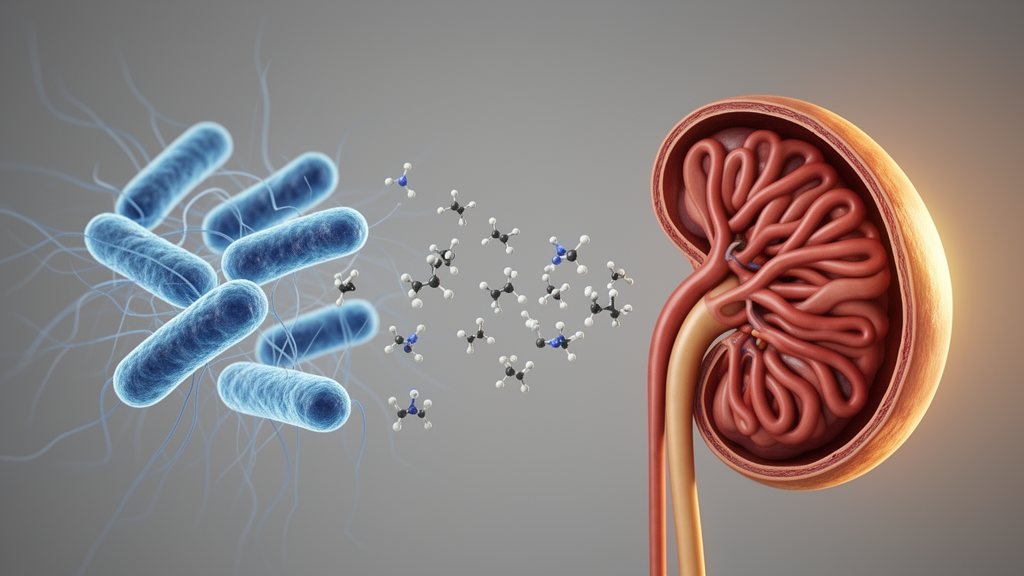
IgA nephropathy, the most common primary glomerular disease worldwide, has long puzzled researchers with its striking geographic variation and its roots in disordered mucosal immunity. Now a comprehensive review published in Microbial Biotechnology draws together clinical, genomic, and mechanistic evidence pointing to an unexpected suspect: Escherichia coli, a bacterium best known as a harmless resident of the human gut. The analysis, led by researchers examining the gut–kidney axis, argues that enrichment of E. coli in the intestinal microbiota of patients with IgA nephropathy may be far more than a passive marker of disease—it may actively participate in driving the aberrant immune responses that damage the kidneys.
The epidemiological backdrop is sobering. Population-based annual incidence of IgA nephropathy reaches approximately 39 to 45 cases per million people in Japan and 25 to 31 in France, while in China the disease accounts for roughly 30 to 40 percent of primary glomerular diseases in biopsy-based cohorts. Clinically, patients can present with anything from painless blood in the urine to rapidly progressive glomerulonephritis, and diagnosis rests on kidney biopsy showing dominant mesangial deposition of IgA. At the heart of the disease lies a molecular culprit known as galactose-deficient IgA1, or Gd-IgA1, an abnormally glycosylated antibody whose production is increasingly linked to dysregulated mucosal immunity and loss of immune tolerance to commensal gut bacteria.
Against this background, several independent cohort studies have converged on a consistent finding: the Escherichia–Shigella group is enriched in the gut microbiota of IgA nephropathy patients compared with healthy individuals and disease controls. In one study published in the Journal of the American Society of Nephrology, the group constituted 10.0 percent of the gut bacterial community in patients versus just 1.0 percent in controls, and its abundance correlated positively with serum creatinine, proteinuria, and the severity of Oxford pathological classification while correlating negatively with albumin and estimated glomerular filtration rate. Other cohorts reported associations with hematuria, urinary albumin-to-creatinine ratio, circulating Gd-IgA1 levels, and poor response to immunosuppressive therapy. Notably, the enrichment appears specific to IgA nephropathy and was not observed in patients with membranous nephropathy, and it is already detectable in newly diagnosed patients.
A crucial advance came from metagenomic sequencing, which resolved the signal at the species level. In a study of 40 patients and 20 healthy controls, E. coli was identified as the characteristic species, averaging 14.01 percent relative abundance in the IgA nephropathy group compared with 5.54 percent in controls, a difference that reached statistical significance and correlated positively with the disease. This matters because 16S rRNA sequencing, the technique used in most earlier studies, cannot reliably distinguish E. coli from closely related Shigella species, let alone separate commensal strains from potentially pathogenic lineages. The authors of the review are careful to stress that the observed enrichment remains an association rather than proof of causality, and that E. coli is also a normal, often beneficial member of the human gut community whose enormous strain-level diversity complicates any simple interpretation.
What features might make particular E. coli strains relevant to kidney disease? The review catalogs several plausible mechanisms. Adhesive structures such as Type 1 fimbriae, whose tip protein FimH binds mannose receptors on intestinal epithelial cells, allow the bacterium to resist peristaltic clearance and establish long-term colonization. Pathogenic lineages, particularly enteropathogenic E. coli, deploy a type III secretion system to inject effector proteins such as EspF and EspG into host cells; EspF degrades tight junction proteins and disrupts the zonula occludens-1–actin cytoskeleton interaction, compromising the intestinal barrier. On the immune side, E. coli releases lipopolysaccharide and flagellin, molecules recognized by Toll-like receptor 4 and Toll-like receptor 5 respectively, triggering innate immune activation, while FimH itself can bind TLR4 on dendritic cells and drive Th1 and Th17 inflammatory responses. The bacterium also continuously sheds outer membrane vesicles that provoke robust innate immune reactions upon uptake.
The mechanistic centerpiece of the proposed framework involves LPS-induced immune activation and a form of inflammatory cell death called pyroptosis. In patients with IgA nephropathy, enrichment of E. coli may raise the intestinal LPS burden, and concurrent impairment of the gut barrier—marked by reduced tight junction protein expression—allows LPS to leak into the circulation. The hexa-acylated lipid A moiety of E. coli-derived LPS is a potent TLR4 agonist, and once in the bloodstream it is hypothesized to act through two parallel routes. In B cells, LPS activates the MyD88/NF-κB pathway, upregulating the B-cell activating factors BAFF and APRIL to promote differentiation into IgA-secreting plasma cells while downregulating the chaperone Cosmc, whose loss produces the defective O-glycosylation characteristic of Gd-IgA1. These abnormal antibodies form immune complexes that deposit in the glomerular mesangium, igniting renal injury.
Simultaneously, circulating LPS engages TLR4 on macrophages, priming the NLRP3 inflammasome through upregulation of NLRP3, pro-IL-1β, and pro-IL-18. A second signal—supplied by LPS-induced reactive oxygen species, lysosomal damage, and ATP release from injured cells—triggers inflammasome assembly and caspase-1 activation, cleaving gasdermin D and unleashing pyroptosis with massive secretion of mature IL-1β and IL-18. These cytokines amplify systemic and local renal inflammation, promoting mesangial cell proliferation, inflammatory infiltration, and interstitial fibrosis. The review emphasizes that this two-pronged framework, while biologically coherent, has not yet been validated as an integrated causal pathway in human disease.
A second mechanistic axis runs through metabolism. Serum sphingosine-1-phosphate, a bioactive sphingolipid, is significantly elevated in IgA nephropathy patients and correlates positively with intestinal E. coli abundance. Experimental models suggest that E. coli-associated dysbiosis alters host sphingolipid metabolism, raising circulating S1P, which then acts on S1PR1 and S1PR3 receptors on glomerular mesangial cells to activate the CCL2–MET–FAK signalling axis. The consequences are threefold: abnormal mesangial proliferation with glomerular expansion, chemokine-driven immune cell infiltration, and upregulation of IgA receptors that enhance capture and retention of circulating Gd-IgA1. Beyond S1P, E. coli metabolizes dietary tryptophan into indole, converted in the liver to indoxyl sulfate, which activates the aryl hydrocarbon receptor in renal tubular cells and drives oxidative stress and tubulointerstitial fibrosis. The bacterium also generates trimethylamine from dietary choline and carnitine, yielding TMAO, a metabolite associated with chronic kidney disease progression and cardiovascular risk—though direct evidence for these pathways in IgA nephropathy specifically is still lacking.
Why does E. coli expand in the first place? The review identifies host, environmental, and ecological drivers. A genome-wide association study found that loss-of-function variants in SIPA1L3 correlate with increased gut Proteobacteria abundance, while IgA nephropathy susceptibility genes—including copy number variations in DEFA, CARD9 variants, and TNFSF13 dysregulation—may weaken mucosal constraints on colonization. Diet matters too: higher intake of fibre, vegetables, and fruits is associated with lower E. coli abundance, because dietary fibre is fermented into butyrate, which inhibits E. coli through intracellular acidification, barrier enhancement, and maintenance of intestinal anaerobiosis. Conversely, gluten-free diets and certain chemical exposures have been shown to increase E. coli counts. Ecologically, IgA nephropathy patients show depletion of butyrate-producing bacteria such as Butyricicoccus and Eubacterium rectale, and of lactate producers like Lactobacillus and Bifidobacterium. This collapse of the so-called Foundation Guild tips the microbial seesaw toward the Pathobiont Guild, creating a niche permissive for E. coli proliferation while butyrate deficiency further weakens the intestinal barrier.
Perhaps the most clinically exciting section of the review concerns therapy. Faecal microbiota transplantation has been tested in refractory IgA nephropathy patients and found well tolerated, with reductions in proteinuria and decreases in E. coli abundance, though sample sizes remain small. Probiotics such as Bifidobacterium and Clostridium butyricum reduce intestinal E. coli, lower serum endotoxin and pro-inflammatory cytokines, and improve renal parameters, partly by producing butyrate that repairs barrier function. High-fibre diets promote butyrate-producing taxa and inhibit E. coli expansion. More futuristic options include an engineered IgA protease—the Clostridium ramosum enzyme AK183 fused to human IgG1 Fc and produced in E. coli—which cleared circulating IgA and glomerular IgA and C3 deposits in mouse models with activity lasting up to a week, offering hope for rapidly progressive disease. Phage therapy, proven safe in E. coli urinary tract infections, could be tailored to selectively eliminate IgA-associated strains while sparing commensal bacteria, and engineered E. coli Nissle 1917 strains that sense inflammation and release therapeutic molecules in situ represent a synthetic-biology frontier. The authors caution that key questions remain—whether specific strains drive disease, how E. coli interacts with butyrate producers, and whether the LPS-pyroptosis and S1P pathways are causal in humans—but the convergence of clinical association, mechanistic plausibility, and emerging targeted interventions marks E. coli as one of the most compelling leads in the ongoing effort to tame a disease that begins, remarkably, in the gut.
Subject of Research: The potential role of gut Escherichia coli in the pathogenesis and microbiota-targeted treatment of IgA nephropathy
Article Title: Potential Roles of Escherichia coli in IgA Nephropathy: Evidence, Mechanistic Hypotheses and Microbiota‐Targeted Strategies
Article References: Liu, Y., Ning, X., Liu, Y., Yu, Z., Liu, J., Xu, X., Zhao, J., & Sun, S. (2026). Potential Roles of Escherichia coli in IgA Nephropathy: Evidence, Mechanistic Hypotheses and Microbiota‐Targeted Strategies. Microbial Biotechnology, 19(10), Article e70455. https://doi.org/10.1111/1751-7915.70455
Image Credits: AI Generated
Keywords: IgA nephropathy, Escherichia coli, gut microbiota, gut-kidney axis, Gd-IgA1, lipopolysaccharide, pyroptosis, sphingosine-1-phosphate, faecal microbiota transplantation, probiotics, phage therapy, engineered bacteria
Cite Scienmag News
Morgan Morrow. (October 17, 2026). Gut Bacterium E. coli Emerges as a Central Suspect in IgA Nephropathy. Scienmag. https://scienmag.com/gut-bacterium-e-coli-emerges-as-a-central-suspect-in-iga-nephropathy/
Morgan Morrow. "Gut Bacterium E. coli Emerges as a Central Suspect in IgA Nephropathy." Scienmag, 17 October 2026, https://scienmag.com/gut-bacterium-e-coli-emerges-as-a-central-suspect-in-iga-nephropathy/. Accessed 17 October 2026.
Morgan Morrow. "Gut Bacterium E. coli Emerges as a Central Suspect in IgA Nephropathy." Scienmag. October 17, 2026. https://scienmag.com/gut-bacterium-e-coli-emerges-as-a-central-suspect-in-iga-nephropathy/