


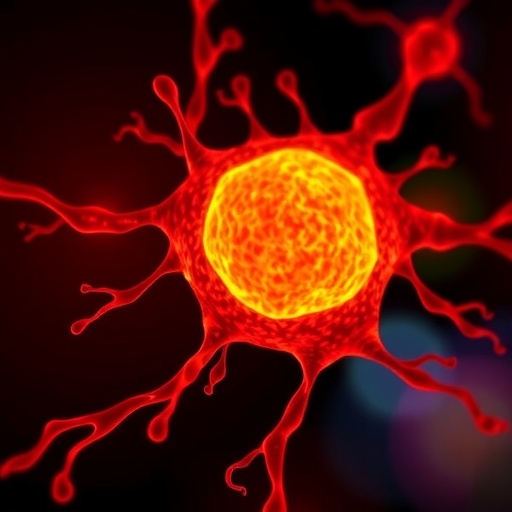
In a groundbreaking study published in Cell Research, researchers uncover a pivotal role for GSK3α, a key regulatory enzyme, as a crucial “stemness checkpoint” across diverse stem cell types. This discovery marks a profound advance in stem cell biology, revealing how GSK3α meticulously governs the balance between self-renewal and differentiation in varied stem cell states. The implications of this insight ripple across developmental biology, regenerative medicine, and cancer research, where understanding stem cell behavior remains a fundamental challenge.
Stem cells, remarkable for their ability to give rise to various cell lineages, rely on tightly controlled signaling networks to maintain their stemness—the capacity for indefinite self-renewal without premature differentiation. Among myriad factors, glycogen synthase kinase 3 (GSK3) isoforms have long suggested roles in modulating these processes, but their precise functions, especially concerning isoform-specific actions, have remained elusive. This new research decisively delineates GSK3α as a vital checkpoint, operating distinctly from its close relative GSK3β, in orchestrating stem cell maintenance.
At the core of the study is the demonstration that GSK3α exerts a state-dependent influence on stem cells. Unlike prior notions suggesting a redundant interplay with GSK3β, GSK3α’s role transcends mere backup and emerges as a critical guardian preventing stem cells from veering off the delicate path of pluripotency. The researchers extensively characterized multiple stem cell states, including naïve, primed, and lineage-committed forms, revealing that GSK3α’s activity patterns dynamically adjust to safeguard each state’s integrity.
Molecular analyses highlight that GSK3α directly modulates transcriptional networks closely linked to stemness gene signatures. It influences key pluripotency factors while simultaneously repressing differentiation cues, thus acting as a molecular “gatekeeper.” Advanced genome-wide chromatin immunoprecipitation and RNA sequencing experiments unveiled a suite of target genes and regulatory elements under GSK3α’s control. This level of precision points to a sophisticated mechanism by which GSK3α calibrates gene expression programs essential for stem cell identity.
Intriguingly, the study also demonstrates that pharmacological inhibition or genetic ablation of GSK3α precipitates rapid loss of stemness, promoting premature differentiation. This finding contrasts with the effects of targeting GSK3β and underscores the non-overlapping functions these isoforms fulfill. Such insights could recalibrate therapeutic strategies that aim to manipulate GSK3 activity to control stem cell fate decisions in regenerative treatments and oncology.
In delineating the pathways influenced by GSK3α, the researchers identified a complex interplay with signaling cascades such as the Wnt/β-catenin pathway, Notch, and Hedgehog pathways—each critical for developmental processes. GSK3α fine-tunes these pathways, thereby ensuring that stem cells receive consistent cues to either maintain their undifferentiated state or commit to differentiation with exquisite spatial and temporal precision.
The study extends beyond rodents and cell lines, incorporating human pluripotent stem cell models to affirm translational relevance. These human models illuminated conserved roles for GSK3α, suggesting that this checkpoint mechanism is evolutionarily preserved. The data thus pave the way for explorations into human disease contexts where stem cell dysregulation plays a pathogenic role, including diverse cancers and degenerative diseases.
One of the most compelling aspects of the research is the identification of GSK3α as a potential target for fine-tuning stem cell therapies. Designing selective modulators that harness GSK3α’s regulatory properties could revolutionize approaches to tissue engineering, organ regeneration, and even anti-cancer strategies by exploiting the vulnerable points in stem cell regulatory machinery.
Furthermore, this work challenges the prevailing paradigm that often grouped GSK3α and GSK3β functions indiscriminately. It calls for a refined perspective that considers isoform-specific roles and how discrete molecular activities integrate into broader cellular contexts. This nuanced understanding enhances our ability to precisely manipulate stem cell behavior without off-target effects that have hampered clinical translation.
The researchers employed cutting-edge technologies including CRISPR-Cas9 gene editing, single-cell RNA sequencing, and live cell imaging, enabling them to track dynamic changes in the stem cell population and directly observe GSK3α’s impact in real-time. This multi-modal approach solidified the functional importance of GSK3α and dispelled uncertainties about its mechanistic contribution.
Importantly, by delineating the “stemness checkpoint,” the study proposes a conceptual framework whereby stem cells are viewed as entities regulated by vigilant molecular sentinels like GSK3α. This perspective enhances our grasp of stem cells not merely as passive reservoirs but as active participants finely regulated to balance renewal and differentiation in a context-dependent manner.
The authors also explored the connection between dysregulated GSK3α signaling and disease susceptibility, suggesting that aberrations in this checkpoint may contribute to uncontrolled stem cell proliferation in cancer or inadequate renewal in degenerative conditions. Hence, therapeutic modulation might restore normal homeostasis in diseased tissues or augment the efficacy of stem cell-based interventions.
The implications for developmental biology are profound, as the study clarifies how distinct developmental stages preserve their unique identity by integrating GSK3α’s regulatory signals. This helps decode fundamental puzzles about embryonic development, lineage specification, and cellular plasticity, enriching the toolkit for developmental and regenerative biology research.
Looking forward, this discovery opens new avenues for investigating how other isoform-specific kinases might regulate cellular states in diverse biological contexts. It invites a broader reexamination of protein kinase functions with the specificity that can revolutionize our understanding of cellular regulation and disease mechanisms.
In summary, the revelation that GSK3α functions as a critical stemness checkpoint across multiple stem cell states revolutionizes the current understanding of stem cell biology. It equips scientists and clinicians with novel insights and tools to manipulate stem cell fate with unprecedented precision, heralding a new era in regenerative medicine and targeted cancer therapies.
Cite Scienmag News
Drew Townsend. (April 9, 2026). GSK3α Regulates Stemness Across Stem Cell States. Scienmag. https://scienmag.com/gsk3%ce%b1-regulates-stemness-across-stem-cell-states/
Drew Townsend. "GSK3α Regulates Stemness Across Stem Cell States." Scienmag, 9 April 2026, https://scienmag.com/gsk3%ce%b1-regulates-stemness-across-stem-cell-states/. Accessed 4 September 2026.
Drew Townsend. "GSK3α Regulates Stemness Across Stem Cell States." Scienmag. April 9, 2026. https://scienmag.com/gsk3%ce%b1-regulates-stemness-across-stem-cell-states/


