


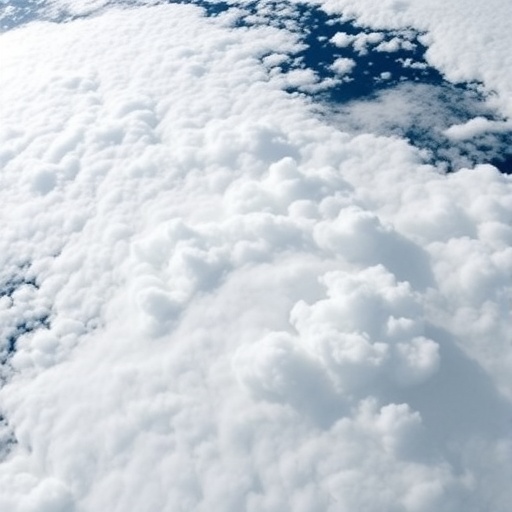
A groundbreaking stride in atmospheric science is on the horizon with the forthcoming launch of the CloudCT precursor nanosatellite, set to take off from California in June 2026. This pioneering mission inaugurates a sophisticated network aimed at unraveling the intricate physics of clouds, a critical yet enigmatic component in Earth’s climate system. Following this precursor, a constellation of ten additional CloudCT satellites is anticipated to deploy in 2027, promising a leap forward in climate research by delivering unprecedented insights into cloud dynamics and their climatic influence.
This venture emerges from a rich, seven-year collaboration uniting Israeli and German scientific expertise, anchored at the Weizmann Institute of Science, Technion – Israel Institute of Technology, and Zentrum für Telematik. Leading the charge are Professors Ilan Koren, Yoav Schechner, and Klaus Schilling, each a luminary in atmospheric sciences, computational photography, and satellite engineering, respectively. Their collective vision leverages decades of research to address persisting uncertainties in climate models, particularly those tied to cloud behavior and microphysics.
CloudCT represents a novel observational paradigm inspired by medical computed tomography (CT), adapted innovatively to atmospheric science. Traditional remote sensing methods often overlook the fine-scale structures of clouds, leaving gaps in data critical for accurate climate predictions. By employing a network of satellites equipped with polarized optical cameras and sophisticated AI-driven reconstruction algorithms, CloudCT aims to generate three-dimensional maps of cloud interiors, capturing droplet distributions and phase states with unparalleled accuracy.
At the heart of this system lies an intricate interplay of technology and atmospheric physics. Each nanosatellite, weighing roughly four kilograms, must autonomously orient itself with exacting precision toward designated cloud targets. This task demands a cutting-edge attitude and orbit control system, capable of high-fidelity pointing and synchronized operations across multiple satellites. Achieving such performance within the constraints of nanosatellite platforms represents a formidable engineering challenge, pushing the envelope of small satellite autonomy and coordination.
The innovative optical camera designed for CloudCT is exceptionally sensitive to the polarization of incoming light—a property invisible to the naked eye yet rich with information about cloud particle characteristics. Polarization signatures help distinguish droplet size distributions and phase transitions within clouds, parameters that are instrumental in understanding weather patterns and climate feedback mechanisms. By capturing these subtle signals from multiple vantage points in space, researchers can reconstruct cloud microstructures in three dimensions, revealing insights heretofore inaccessible.
Artificial intelligence drives the analytical backbone of the mission. Sophisticated algorithms process the multiview polarized images, overcoming the ill-posed inverse problem intrinsic to optical tomography of clouds. These AI methods not only reconstruct the spatial distribution of droplets but also assess the reliability of such measurements, enabling a robust scientific interpretation. The synergy of AI with innovative sensor technology epitomizes a new era of remote sensing methodology.
Precursor mission flight tests will validate the satellite’s operational capabilities and measurement strategies. The data collected will critically inform the subsequent deployment of the full CloudCT constellation, setting the stage for an ambitious effort to close critical knowledge gaps in cloud physics. This stepwise approach underscores the mission’s balance of technological risk and scientific ambition, ensuring readiness for large-scale operational use.
The project’s cutting-edge nature and potential impact were recognized through a prestigious European Research Council Synergy Grant. This accolade supports the collaborative, interdisciplinary framework necessary to advance such a multifaceted endeavor. Publications arising from this work have already appeared in top-tier scientific journals, affirming its academic rigor and innovative merit.
CloudCT’s implications stretch far beyond pure science. By enhancing the resolution and fidelity of cloud observation, this mission could transform climate forecasting, improve weather prediction models, and deepen our understanding of the Earth’s radiation budget. Clouds play a dual role—both reflecting sunlight to cool the Earth and trapping infrared radiation to warm it—their complex behavior presents a key uncertainty in projections of global warming.
The interdisciplinary approach combining atmospheric physics, computational photography, satellite engineering, and AI heralds a new paradigm in Earth observation. CloudCT exemplifies how miniaturized satellite technology and intelligent data processing can collaborate to tackle grand scientific challenges, previously constrained by technical and financial barriers.
With the precursor mission’s launch approaching, the scientific community anticipates a new era where nanosatellites operate cooperatively to monitor fine-scale atmospheric phenomena continuously and globally. This paradigm shift not only benchmarks technological innovation but could contribute significantly to actionable climate science interventions in an era of accelerating climate change.
Ultimately, CloudCT stands as a testament to international collaboration, technological ingenuity, and scientific curiosity. By illuminating the hidden structures of clouds, it holds promise for unlocking mysteries of the Earth’s climate system, refining predictive models, and informing mitigation strategies for the planet’s future.
Cite Scienmag News
Russell Cooper. (May 26, 2026). Groundbreaking Satellite Network for Cloud Computed Tomography Launched to Enhance Climate Prediction Models. Scienmag. https://scienmag.com/groundbreaking-satellite-network-for-cloud-computed-tomography-launched-to-enhance-climate-prediction-models/
Russell Cooper. "Groundbreaking Satellite Network for Cloud Computed Tomography Launched to Enhance Climate Prediction Models." Scienmag, 26 May 2026, https://scienmag.com/groundbreaking-satellite-network-for-cloud-computed-tomography-launched-to-enhance-climate-prediction-models/. Accessed 6 September 2026.
Russell Cooper. "Groundbreaking Satellite Network for Cloud Computed Tomography Launched to Enhance Climate Prediction Models." Scienmag. May 26, 2026. https://scienmag.com/groundbreaking-satellite-network-for-cloud-computed-tomography-launched-to-enhance-climate-prediction-models/


