


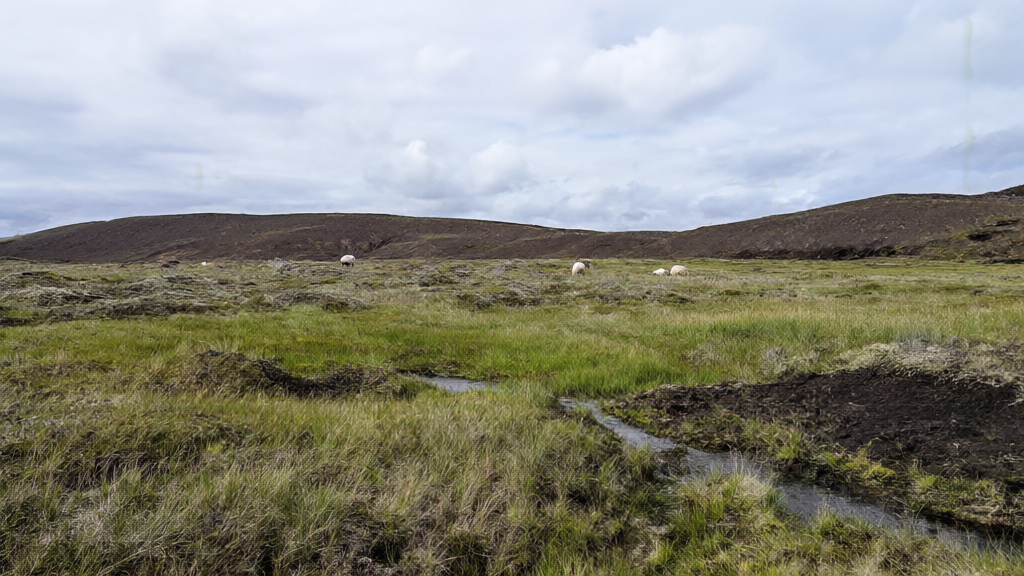
For decades, conventional ecological wisdom has suggested that removing livestock from grasslands is the most effective strategy for enhancing soil carbon storage. The underlying assumption is straightforward: if grazing animals consume plant biomass, they reduce the amount of organic matter available to decompose and return to the soil. Consequently, many conservation policies and nature-based climate solutions have advocated for the exclusion of grazers to maximize the sequestration of atmospheric carbon dioxide into the ground. However, a new study published in Global Change Biology Communications challenges this long-held belief, presenting compelling evidence that the opposite may be true in certain environments. The research indicates that sustained livestock grazing can actually enhance soil organic carbon storage, particularly in sub-arctic grassland ecosystems, thereby shifting the paradigm for sustainable land management and climate mitigation strategies.
The study, led by Anna Gudrun Thorhallsdottir, a professor at the University of Iceland at Holar, draws on real-world data from long-term grazing cessation experiments in Iceland. By examining grasslands where grazing was abandoned for extended periods, the researchers were able to isolate the specific effects of livestock presence on soil chemistry and vegetation dynamics. The findings reveal that grazing abandonment resulted in lower soil carbon levels, while continued grazing consistently led to higher soil carbon concentrations. This counterintuitive result suggests that the interaction between herbivores and grassland plants is more complex than simple biomass removal, involving intricate feedback loops that influence root exudation, nutrient cycling, and microbial activity in the soil.
Grassland plants transfer large amounts of carbon to the soil through their root systems, and the majority of this carbon is stored below ground. In the absence of grazing, grasslands often undergo ecological shifts that can reduce their capacity to sequester carbon. The study found that long-time grazing abandonment promoted the dominance of vegetation types that are less efficient at storing soil carbon. These shifts often involve the encroachment of shrubs or the dominance of plant species that allocate less carbon to deep root systems compared to the grasses that thrive under grazing pressure. Grazing, by keeping vegetation short and stimulating new growth, may encourage plants to invest more in root production and exudation, thereby increasing the input of labile carbon into the soil.
The mechanism by which grazing enhances soil carbon storage is not fully understood, but several hypotheses are supported by the data. One possibility is that grazing stimulates plant regrowth, leading to increased root turnover and the release of root exudates that feed soil microorganisms. These microorganisms, in turn, produce stable soil organic matter that persists in the soil for longer periods. Another factor is the distribution of manure and urine, which adds nitrogen and other nutrients to the soil, promoting plant growth and microbial activity. Additionally, the physical disturbance caused by grazing animals can mix the soil, enhancing aeration and the incorporation of organic matter into deeper soil layers. These combined effects can create a positive feedback loop that supports higher soil carbon stocks over time.
The implications of these findings extend beyond local grassland management to global climate policy. As the world seeks nature-based solutions to combat climate change, understanding the role of grazing in carbon sequestration is crucial. The study highlights the potential importance of grazing to sustain grasslands and enhance soil carbon storage, suggesting that blanket exclusion of livestock may not always be the best approach. Instead, a nuanced understanding of local ecological conditions is necessary to determine whether grazing or non-grazing management is more effective for carbon sequestration. This has significant implications for land-use planning, conservation efforts, and the development of carbon credit markets that rely on accurate estimates of soil carbon changes.
Thorhallsdottir emphasizes that the findings have important implications for climate policy, nature-based solutions, and sustainable grassland management worldwide. She notes that the results highlight the potential importance of grazing to sustain grasslands and enhance soil carbon storage. This perspective challenges the prevailing narrative that grazing is inherently detrimental to soil health and carbon sequestration. Instead, it suggests that grazing can be a tool for managing grasslands in a way that supports both biodiversity and climate goals. The study underscores the need for more research to understand the specific conditions under which grazing enhances or hinders soil carbon storage, as well as the long-term stability of these carbon stocks.
The research was conducted in sub-arctic grasslands in Iceland, a region that is particularly sensitive to climate change and land-use alterations. Sub-arctic grasslands are characterized by low temperatures, short growing seasons, and permafrost, which can influence soil carbon dynamics. The study’s findings are therefore specific to this environment, but they raise important questions about the applicability of these results to other grassland types. Further research is needed to determine whether the positive effects of grazing on soil carbon storage are consistent across different climatic and ecological contexts. This will require long-term experiments and monitoring programs that can capture the slow processes of soil carbon accumulation and decomposition.
The publication of this study in Global Change Biology Communications, a peer-reviewed, open-access journal, ensures that the findings are accessible to a wide audience, including scientists, policymakers, and practitioners. The journal is a companion to Global Change Biology and publishes high-impact research on how living systems respond to global changes. By making the study openly available, the authors hope to facilitate the translation of these findings into practical management recommendations. The study also contributes to the broader scientific discourse on the role of land management in climate change mitigation, highlighting the importance of integrating ecological knowledge into policy decisions.
In conclusion, the study provides a compelling case for reconsidering the role of livestock grazing in soil carbon storage. By demonstrating that grazing can enhance carbon sequestration in sub-arctic grasslands, the research challenges conventional wisdom and offers new insights into the complex interactions between plants, animals, and soil. As the world grapples with the urgent need to mitigate climate change, understanding these interactions is essential for developing effective nature-based solutions. The findings suggest that sustainable grassland management must take into account the potential benefits of grazing, and that a one-size-fits-all approach to land management is unlikely to be successful. Future research should focus on identifying the key factors that determine the impact of grazing on soil carbon storage, and on developing management strategies that can be applied in different ecological contexts.
This research marks a significant step forward in our understanding of grassland ecosystems and their role in the global carbon cycle. It highlights the importance of long-term ecological studies in uncovering the complex dynamics that govern soil carbon storage. By providing evidence that grazing can be beneficial for soil carbon, the study opens up new possibilities for using grasslands as a tool for climate change mitigation. As we continue to seek ways to combat climate change, it is clear that we need to rethink our assumptions about land management and embrace a more nuanced understanding of the ecological processes that shape our planet. The findings of this study serve as a reminder that nature is complex, and that solutions to global challenges often require a deep understanding of the systems we seek to protect.
Subject of Research: Impact of livestock grazing on soil carbon storage in sub-arctic grasslands
Article Title: Does livestock grazing enhance or hinder soil carbon storage?
Article References: Does livestock grazing enhance or hinder soil carbon storage?. (n.d.). Original publication
Image Credits: AI Generated
DOI: Not provided
Keywords: soil carbon, livestock grazing, grassland ecology, climate change, carbon sequestration, sub-arctic ecosystems, land management, nature-based solutions, Global Change Biology, Iceland, ecological shifts, root exudation
Cite Scienmag News
Gavin Prescott. (October 2, 2026). Grazing Increases Soil Carbon in Sub-Arctic Grasslands. Scienmag. https://scienmag.com/grazing-increases-soil-carbon-in-sub-arctic-grasslands/
Gavin Prescott. "Grazing Increases Soil Carbon in Sub-Arctic Grasslands." Scienmag, 2 October 2026, https://scienmag.com/grazing-increases-soil-carbon-in-sub-arctic-grasslands/. Accessed 4 October 2026.
Gavin Prescott. "Grazing Increases Soil Carbon in Sub-Arctic Grasslands." Scienmag. October 2, 2026. https://scienmag.com/grazing-increases-soil-carbon-in-sub-arctic-grasslands/


