

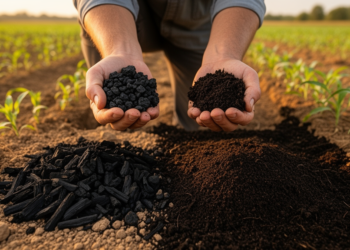
Biochar’s Soil Benefits Depend Sharply on Material and Setting
A systematic review of 156 studies shows that biochar can improve soils, immobilize contaminants and alter greenhouse-gas emissions, but its ...
A systematic review of 156 studies shows that biochar can improve soils, immobilize contaminants and alter greenhouse-gas emissions, but its ...

A 30-year field trial in Bihar found that returning all available rice–wheat crop residue increased soil aggregation, raised profile-scale organic ...
A comparative study of two small coastal parks found that ecological engineering cut net life-cycle carbon emissions by 99% and ...
A 21-year Belgian cropland study found that soil inventories, process modelling and eddy-covariance measurements disagreed about carbon-stock trends, while agreeing ...
A regional satellite-observation study links Grain for Green implementation on the Loess Plateau with 53.2% forest-cover growth and 24.4% higher ...
A preliminary regional-sea accounting study maps North-East Atlantic habitats and estimates selected ecosystem-service and asset values while identifying major spatial, ...
A year-long study of a tropical seagrass meadow in Taiwan finds that its sediments produce methane steadily, yet nearly all ...
A 90-day incubation study shows that mixing corn straw with biochar at a 1:3 ratio immobilizes cadmium and zinc, relieves ...
An eight-year field experiment and a meta-analysis show that warming combined with nitrogen input dissolves soil inorganic carbon in drylands, ...
New niche models reveal that elevation and precipitation determine where Juncaceae- and Cyperaceae-dominated high Andean wetlands can exist across the ...

Embark on a thrilling journey of discovery with Scienmag.com—your ultimate source for cutting-edge breakthroughs. Immerse yourself in a world where curiosity knows no limits and tomorrow’s possibilities become today’s reality!