Saturday, October 31, 2026
Science
No Result
View All Result
  • Login
  • HOME
  • SCIENCE NEWS
  • CONTACT US
  • HOME
  • SCIENCE NEWS
  • CONTACT US
No Result
View All Result
Scienmag
No Result
View All Result
Home Science News Technology and Engineering

Graph neural network method boosts detection of rare cyberattacks in imbalanced data

October 29, 2026
in Technology and Engineering
Blake Davidson
By Blake Davidson Scienmag Editorial Profile - Data Science
Reading Time: 2 mins read
0
Graph neural network method boosts detection of rare cyberattacks in imbalanced data

Graph neural network method boosts detection of rare cyberattacks in imbalanced data

65
SHARES
587
VIEWS
Share on FacebookShare on Twitter
ADVERTISEMENT

Researchers have introduced a graph-based intrusion detection framework designed to tackle a persistent weakness in security systems for industrial control environments: when attack samples are scarce, conventional models tend to favour the majority class and fail to detect rare attacks.

The method, called Enhanced Graph Neural Networks (EGNN), was described by Xuebei Liu and Wenping Ma in a paper published in Cluster Computing. The work addresses the problem of imbalanced class distributions, in which normal behaviour dominates the data and minority attack classes are underrepresented, causing models to underfit those minority classes.

The central idea of EGNN is to increase the number of samples available for minority classes so the model can better learn their features. Rather than relying solely on the limited labeled attack data, the framework generates pseudo-samples based on a graph structure constructed from the same labeled samples, expanding the effective representation of rare attack types.

To make better use of labeled data, the approach also employs semi-supervised learning to assign pseudo-labels to a large amount of unlabeled data. The quality of these pseudo-labels is controlled through dynamic thresholds, which the authors set differently for different classes.

A key design choice is that lower thresholds are applied to minority classes. This makes it easier for samples belonging to rare attack types to receive pseudo-labels, further expanding their sample size and counteracting the bias toward majority classes that plagues existing methods.

According to the paper, the scheme addresses the high leakage and false alarm rates that arise from the scarcity of attack samples and the predominance of normal behaviours in industrial control system traffic, with the goal of enhancing overall system security.

The authors report extensive multiclass classification experiments on two imbalanced intrusion detection datasets. In these experiments, the framework achieved up to a 19.09% improvement in detection performance, and the results indicated that the approach outperformed state-of-the-art methods with which it was compared.

The work reflects a broader trend in which graph-based intrusion detection techniques have advanced rapidly in recent years and emerged as a crucial means of ensuring the security of industrial control systems. By combining graph-structured sample generation with threshold-controlled semi-supervised labeling, EGNN offers a way to sharpen detection of rare attacks without requiring large volumes of labeled attack data, a resource that is often difficult to obtain in operational security settings.

Subject of Research: A graph neural network framework for intrusion detection under class-imbalanced data distributions.

Article Title: EGNN: A graph-based intrusion detection framework considering class-imbalanced problem

Article References: Liu, X., & Ma, W. (2026). EGNN: A graph-based intrusion detection framework considering class-imbalanced problem. Cluster Computing, 29(15), Article 890. https://doi.org/10.1007/s10586-026-06678-6

Image Credits: AI Generated

DOI: 10.1007/s10586-026-06678-6

Keywords: intrusion detection, graph neural networks, class imbalance, industrial control systems, semi-supervised learning, pseudo-labels, network security, machine learning, anomaly detection, cybersecurity, EGNN, graph-based

Cite Scienmag News

Blake Davidson. (October 29, 2026). Graph neural network method boosts detection of rare cyberattacks in imbalanced data. Scienmag. https://scienmag.com/graph-neural-network-method-boosts-detection-of-rare-cyberattacks-in-imbalanced-data/


Blake Davidson. "Graph neural network method boosts detection of rare cyberattacks in imbalanced data." Scienmag, 29 October 2026, https://scienmag.com/graph-neural-network-method-boosts-detection-of-rare-cyberattacks-in-imbalanced-data/. Accessed 31 October 2026.

Blake Davidson. "Graph neural network method boosts detection of rare cyberattacks in imbalanced data." Scienmag. October 29, 2026. https://scienmag.com/graph-neural-network-method-boosts-detection-of-rare-cyberattacks-in-imbalanced-data/

Tags: addressing data imbalance in intrusion detectionadvanced machine learning for cybersecurityanomaly detectionboosting detection of rare cyber threatsclass imbalancecybersecuritydynamic thresholding in graph-based modelsEGNNEGNN framework for cybersecurityenhancing minority class detection in security systemsGraph neural network for rare cyberattack detectionGraph Neural Networksgraph-basedgraph-structured data for cyberattack analysisimbalanced data cybersecurity solutionsindustrial control environment cyberattack detectionindustrial control systemsintrusion detectionMachine learningnetwork securitypseudo-labelspseudo-sample generation for attack classessemi-supervised learningsemi-supervised learning in intrusion detection
Share26Tweet16
Previous Post

Scoping Review Finds Forensic DNA Phenotyping Fails Southeast Asian Populations

Next Post

Gut Microbes, Immune Signals and the Inflammatory Road to Parkinson’s Disease

Related Posts

Systematic review maps sustainability tensions in offshore wind development
Climate

Systematic review maps sustainability tensions in offshore wind development

October 30, 2026
Amateur maps and sketches helped put Hong Kong’s wartime pillboxes on official charts
Archaeology

Amateur maps and sketches helped put Hong Kong’s wartime pillboxes on official charts

October 30, 2026
Heavier logging trucks only pay off when the road network lets them work
Technology and Engineering

Heavier logging trucks only pay off when the road network lets them work

October 30, 2026
Supersulfated cement outperforms Portland cement in curbing concrete’s alkali-silica reaction
Technology and Engineering

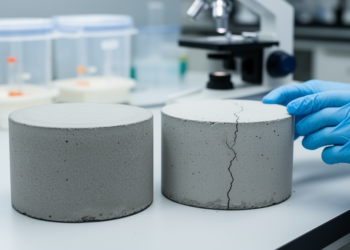
Supersulfated cement outperforms Portland cement in curbing concrete’s alkali-silica reaction

October 30, 2026
Heritage remade: how three Gulf districts turn patrimonialisation into cultural tourism
Technology and Engineering

Heritage remade: how three Gulf districts turn patrimonialisation into cultural tourism

October 30, 2026
Patch Shuffling Trick Makes Adversarial Attacks on Vision Transformers Far More Transferable
Technology and Engineering

Patch Shuffling Trick Makes Adversarial Attacks on Vision Transformers Far More Transferable

October 30, 2026
Next Post
Gut Microbes, Immune Signals and the Inflammatory Road to Parkinson’s Disease

Gut Microbes, Immune Signals and the Inflammatory Road to Parkinson's Disease

  • Mothers who receive childcare support from maternal grandparents show more optimized

    Mothers who receive childcare support from maternal grandparents show more parental warmth, finds NTU Singapore study

    27656 shares
    Share 11059 Tweet 6912
  • University of Seville Breaks 120-Year-Old Mystery, Revises a Key Einstein Concept

    1061 shares
    Share 424 Tweet 265
  • Bee body mass, pathogens and local climate influence heat tolerance

    682 shares
    Share 273 Tweet 171
  • Researchers record first-ever images and data of a shark experiencing a boat strike

    546 shares
    Share 218 Tweet 137
  • Groundbreaking Clinical Trial Reveals Lubiprostone Enhances Kidney Function

    531 shares
    Share 212 Tweet 133
Science

Embark on a thrilling journey of discovery with Scienmag.com—your ultimate source for cutting-edge breakthroughs. Immerse yourself in a world where curiosity knows no limits and tomorrow’s possibilities become today’s reality!

RECENT NEWS

  • Trademarks Meet Patents in New Method to Spot Technology Opportunities
  • Reddit self-declarations offer auditable labels for demographic inference
  • Scots pine needles map trace element pollution in Polish industrial town
  • Dual-blockchain scheme secures vehicle handovers without pre-shared keys

Categories

  • Agriculture
  • Anthropology
  • Archaeology
  • Athmospheric
  • Biology
  • Biotechnology
  • Blog
  • Bussines
  • Cancer
  • Chemistry
  • Climate
  • Earth Science
  • Editorial Policy
  • Marine
  • Mathematics
  • Medicine
  • Pediatry
  • Policy
  • Psychology & Psychiatry
  • Science Education
  • Science News
  • Social Science
  • Space
  • Technology and Engineering

Subscribe to Blog via Email

Enter your email address to subscribe to this blog and receive notifications of new posts by email.

Join 5,150 other subscribers

© 2025 Scienmag - Science Magazine

Welcome Back!

Login to your account below

Forgotten Password?

Retrieve your password

Please enter your username or email address to reset your password.

Log In
No Result
View All Result
  • HOME
  • SCIENCE NEWS
  • CONTACT US

© 2025 Scienmag - Science Magazine

Discover more from Science

Subscribe now to keep reading and get access to the full archive.

Continue reading