


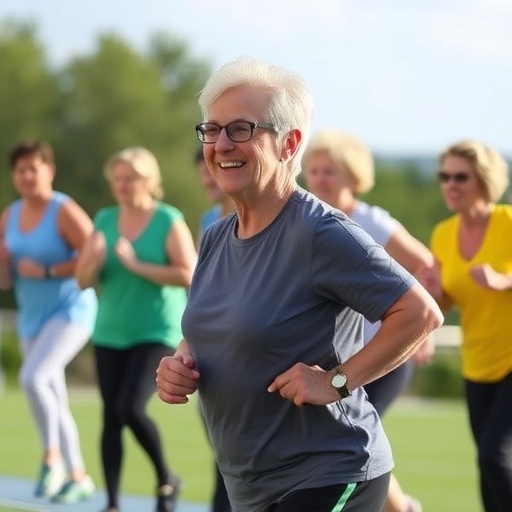
In an era where longevity is increasing globally, the challenge of maintaining physical function and independence in older adults has become a paramount public health concern. Recently, researchers have struck a pioneering chord with a novel theory-driven exercise intervention aimed at enhancing physical performance among community-dwelling older adults. Conducted as a cluster randomized controlled trial and delivered by general practitioners, this innovative approach bridges clinical practice and gerontological science, offering fresh insights into how structured physical activity can be seamlessly integrated into everyday healthcare settings to combat the decline of physical abilities in aging populations.
The growing body of evidence underscores that physical performance is a critical determinant of quality of life in older individuals, with impairments often resulting in loss of independence, increased risk of falls, and heightened mortality rates. Traditional physical activity programs, while effective in experimental contexts, frequently face barriers to real-world implementation, including logistical challenges and inadequate healthcare professional involvement. Addressing these obstacles, the latest study utilizes a theoretical framework to design an exercise regimen that general practitioners can confidently prescribe and monitor, ensuring accessibility and adherence among older adults living independently in their communities.
Central to the success of the intervention is its grounding in behavioral theories that emphasize motivation, self-efficacy, and habit formation. By incorporating elements of social cognitive theory and the transtheoretical model of behavior change, the researchers devised a multifaceted strategy that tailors exercises to individual capabilities while progressively encouraging engagement. This patient-centered model supports older adults through personalized goal-setting, frequent feedback, and structured follow-ups, all facilitated by primary care providers who act as both supervisors and motivators in the exercise journey.
The trial’s methodology reflects a rigorous design, implementing cluster randomization at the level of general practice clinics to control for potential confounders related to healthcare environment and provider variability. The sample comprised a diverse cohort of community-dwelling seniors, intentionally inclusive to represent varied baseline physical statuses and social contexts. By embedding the intervention into routine clinical consultations, the study not only tests efficacy but also evaluates feasibility and scalability—a significant advancement over prior initiatives that often relied on specialized settings and personnel.
Outcomes of the intervention were assessed through a battery of validated physical performance metrics, including gait speed, balance tests, muscle strength, and endurance measures. These objective assessments are critical, as subtle improvements in physical function can translate into profound differences in daily living activities and fall prevention. Remarkably, the study documented statistically significant improvements across all primary endpoints in the intervention group compared to controls, suggesting that even modest, supervised exercise can yield substantial functional gains.
An intriguing aspect of the research lies in its exploration of adherence patterns and barriers encountered when implementing exercise protocols within primary care. Data revealed that the involvement of general practitioners was instrumental in motivating participants, fostering a sense of accountability and safety. Furthermore, tailoring exercises to individual preferences and capacities mitigated dropout rates, highlighting the necessity of personalization in health interventions targeting older adults.
The broader implications of this work extend to healthcare policy and public health initiatives. As populations age worldwide, models that integrate preventive strategies into standard care pathways are essential to reduce the burden of disability and healthcare costs. This study offers a scalable blueprint for embedding effective physical performance enhancement into primary care, promoting sustainability through existing healthcare infrastructure and professional roles.
Moreover, the intersection of theoretical knowledge and practical application in this trial exemplifies a paradigm shift towards evidence-based approaches in geriatric rehabilitation. By grounding interventions in behavioral science, the research acknowledges the complex interplay of psychological, social, and physical factors influencing older adults’ engagement with exercise. This holistic perspective may pave the way for future interventions that are not only efficacious but also culturally sensitive and adaptable to diverse populations.
Technological integration, though not the primary focus of this study, emerges as a promising adjunct to support such interventions. Wearable devices, telehealth platforms, and digital tracking could amplify engagement and provide real-time feedback, potentially enhancing outcomes further. As general practitioners increasingly adopt electronic health records and digital tools, the synergy between technology and theory-driven exercise programs holds great promise for optimizing care delivery.
In conclusion, this groundbreaking cluster randomized controlled trial substantiates the potential of theory-based exercise interventions administered by general practitioners to substantially improve physical function in community-dwelling older adults. It signals a critical advancement in geriatric care, where empowering older individuals to maintain mobility and independence becomes a tangible goal. Future research may delve deeper into customizing such programs for various subgroups, exploring long-term sustainability, and integrating emerging technologies to amplify impact.
As the drive to enhance healthy aging intensifies, findings from this study offer a beacon of hope for clinicians, policymakers, and older adults alike. They affirm that structured, theoretically informed physical activity embedded within routine healthcare can redefine aging trajectories, transforming the landscape of elder care from reactive treatment to proactive wellness. With aging populations on the rise, such innovations stand to revolutionize how societies support their seniors, fostering not only longer lives but also richer, more fulfilling experiences in later years.
In the quest to mitigate frailty and functional decline, this research emerges as a milestone, demonstrating that integrated, theory-supported exercise regimens are both feasible and effective when championed by trusted healthcare professionals. It invites a reevaluation of current practices, urging a shift toward interventions that are pragmatic, personalized, and embedded in the social reality of aging. As the science of exercise physiology converges with behavioral health, the future of geriatric care appears poised for transformative progress.
Ultimately, the compelling evidence generated here stresses the indispensable role of general practitioners as frontline agents of change in elder health. By equipping them with robust, theory-driven tools and protocols, healthcare systems can harness a credible pathway to counteract the pervasive challenges of aging. This beacon study, therefore, not only enriches the scientific literature but also inspires a practical roadmap for enhancing the well-being and dignity of older adults around the world.
Cite Scienmag News
Ophelia Keating. (May 26, 2026). GP-Led Exercise Boosts Seniors’ Physical Performance. Scienmag. https://scienmag.com/gp-led-exercise-boosts-seniors-physical-performance/
Ophelia Keating. "GP-Led Exercise Boosts Seniors’ Physical Performance." Scienmag, 26 May 2026, https://scienmag.com/gp-led-exercise-boosts-seniors-physical-performance/. Accessed 4 September 2026.
Ophelia Keating. "GP-Led Exercise Boosts Seniors’ Physical Performance." Scienmag. May 26, 2026. https://scienmag.com/gp-led-exercise-boosts-seniors-physical-performance/


