

Wednesday, October 21, 2026
Science
No Result
View All Result
  • Login
  • HOME
  • SCIENCE NEWS
  • CONTACT US
  • HOME
  • SCIENCE NEWS
  • CONTACT US
No Result
View All Result
Scienmag
No Result
View All Result
Home Science News Biology

GLIS3 regulates astrocyte differentiation in human stem cells

October 21, 2026
in Biology
Juliet Wilcox
By Juliet Wilcox Scienmag Editorial Profile - Human Genetics
Reading Time: 2 mins read
0
GLIS3 regulates astrocyte differentiation in human stem cells

GLIS3 regulates astrocyte differentiation in human stem cells

65
SHARES
587
VIEWS
Share on FacebookShare on Twitter
ADVERTISEMENT

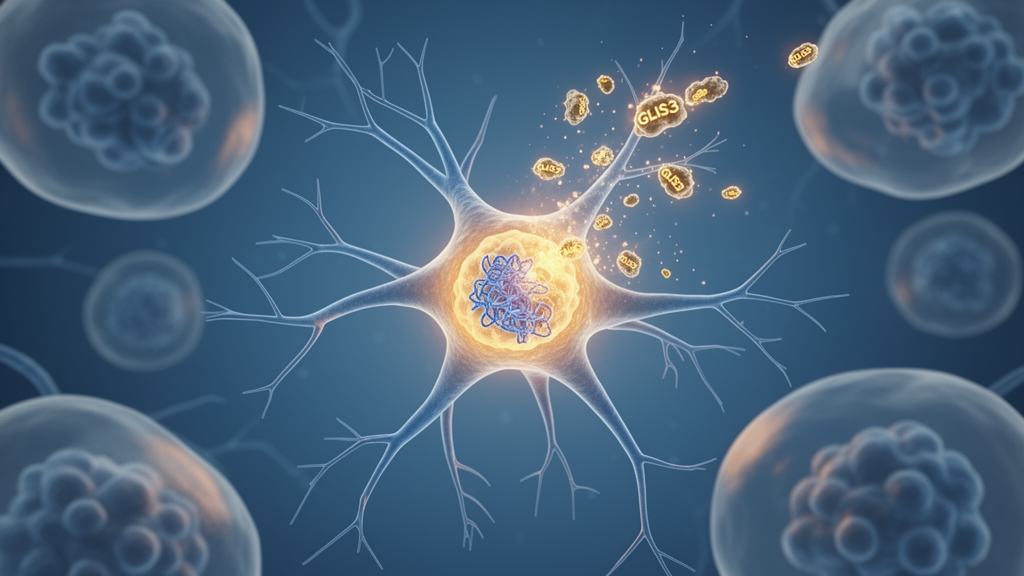
GLIS3 is a critical transcriptional regulator of astrocyte differentiation, according to research using mouse-derived astrocytes and human embryonic stem cells. The study found that disabling GLIS3 markedly impaired astrocyte differentiation, while restoring the factor rescued the induction of astrocyte-specific genes.

The findings place GLIS3 upstream of a core astrocyte transcriptional program in the experimental systems examined. Beyond controlling established differentiation markers, the factor influenced genes associated with glutamate and potassium homeostasis, synaptic transmission and synapse formation, linking astrocyte identity with several cellular processes important to brain function.

The researchers first assessed GLIS3 expression in mouse-derived astrocytes using reverse-transcription quantitative polymerase chain reaction and immunofluorescence. Both methods showed robust expression, establishing that the transcription factor is present in the cells used to investigate its relationship with astrocyte biology.

They then generated GLIS3-knockout human embryonic stem cells and examined the effects on astrocyte differentiation. Loss of GLIS3 markedly reduced the expression of canonical astrocyte markers. This result connected the molecular perturbation to a broad failure to induce astrocyte characteristics rather than to a change involving only one measured marker.

The investigators also tested whether restoring GLIS3 could reverse the differentiation defect. Introducing exogenous GLIS3 restored induction of astrocyte-specific genes, providing experimental evidence that GLIS3 is required for the astrocyte lineage program in this human stem-cell system.

Integrative transcriptomic and cistromic analyses indicated that GLIS3 directly controls part of the core astrocyte transcriptional program, including GFAP, SLC1A2, NFIA and ATF3. The analyses also showed that GLIS3 acts together with lineage-determining factors such as STAT3, NFIA and SOX9, placing the factor within a broader network of gene regulation.

Pathway analysis identified additional GLIS3-dependent genes, including SLC1A2, GRIA4, GRIA2, SLC38A2 and KCNJ10. The researchers associated these genes with glutamate and potassium homeostasis, synaptic transmission and synapse formation. These findings indicate that GLIS3 regulates astrocyte differentiation alongside genes involved in several neural signaling processes, although the experiments do not establish effects on neurological disease in patients.

The study is mechanistic and was conducted in mouse-derived astrocytes and human embryonic stem cells. It supports the conclusion that GLIS3 regulates astrocyte differentiation and gene expression in these systems, but it does not demonstrate that changing GLIS3 activity can prevent or reverse neurodegenerative disease in people. The authors identify GLIS3 as a potential therapeutic target for astrocyte-associated neurological disorders, a prospect that would require further validation.

Subject of Research: Experimental regulation of astrocyte differentiation and gene expression by GLIS3 in mouse-derived astrocytes and human embryonic stem cells.

Article Title: GLIS3 is a key transcriptional regulator of astrocyte differentiation in human neural stem cells

Article References: Pradhan, T., Kang, H. S., Jeon, K., Grimm, S. A., Park, K.-Y., Gruzdev, A., & Jetten, A. M. (2026). GLIS3 is a key transcriptional regulator of astrocyte differentiation in human neural stem cells. Cellular and Molecular Life Sciences. https://doi.org/10.1007/s00018-026-06482-w

Image Credits: AI Generated

DOI: 10.1007/s00018-026-06482-w

Keywords: GLIS3, astrocyte differentiation, human embryonic stem cells, transcription factor, gene regulation, neural homeostasis, glutamate homeostasis, potassium homeostasis, synaptic transmission, neurodegenerative disease, transcriptional, regulator

Cite Scienmag News

Juliet Wilcox. (October 21, 2026). GLIS3 regulates astrocyte differentiation in human stem cells. Scienmag. https://scienmag.com/glis3-regulates-astrocyte-differentiation-in-human-stem-cells/

Juliet Wilcox. "GLIS3 regulates astrocyte differentiation in human stem cells." Scienmag, 21 October 2026, https://scienmag.com/glis3-regulates-astrocyte-differentiation-in-human-stem-cells/. Accessed 21 October 2026.

Juliet Wilcox. "GLIS3 regulates astrocyte differentiation in human stem cells." Scienmag. October 21, 2026. https://scienmag.com/glis3-regulates-astrocyte-differentiation-in-human-stem-cells/


Tags: astrocyte differentiationastrocyte gene expression and glutamate homeostasisGene regulationgene regulation of astrocyte-specific markersGLIS3GLIS3 transcription factor in human astrocyte differentiationGLIS3's influence on synaptic transmission and formationglutamate homeostasishuman embryonic stem cellsimpact of GLIS3 knockout on neural cell fatemolecular mechanisms of glial cell maturationneural homeostasisneurodegenerative diseasepotassium homeostasisregulatorrescue of astrocyte development via GLISrole of GLIS3 in brain cell developmentstem cell-based models of astrocyte differentiationsynaptic transmissiontranscription factortranscriptionaltranscriptional regulation of brain support cells
Share26Tweet16
Previous Post

Upward Moves Link Elite Chinese Academics to Stronger Research Outcomes

Next Post

Hypothesis proposes auxiliary brain for severe stroke restoration

Related Posts

Fungal parasite selects against larger yellow dung flies
Biology

Fungal parasite selects against larger yellow dung flies

October 21, 2026
BioSIFTR infers gut microbiome functions from shallow sequencing
Biology

BioSIFTR infers gut microbiome functions from shallow sequencing

October 21, 2026
PRKAR2A Emerges as Candidate Spatial cAMP–PKA Router in TNBC
Biology

PRKAR2A Emerges as Candidate Spatial cAMP–PKA Router in TNBC

October 21, 2026
Molecular survey finds widespread Cryptosporidium and limited Giardia in Victorian pigs
Biology

Molecular survey finds widespread Cryptosporidium and limited Giardia in Victorian pigs

October 21, 2026
Gene architecture predicts isoform diversity across four genomes
Biology

Gene architecture predicts isoform diversity across four genomes

October 21, 2026
Efficacy of statistical and design interventions for improving reproducibility in biomedical research
Biology

Efficacy of statistical and design interventions for improving reproducibility in biomedical research

October 21, 2026
Next Post
Hypothesis proposes auxiliary brain for severe stroke restoration

Hypothesis proposes auxiliary brain for severe stroke restoration

  • Mothers who receive childcare support from maternal grandparents show more optimized

    Mothers who receive childcare support from maternal grandparents show more parental warmth, finds NTU Singapore study

    27656 shares
    Share 11059 Tweet 6912
  • University of Seville Breaks 120-Year-Old Mystery, Revises a Key Einstein Concept

    1061 shares
    Share 424 Tweet 265
  • Bee body mass, pathogens and local climate influence heat tolerance

    682 shares
    Share 273 Tweet 171
  • Researchers record first-ever images and data of a shark experiencing a boat strike

    546 shares
    Share 218 Tweet 137
  • Groundbreaking Clinical Trial Reveals Lubiprostone Enhances Kidney Function

    531 shares
    Share 212 Tweet 133
Science

Embark on a thrilling journey of discovery with Scienmag.com—your ultimate source for cutting-edge breakthroughs. Immerse yourself in a world where curiosity knows no limits and tomorrow’s possibilities become today’s reality!

RECENT NEWS

  • CMIP6 study projects hotter multi-day extremes in 54 Indian cities
  • Genetically elevated eosinophil counts linked to AMD in European cohorts
  • Hypothesis proposes auxiliary brain for severe stroke restoration
  • GLIS3 regulates astrocyte differentiation in human stem cells

Categories

  • Agriculture
  • Anthropology
  • Archaeology
  • Athmospheric
  • Biology
  • Biotechnology
  • Blog
  • Bussines
  • Cancer
  • Chemistry
  • Climate
  • Earth Science
  • Editorial Policy
  • Marine
  • Mathematics
  • Medicine
  • Pediatry
  • Policy
  • Psychology & Psychiatry
  • Science Education
  • Science News
  • Social Science
  • Space
  • Technology and Engineering

Subscribe to Blog via Email

Enter your email address to subscribe to this blog and receive notifications of new posts by email.

Join 5,150 other subscribers

© 2025 Scienmag - Science Magazine

Welcome Back!

Login to your account below

Forgotten Password?

Retrieve your password

Please enter your username or email address to reset your password.

Log In
No Result
View All Result
  • HOME
  • SCIENCE NEWS
  • CONTACT US

© 2025 Scienmag - Science Magazine

Discover more from Science

Subscribe now to keep reading and get access to the full archive.

Continue reading