


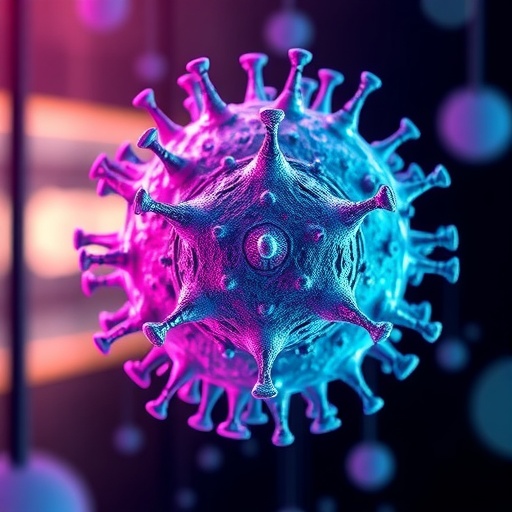
In an era where antibiotic-resistant bacterial infections are causing an alarming number of fatalities worldwide, a pioneering initiative at the Gladstone Institutes is forging a path toward harnessing the power of bacteriophages, or phages, for effective therapeutic interventions. These naturally occurring viruses, which specialize in infecting and destroying bacteria, have long been considered promising alternatives to antibiotics, especially when traditional treatments fail. However, the transition from promising biological agents to reliable clinical tools has been hindered by significant challenges, including variability in phage efficacy and the laborious trial-and-error approach required to match phages with bacterial infections.
Gladstone Institutes’ new project, supported by an initial $2 million grant from the National Institute of Allergy and Infectious Diseases—with the potential to increase funding up to $10 million over five years—aims to overcome these obstacles. This initiative, aptly named the Center for PhAIge Therapy, is designed to revolutionize phage therapy by integrating cutting-edge engineering techniques with advanced artificial intelligence (AI) models to develop precise, effective, and scalable treatments for antibiotic-resistant infections. By focusing on the notoriously difficult-to-treat ESKAPE pathogens, the Center is addressing some of the most pressing threats to contemporary medicine.
The ESKAPE pathogens—Enterococcus faecium, Staphylococcus aureus, Klebsiella pneumoniae, Acinetobacter baumannii, Pseudomonas aeruginosa, and Enterobacter species—are notorious for their ability to evade conventional antibiotics and rapidly adapt to new drug regimens through genetic exchange of resistance elements. These opportunistic pathogens not only constitute a major source of hospital-acquired infections but also present a growing challenge due to their increasing resistance profiles. The World Health Organization has classified them as critical priority pathogens, urging urgent research for novel therapeutic approaches.
Gladstone’s Center for PhAIge Therapy, led by investigator Seth Shipman, PhD, is a cornerstone of a tri-institutional network funded through the Centers for Accelerating Phage Therapy to Combat ESKAPE Pathogens (CAPT-CEP) program. This center’s scientific strategy involves combining high-throughput experimental platforms with sophisticated computational models to identify optimal phage-bacteria pairings. The goal is to move beyond the current empirical tactics to a predictive, rational design of phage therapies by generating large-scale datasets that elucidate the precise mechanisms of phage-bacterial interactions.
Fundamental to this approach is Gladstone’s recent technological breakthrough: precision genome editing tools that enable systematic engineering of phage genomes. By modifying specific genomic loci within phages, researchers can tailor phage infectivity and lytic activity to enhance therapeutic potential. The Center aims to leverage these tools along with AI algorithms to distill patterns of phage efficacy against various bacterial strains, ultimately facilitating the design of phage candidates with superior bactericidal capabilities against Klebsiella pneumoniae, a predominant and lethal ESKAPE pathogen responsible for a multitude of respiratory and bloodstream infections.
Complementing the genetic engineering work, the Center will also employ advanced phenotypic screening assays to dissect how individual phage components contribute to bacterial lysis and evasion of bacterial defense mechanisms. Such assays will provide critical insights into phage-host dynamics, informing both model refinement and phage optimization. This comprehensive experimental platform is designed to yield an unprecedented volume of data to feed machine learning algorithms, empowering models to predict phage effectiveness with clinical precision.
Moreover, the Center’s work extends into the realm of bacterium variability. Sukrit Silas, PhD, is characterizing the genetic and phenotypic diversity among Klebsiella pneumoniae strains to determine their differential susceptibility to various phage cocktails. By mapping this bacterial heterogeneity, the team aims to formulate phage combinations tailored to specific bacterial genotypes, thus maximizing therapeutic success rates and circumventing resistance development.
Integrated with these laboratory-based efforts is a computational analytics core led by Katie Pollard, PhD, who advances algorithms capable of evaluating compatibility between phage and bacterial strains, optimizing phage formulations for individualized treatments. The Center also benefits from Melanie Ott, MD, PhD, whose research involving human lung organoids offers a physiologically relevant context to study phage pharmacodynamics and therapeutic responses, bridging the gap between in vitro predictions and in vivo outcomes.
Together, this multidisciplinary team is constructing a synergistic feedback loop where iterative experiments inform AI model training, which in turn guides experimental design, accelerating progress in phage therapy development. This cycle enables the rapid identification and refinement of phage candidates, a paradigm shift from prior approaches that heavily relied on serendipity and small-scale case studies.
The broader CAPT-CEP initiative also includes complementary centers—such as the Center for Phage Pharmaceuticals at Stanford University, focusing on phage delivery mechanisms to the lung, and the University of Pittsburgh’s CAPT center, dedicated to developing assays for designing optimal dosing regimens. This collaborative network facilitates the sharing of assays, datasets, and expertise, fostering a unified effort to translate phage therapy into mainstream clinical practice.
Antibiotic-resistant infections are an escalating global health crisis, with an estimated 5 million deaths linked annually to resistant bacterial pathogens. Vulnerable populations, including immunocompromised cancer patients and hospitalized individuals reliant on invasive devices, are particularly affected. By harnessing the evolutionary specificity of phages and augmenting it with genome engineering and AI, the Center for PhAIge Therapy holds promise for delivering potent, tailored, and scalable therapeutic options against these formidable superbugs.
The project is supported by a five-year grant totaling up to $10,239,795 from the National Institute of Allergy and Infectious Diseases under the grant number P01AI195327, reflecting a significant federal investment in advancing bacteriophage therapeutics. Situated in San Francisco’s innovation hub, Gladstone Institutes exemplifies a research model that emphasizes visionary science, cross-disciplinary integration, and translational potential, positioning the Center for PhAIge Therapy at the forefront of combating antibiotic resistance.
Cite Scienmag News
Denise Maddox. (June 2, 2026). Gladstone Unveils Center for PhAIge Therapy to Combat Drug-Resistant Infections Using AI. Scienmag. https://scienmag.com/gladstone-unveils-center-for-phaige-therapy-to-combat-drug-resistant-infections-using-ai/
Denise Maddox. "Gladstone Unveils Center for PhAIge Therapy to Combat Drug-Resistant Infections Using AI." Scienmag, 2 June 2026, https://scienmag.com/gladstone-unveils-center-for-phaige-therapy-to-combat-drug-resistant-infections-using-ai/. Accessed 4 September 2026.
Denise Maddox. "Gladstone Unveils Center for PhAIge Therapy to Combat Drug-Resistant Infections Using AI." Scienmag. June 2, 2026. https://scienmag.com/gladstone-unveils-center-for-phaige-therapy-to-combat-drug-resistant-infections-using-ai/


