

Thursday, September 3, 2026
Science
No Result
View All Result
  • Login
  • HOME
  • SCIENCE NEWS
  • CONTACT US
  • HOME
  • SCIENCE NEWS
  • CONTACT US
No Result
View All Result
Scienmag
No Result
View All Result
Home Science News Technology and Engineering

Microglial Maturation Across Species Guides Large-Animal Perinatal Brain Injury Research

August 3, 2026
in Technology and Engineering
Cassandra Pierce
By Cassandra Pierce Scienmag Editorial Profile - Systems Neuroscience
Reading Time: 4 mins read
0
Microglial Maturation Across Species Guides Large-Animal Perinatal Brain Injury Research

Microglial Maturation Across Species Guides Large-Animal Perinatal Brain Injury Research

65
SHARES
587
VIEWS
Share on FacebookShare on Twitter
ADVERTISEMENT

Microglia, the brain’s resident immune cells, may hold one of the most important clues for understanding why an injury that occurs around birth can produce radically different outcomes in humans, mice and larger mammals. A new study published in Pediatric Research presents a comparative framework for tracking how these cells mature across species, offering researchers a way to judge whether animal models truly reproduce the biology of the developing human brain.

The work, led by Shearer, Antonson, Van Steenwinckel and colleagues, focuses on a problem that has complicated neonatal neuroscience for decades. Perinatal brain injury—including damage associated with oxygen deprivation, inflammation, infection or disrupted blood flow—cannot be studied in humans with the same experimental precision available in animals. Mice are widely used because they are practical and genetically tractable, while larger animals can more closely resemble human brain development in certain respects. Yet similarities in anatomy do not automatically mean that immune cells are at the same developmental stage.

Microglia are central to this challenge. Often described as the brain’s immune sentinels, they constantly survey neural tissue, remove damaged material and help shape connections between neurons. During early development, however, microglia are not simply defensive cells waiting for injury. They participate in the formation and refinement of neural circuits, regulate inflammatory signals, influence the survival of immature cells and help coordinate the transition from a developing to a mature nervous system. Their behavior therefore depends strongly on age and developmental context.

The new reference aims to make that context visible. Rather than treating “newborn,” “infant” or “juvenile” as interchangeable labels across species, the study examines microglial maturation as a biological process that can be compared across human and mouse development and then used to interpret large-animal models. This distinction is crucial because the same chronological age can represent very different stages of brain maturation in different species. A mouse that is described as neonatal may not possess microglia operating in a state equivalent to those in a human newborn.

At the cellular level, maturation can involve changes in morphology, gene activity, surface markers, metabolism and responses to environmental signals. Immature microglia may display molecular programs associated with construction and growth, while later stages are increasingly linked to surveillance, maintenance and coordinated responses to damage. After an injury, these programs can shift again. Cells may become activated, alter their shape, change their gene expression and release signaling molecules that affect neurons, blood vessels and other glial cells. Interpreting such changes requires knowing whether they reflect injury—or simply normal development.

That issue has direct consequences for translational research. An experimental treatment may appear to reduce inflammation in a mouse model while acting on a developmental pathway that is not dominant in human infants. Conversely, a response that looks excessive in an animal may represent a normal stage of immune maturation rather than pathological activation. By placing microglial states on a cross-species developmental map, the researchers seek to reduce these mismatches and help investigators select models whose biology is aligned with the human condition being studied.

Large-animal models are particularly important because their brains, body sizes, gestational patterns and postnatal development can provide intermediate or complementary perspectives between rodents and people. They are also more suitable for some forms of imaging, monitoring and clinically relevant intervention. But their value depends on careful biological benchmarking. The study’s framework is designed to help researchers ask a more precise question than whether an animal is simply “similar” to a human: which aspects of microglial maturation are shared, which are different and at what developmental point do those differences matter most?

The implications extend beyond perinatal brain injury. Microglial development is increasingly linked to neurodevelopmental disorders, epilepsy, white-matter damage and later-life neurological disease. A clearer understanding of how these cells mature could improve the interpretation of early inflammatory signals and reveal why the timing of an insult often matters as much as its severity. It may also support more rational testing of therapies intended to control harmful inflammation without blocking the beneficial immune functions needed for repair and brain development.

The study does not eliminate the complexity of translating animal research into clinical care, but it offers a practical foundation for doing so more intelligently. Its central message is that developmental biology must be treated as a measurement, not an assumption. As neonatal medicine searches for treatments that protect the vulnerable brain, comparing microglia across species may provide the biological “translation key” needed to distinguish a promising model from a misleading one. The resulting reference could become an important resource for researchers investigating how early-life injury reshapes the brain—and how those changes might be prevented.

Subject of Research: Comparative maturation of microglia in humans and mice, with implications for interpreting large-animal models of perinatal brain injury.

Article Title: Microglial maturation across human and mouse as a reference for interpreting large-animal models of perinatal brain injury

Article References: Shearer, I. K., Antonson, A., Van Steenwinckel, J., Gressens, P., Tolcos, M., Walker, D., Spencer, S. J., Johnson, R., & Fleiss, B. (2026). Microglial maturation across human and mouse as a reference for interpreting large-animal models of perinatal brain injury. Pediatric Research. https://doi.org/10.1038/s41390-026-05355-z

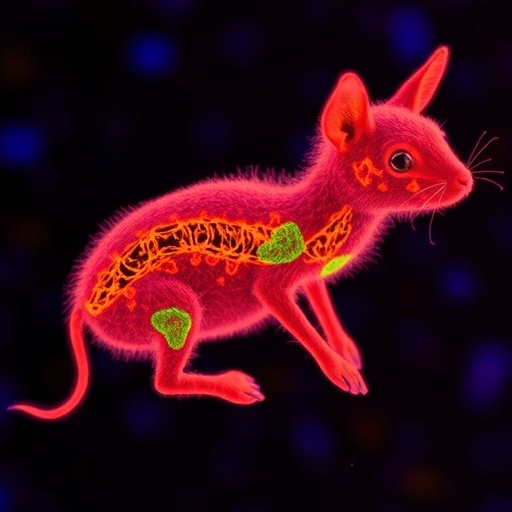
Image Credits: AI Generated

DOI: 10.1038/s41390-026-05355-z

Keywords: microglia, brain development, perinatal brain injury, neuroinflammation, human-mouse comparison, large-animal models, neonatal neuroscience, translational medicine, pediatric research

Cite Scienmag News

Cassandra Pierce. (August 3, 2026). Microglial Maturation Across Species Guides Large-Animal Perinatal Brain Injury Research. Scienmag. https://scienmag.com/microglial-maturation-across-species-guides-large-animal-perinatal-brain-injury-research/


Cassandra Pierce. "Microglial Maturation Across Species Guides Large-Animal Perinatal Brain Injury Research." Scienmag, 3 August 2026, https://scienmag.com/microglial-maturation-across-species-guides-large-animal-perinatal-brain-injury-research/. Accessed 3 September 2026.

Cassandra Pierce. "Microglial Maturation Across Species Guides Large-Animal Perinatal Brain Injury Research." Scienmag. August 3, 2026. https://scienmag.com/microglial-maturation-across-species-guides-large-animal-perinatal-brain-injury-research/

Tags: animal models in neurosciencebrain immune cell developmentcomparative neurodevelopmentlarge-animal brain developmentmicroglia and neural connectivitymicroglia function across speciesmicroglia in neuroinflammationMicroglial maturationneonatal brain injury researchneonatal neuroscience challengesperinatal brain injuryspecies-specific immune responses
Share26Tweet16
Previous Post

New CAKUT calculator predicts in-hospital death risk for newborns in intensive care

Next Post

Experts Set Minimum Clinical Metadata and Outcome Standards for Microbiome Studies

Related Posts

Functionalized graphene slows asphalt aging via matrix-specific anti-aging mechanisms
Technology and Engineering

Functionalized graphene slows asphalt aging via matrix-specific anti-aging mechanisms

September 3, 2026
Mechanical properties of eggshell and paper-based epoxy hybrid bio-composites: a study toward biomedical applications
Technology and Engineering

Mechanical properties of eggshell and paper-based epoxy hybrid bio-composites: a study toward biomedical applications

September 3, 2026
Helical magnetic field triggers ferromagnetic phase transition in DPPH
Technology and Engineering

Helical magnetic field triggers ferromagnetic phase transition in DPPH

September 3, 2026
Microwave Sintering Rewrites the Rules for Making Stronger Metals Faster
Technology and Engineering

Microwave Sintering Rewrites the Rules for Making Stronger Metals Faster

September 3, 2026
Design, fabrication and characterization of a wearable Fiber Bragg grating sensor for cardiorespiratory monitoring using finger plethysmography
Technology and Engineering

Design, fabrication and characterization of a wearable Fiber Bragg grating sensor for cardiorespiratory monitoring using finger plethysmography

September 3, 2026
KAIST opens the era of industrial-scale microbial foods, proposing growth strategies for the next-generation protein market
Technology and Engineering

KAIST opens the era of industrial-scale microbial foods, proposing growth strategies for the next-generation protein market

September 3, 2026
Next Post
Experts Set Minimum Clinical Metadata and Outcome Standards for Microbiome Studies

Experts Set Minimum Clinical Metadata and Outcome Standards for Microbiome Studies

  • Mothers who receive childcare support from maternal grandparents show more optimized

    Mothers who receive childcare support from maternal grandparents show more parental warmth, finds NTU Singapore study

    27656 shares
    Share 11059 Tweet 6912
  • University of Seville Breaks 120-Year-Old Mystery, Revises a Key Einstein Concept

    1061 shares
    Share 424 Tweet 265
  • Bee body mass, pathogens and local climate influence heat tolerance

    682 shares
    Share 273 Tweet 171
  • Researchers record first-ever images and data of a shark experiencing a boat strike

    546 shares
    Share 218 Tweet 137
  • Groundbreaking Clinical Trial Reveals Lubiprostone Enhances Kidney Function

    531 shares
    Share 212 Tweet 133
Science

Embark on a thrilling journey of discovery with Scienmag.com—your ultimate source for cutting-edge breakthroughs. Immerse yourself in a world where curiosity knows no limits and tomorrow’s possibilities become today’s reality!

RECENT NEWS

  • Panda-livestock interface reveals divergent virus-sharing patterns
  • Sugarcane Waste Transformed Into Biodegradable Films to Rival Plastic Packaging
  • Fecal S100B protein shows promise for assessing C. difficile severity
  • New Mid-Late Maturing Sugarcane Variety CoH 179 Joins India’s Breeding Pipeline

Categories

  • Agriculture
  • Anthropology
  • Archaeology
  • Athmospheric
  • Biology
  • Biotechnology
  • Blog
  • Bussines
  • Cancer
  • Chemistry
  • Climate
  • Earth Science
  • Editorial Policy
  • Marine
  • Mathematics
  • Medicine
  • Pediatry
  • Policy
  • Psychology & Psychiatry
  • Science Education
  • Social Science
  • Space
  • Technology and Engineering

Subscribe to Blog via Email

Enter your email address to subscribe to this blog and receive notifications of new posts by email.

Join 5,151 other subscribers

© 2025 Scienmag - Science Magazine

Welcome Back!

Login to your account below

Forgotten Password?

Retrieve your password

Please enter your username or email address to reset your password.

Log In
No Result
View All Result
  • HOME
  • SCIENCE NEWS
  • CONTACT US

© 2025 Scienmag - Science Magazine

Discover more from Science

Subscribe now to keep reading and get access to the full archive.

Continue reading