


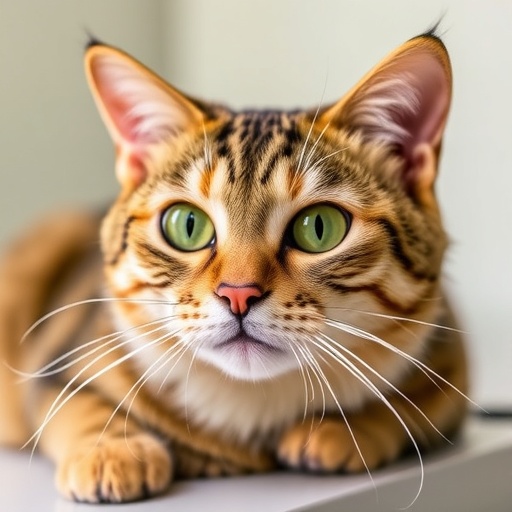
In the evolving landscape of oncological research, domestic cats are emerging from their traditional role as beloved companions to take on a pivotal part as natural models in the study of viral-induced cancer mechanisms. Spearheaded by Professor Julia Beatty, Chair Professor of Veterinary Medicine and Infectious Diseases at the Jockey Club College of Veterinary Medicine and Life Sciences, City University of Hong Kong (CityUHK), an illuminating review has been published in the renowned journal Nature Reviews Cancer. The article, entitled “Cat viruses as windows into human oncogenesis,” presents groundbreaking insights into how feline tumor viruses mirror their human counterparts, providing unparalleled opportunities to deepen our understanding of viral carcinogenesis within a comparative oncology framework.
Hepatocellular carcinoma (HCC), a leading cause of cancer-related mortality worldwide, has a well-established association with chronic hepatitis B virus (HBV) infection in humans. Despite advances in vaccination and antiviral therapeutics, the global incidence of HBV-related HCC continues to escalate, representing a significant health burden. A key obstacle hindering progress in deciphering the precise oncogenic pathways of HBV lies in the absence of animal models that faithfully recapitulate the natural disease progression observed in humans. Conventional laboratory animals such as mice, while invaluable in many research arenas, lack natural susceptibility to HBV infection, limiting their ability to mimic the intricate pathophysiology of human viral hepatocarcinogenesis.
Professor Beatty’s research group has identified a remarkable parallel in the domestic cat hepatitis B virus (DCHBV), which is closely linked with feline HCC in naturally infected cats. This viral homologue exhibits oncogenic dynamics comparable to human HBV, positioning the domestic cat as a uniquely relevant biological model. This discovery catalyzes a paradigm shift in viral oncology, inviting researchers to harness the complex, naturally occurring infections in cats to unlock novel perspectives on tumor formation driven by viral agents.
One of the most compelling facets of using domestic cats in comparative oncology lies in their cohabitation with humans. Cats share highly diverse genetic backgrounds and are exposed to similar environmental factors, which better replicate the multifactorial interactions seen in human populations. This inherent biological and ecological resemblance enables a close examination of viral-host interactions under conditions far more representative of natural disease states than artificially induced laboratory models. Consequently, studies involving naturally infected cats can bridge the translational gap, providing data with higher clinical relevance.
Cats display a unique susceptibility to a range of viral homologues associated with human cancers, a fact that endows them with distinct advantages in the study of oncogenic viruses. These include certain retroviruses and herpesviruses that have been implicated in human tumorigenesis. Their natural infection status coupled with spontaneous disease progression offers a rich resource for dissecting viral oncogenic mechanisms and host immune responses, potentially revealing viral strategies for evading immune surveillance and driving malignant transformation.
The integration of feline viral oncology into a One Health approach exemplifies the bidirectional benefits of cross-species infectious disease research. By leveraging insights gleaned from feline viral infections and tumor biology, researchers can accelerate the development of innovative therapies and preventative measures that concurrently enhance feline and human health. This translational synergy underscores the importance of interdisciplinary collaboration, uniting veterinary science, human medicine, virology, and oncology towards shared goals.
Professor Beatty advocates for the formation of international comparative oncology networks to capitalize on this critical nascent field. She emphasizes the imperative for standardized governance protocols and robust data-sharing infrastructures, facilitating collaborative multicenter studies and enabling the pooling of high-quality clinical samples. Such global alliances would enhance surveillance of feline viral oncogenesis, foster clinical case recruitment, and expand partnerships with pharmaceutical and biotech industries, thereby accelerating the translation of research findings into practical health interventions.
Training the next generation of veterinary clinical scientists with a broad interdisciplinary vision is central to driving viral oncology forward. These experts will be instrumental in navigating the complexities of comparative oncology, integrating molecular biology, genomics, epidemiology, and clinical veterinary practice. As Professor Beatty notes, nurturing such talent is indispensable for fostering innovation and sustaining progress in this interdisciplinary arena.
Effective communication and engagement with the public, policymakers, funding bodies, and professional organizations form an essential pillar of this initiative. Transparent dialogue ensures that evolving scientific evidence informs policy decisions, secures necessary resources, and promotes responsible adoption of new diagnostic and therapeutic techniques for both pets and humans. This cooperative approach serves to amplify the societal impact of research, aligning scientific advancement with public health priorities.
CityUHK’s sustained commitment to the One Health paradigm is demonstrated through its strategic focus on interdisciplinary collaboration and comparative medicine. By addressing global health challenges through integrated human-animal-environment research, the institution exemplifies how academic leadership can foster innovative solutions. Utilizing the domestic cat as a model for viral oncogenesis constitutes a powerful embodiment of this approach, combining basic science and clinical application to generate mutual benefits.
The broad implications of this research extend beyond feline health, potentially transforming our understanding of viral carcinogenesis in humans. Developing in-depth knowledge about how DCHBV drives tumorigenesis may unlock novel molecular targets for therapy and prevention applicable to HBV-associated human HCC. More broadly, insights from feline viral oncology may illuminate general principles of virus-induced malignancies, contributing to the global fight against cancer.
In summary, domestic cats harboring natural viral infections represent a promising but underappreciated platform to deepen our understanding of viral oncogenesis. Professor Julia Beatty’s pioneering work opens a new frontier in comparative oncology, harnessing the unique biological characteristics of cats to unravel the complexities of virus-driven cancer evolution. The future of viral cancer research lies in such interdisciplinary, cross-species collaborations that hold the promise of breakthroughs benefiting both animal and human health in profound ways.
News Publication Date: 23-Jan-2026
Web References: http://dx.doi.org/10.1038/s41568-026-00909-z
References: The authors declare that they have no competing interests.
Cite Scienmag News
Nathaniel Bowman. (April 13, 2026). From Felines to Folks: CityUHK Propels Cancer Research with One Health Approach. Scienmag. https://scienmag.com/from-felines-to-folks-cityuhk-propels-cancer-research-with-one-health-approach/
Nathaniel Bowman. "From Felines to Folks: CityUHK Propels Cancer Research with One Health Approach." Scienmag, 13 April 2026, https://scienmag.com/from-felines-to-folks-cityuhk-propels-cancer-research-with-one-health-approach/. Accessed 3 September 2026.
Nathaniel Bowman. "From Felines to Folks: CityUHK Propels Cancer Research with One Health Approach." Scienmag. April 13, 2026. https://scienmag.com/from-felines-to-folks-cityuhk-propels-cancer-research-with-one-health-approach/


