


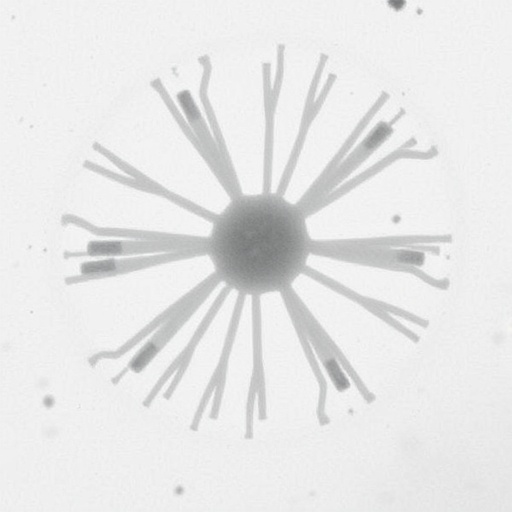
Scanning electron microscopy has long offered microbiologists an exceptionally detailed view of bacterial surfaces, but the instrument’s vacuum environment creates a fundamental challenge: biological specimens must be dry before they can be examined. Water-rich cells cannot simply be placed inside the microscope, because liquid would evaporate rapidly under vacuum and interfere with imaging. As a result, researchers traditionally prepare microorganisms through a sequence of chemical fixation, dehydration, solvent exchange, and drying. Although these procedures make samples compatible with SEM, they can also alter the structures scientists are trying to observe. Shrinkage, cracking, collapse, and the extraction of lipids or soluble cellular components may produce images that reflect preparation damage as much as native biology.
A collaborative team from Shujitsu University, Kobe University, the National Institute for Physiological Sciences, Shimane University, the Institute for Evolutionary Ecology of the National Academy of Sciences of Ukraine, the Institute of Physics of the National Academy of Sciences of Ukraine, and Pusan National University has now demonstrated a comparatively simple alternative known as Water Freeze-Drying, or WFD. The method is designed to remove water from microbial specimens without first replacing it with ethanol, t-butyl alcohol, or another organic solvent. The researchers applied WFD to bacterial samples and reported that it preserved surface continuity and morphological details that were substantially disrupted by a conventional t-butyl alcohol freeze-drying procedure. Their findings, published in Frontiers in Microbiology, suggest that the approach could make high-fidelity SEM preparation more accessible to laboratories that do not possess specialized rapid-freezing systems.
The WFD workflow begins by immobilizing microorganisms on a membrane filter. The filter is then rinsed with ultrapure water to remove residual salts and other soluble materials that could form crystals or deposits during drying. Instead of chemically dehydrating the cells, the researchers freeze the hydrated specimen directly. A copper block cooled to approximately minus 80 degrees Celsius is gently brought into contact with the sample, rapidly drawing away heat and initiating freezing. The frozen membrane is mounted on a pre-cooled steel support stage and transferred to a freeze-dryer while its temperature is maintained at a low level. Inside the dryer, ice is removed by sublimation, a physical process in which frozen water changes directly from solid ice to vapor under reduced pressure, bypassing the liquid phase.
Avoiding the liquid phase is technically important because melting and evaporation can generate powerful forces at the interface between water and delicate cellular structures. In conventional preparation, ethanol dehydration gradually replaces water, after which an organic solvent such as t-butyl alcohol may be frozen and sublimated. Every exchange step can expose cells to osmotic stress, solvent extraction, interfacial tension, and mechanical distortion. WFD removes ice directly from the frozen state, potentially reducing those stresses and limiting the movement of soluble cellular components. It also eliminates the need for a solvent-replacement stage. The method does not guarantee that every feature remains perfectly unchanged, since freezing itself can create artifacts if ice crystals grow within or around cells, but the researchers argue that controlled contact freezing and prompt maintenance of low temperatures can reduce such damage.
To test the consequences of the two preparation strategies, the team examined Escherichia coli specimens processed either by the conventional t-butyl alcohol freeze-drying method or by WFD. The differences were visible at the scale of the bacterial layer. Conventional samples showed conspicuous cracking and extensive shrinkage, with areas of the cell population appearing disrupted or compressed. In contrast, WFD-treated specimens retained a largely continuous and intact appearance. This distinction matters for SEM studies of microbial communities because damage that occurs across a whole layer can obscure cell-to-cell spacing, surface attachments, and the organization of extracellular material. A sample that looks intact at low magnification also provides a more reliable foundation for interpreting details observed at higher magnification.
The researchers also identified a difference in the appearance of the cell poles. Cells prepared using the conventional procedure generally displayed rounded, dome-shaped ends. WFD specimens, however, contained a heterogeneous mixture: some cells had rounded poles, while others showed sharply truncated, relatively flat ends. The observation raises the possibility that solvent-based dehydration may make bacterial poles appear more uniform than they are in the hydrated state. Cell poles are not merely geometric endpoints. Their architecture can be influenced by growth stage, division history, envelope remodeling, mechanical stress, and physiological transitions. If preparation-induced rounding masks these variations, conventional SEM images may lead researchers to underestimate the range of structures present in a bacterial population.
The team is cautious about interpreting the flat poles as unquestionably native features. WFD may itself introduce changes, and the biological significance of the different pole morphologies remains unresolved. Freezing rate, the thickness of the water layer, the distribution of cells on the filter, and the conditions used during sublimation can all influence the final specimen. Ice crystal formation is a particular concern because crystals can displace membranes or deform the cell envelope before the water is removed. For that reason, the authors present WFD not as an artifact-free replacement for every existing technique, but as a preparation strategy that may preserve certain morphological states more effectively than solvent-based dehydration. Correlative studies using complementary imaging methods will be needed to determine which features are consistently retained.
One of the most practical findings is that WFD does not require an instrument built exclusively for electron microscopy. The researchers confirmed that the procedure can be performed with a general-purpose laboratory freeze-dryer as well as with a dedicated freeze-drying apparatus. This compatibility could lower the financial and technical barriers associated with high-resolution SEM. Laboratories already equipped with a suitable freeze-dryer may be able to adapt the workflow without investing in a specialized rapid-freezing platform, although careful control of temperature, sample transfer, vacuum conditions, and sublimation time remains essential. The simplicity of the approach may also make it useful for comparative experiments in which large numbers of microbial specimens must be prepared under consistent conditions.
The potential applications extend beyond visualizing E. coli. Researchers could use WFD to examine antimicrobial-induced damage, changes in cell-envelope architecture, microbial attachment to surfaces, and the three-dimensional organization of biofilms. Preserving surface structures with fewer preparation-related distortions could be especially valuable when studying bacteria exposed to antibiotics, disinfectants, nanoparticles, or environmental stresses. The method may also help investigators distinguish genuine biological heterogeneity from uniformity created by chemical processing. At the same time, reliable use will require standardized protocols and direct comparisons with cryogenic SEM, transmission electron microscopy, atomic force microscopy, and other approaches capable of testing whether observed structures are native. By showing that water can be removed from frozen bacterial specimens without organic-solvent replacement, the study offers a technically accessible route toward more faithful microbial imaging while highlighting the need for continued validation.
News Publication Date: 18-Aug-2026
Web References: https://doi.org/10.3389/fmicb.2026.1870866
References: Frontiers in Microbiology, DOI: 10.3389/fmicb.2026.1870866
Keywords
Water Freeze-Drying; Scanning Electron Microscopy; SEM; Escherichia coli; Bacteria; Microorganism Morphology; Sample Preparation; Cell Biology; Freeze-Drying; Electron Microscopy
Cite Scienmag News
Morgan Morrow. (August 18, 2026). Freeze-Drying Method Reveals Bacterial Ultrastructure in Scanning Electron Microscopy. Scienmag. https://scienmag.com/freeze-drying-method-reveals-bacterial-ultrastructure-in-scanning-electron-microscopy/
Morgan Morrow. "Freeze-Drying Method Reveals Bacterial Ultrastructure in Scanning Electron Microscopy." Scienmag, 18 August 2026, https://scienmag.com/freeze-drying-method-reveals-bacterial-ultrastructure-in-scanning-electron-microscopy/. Accessed 5 September 2026.
Morgan Morrow. "Freeze-Drying Method Reveals Bacterial Ultrastructure in Scanning Electron Microscopy." Scienmag. August 18, 2026. https://scienmag.com/freeze-drying-method-reveals-bacterial-ultrastructure-in-scanning-electron-microscopy/


