


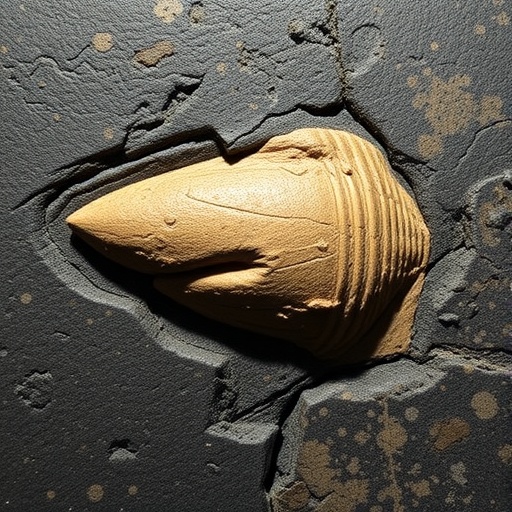
For thousands of years before industrial fishing transformed the world’s oceans, Pacific coral reefs supported vastly more sharks than comparable reefs in the Caribbean. A new study suggests that this striking difference was not created by modern human exploitation alone. Instead, the natural productivity of the surrounding ocean appears to have established fundamentally different carrying capacities for reef shark communities long before intensive fishing began. The research, based on thousands of fossilized shark scales preserved in reef sediments, offers one of the clearest reconstructions yet of what healthy shark populations looked like before large-scale human disturbance. It also challenges the idea that a single global benchmark can define a “recovered” shark population. In some regions, historical abundance was naturally high; in others, shark numbers may always have been more limited by food availability and oceanographic conditions.
The study, led by Erin Dillon and colleagues, examines reef shark communities that lived around Panama during the past 7,000 years. Panama provides a rare natural comparison because its Pacific and Caribbean coasts are geographically close but environmentally very different. The two regions share many shark species, yet their waters differ sharply in nutrient supply, primary productivity and historical human pressure. By comparing ancient sediments dating from approximately 7,000 to 3,000 years ago with sediments deposited during the past century, the researchers reconstructed both natural shark baselines and recent population changes. This approach helps solve a major problem in marine conservation: modern surveys often begin after decades or centuries of decline, making today’s depleted ecosystems appear normal. Fossil evidence can reveal the abundance that existed before those losses occurred.
The key evidence comes from dermal denticles, tiny tooth-like scales embedded in shark skin. Unlike the large teeth that are commonly associated with fossil sharks, denticles are produced across the entire body and differ in shape according to a shark’s body form, swimming style and habitat. Fast-swimming pelagic sharks, for example, possess denticle characteristics associated with reducing drag, while bottom-associated species may have scales adapted to a different hydrodynamic environment. When sharks die, their denticles can become concentrated in coral reef sediments, where they may remain preserved for thousands of years. The researchers extracted and identified these microscopic remains, using their abundance and morphology as clues to the composition and size of ancient shark communities. Because the number of denticles deposited in reef sediments closely tracks the number of sharks using those habitats, the fossils function as a biological archive of past abundance.
The ancient record revealed a dramatic ecological contrast. Before intensive commercial fishing, Pacific reefs in Panama supported approximately 20 times more sharks than Caribbean reefs. This difference existed thousands of years ago, when modern fishing fleets, industrial gear and global seafood markets were absent. The result indicates that productivity, rather than human pressure alone, played a decisive role in determining how many sharks each reef system could sustain. The Pacific coast of Panama experiences strong seasonal upwelling, a process in which winds and ocean circulation bring cold, nutrient-rich water toward the surface. These nutrients stimulate phytoplankton growth, supporting a larger food web that can ultimately provide more energy for predators such as sharks. The Caribbean coast lacks an equivalent level of seasonal nutrient enrichment and is therefore naturally less productive.
The study also shows that the ecological gap between the two regions has become far wider in the modern era. Since the period represented by the ancient sediments, Caribbean shark populations have declined by roughly 75 percent, with particularly severe losses among fast-swimming pelagic species. By contrast, shark populations on the Pacific coast have remained comparatively stable, even though Pacific sharks experienced greater historical fishing pressure. The researchers estimate that modern Pacific reefs now support about 100 times more sharks than comparable Caribbean reefs. That ratio is not simply a measure of different fishing histories. It reflects the combination of a naturally larger Pacific baseline and a much steeper Caribbean decline. The findings suggest that the same level of human exploitation can produce very different outcomes depending on the productivity and resilience of the ecosystem being exploited.
The apparent resilience of Pacific shark communities may be linked to the greater energy flowing through their food webs. In productive waters, prey populations can be larger and replenish more rapidly, potentially allowing predators to withstand some level of removal without suffering immediate collapse. This does not mean that Pacific sharks are protected from overfishing or that their populations are secure. Rather, it suggests that ecological conditions may give them a greater capacity to absorb disturbance or recover after declines. In less productive Caribbean waters, even moderate losses may represent a larger fraction of the available predator population and may be followed by slower recovery. The distinction is important because conservation models that ignore regional productivity could overestimate the number of sharks an ecosystem can support or misinterpret a naturally low baseline as evidence of severe human-driven depletion.
Fossil denticles also provide information that conventional fishery records cannot. Written catch records and underwater surveys generally cover only a small portion of the time during which humans have affected marine ecosystems. In many coastal regions, fishing pressure began centuries ago, long before scientists started counting sharks. As a result, historical surveys may already describe populations that have been substantially reduced. Sedimentary archives extend the timeline backward and allow researchers to separate long-standing ecological differences from recent changes. The technique can also distinguish broad groups of sharks through the microscopic structure of their denticles, helping reveal whether particular ecological types, such as pelagic hunters, reef-associated species or bottom-dwelling forms, have changed disproportionately over time.
The results carry direct implications for conservation planning. Restoration targets are often based on comparisons with a nearby reef, a regional average or the best population measurements available from recent decades. But the study indicates that such comparisons can be misleading when ecosystems differ in nutrient supply and food-web structure. A target appropriate for a highly productive Pacific reef may be unrealistic for a less productive Caribbean reef, while a low target based on today’s Caribbean abundance could quietly institutionalize a severe level of depletion. Effective recovery plans should therefore combine fossil baselines with modern ecological data, including productivity, prey availability, habitat quality and fishing intensity. In practical terms, managers may need region-specific goals that recognize both the natural limits of an ecosystem and the extent to which its current shark population has fallen below its historical potential.
The research arrives as reef sharks face mounting pressure worldwide. Sharks are captured intentionally for their meat and fins, caught incidentally in other fisheries and affected by habitat degradation, climate change and the loss of prey. Their disappearance can alter reef food webs because sharks influence the behavior, distribution and abundance of other predators and prey. By showing that Pacific and Caribbean reefs began with profoundly different shark communities, Dillon and colleagues provide a more precise framework for understanding those losses. The fossil record does not offer a single universal number for what a healthy reef should contain. Instead, it reveals that shark conservation must be rooted in the history and productivity of each ecosystem. The microscopic scales left behind by ancient sharks may therefore become a powerful tool for setting realistic recovery goals—and for exposing just how much has been lost where modern reefs now appear deceptively quiet.
News Publication Date: 13-Aug-2026
Web References: https://doi.org/10.1126/science.aec2144
References: Dillon et al., “Fossil denticles reveal how ocean productivity shapes shark baselines and recovery potential,” Science.
Cite Scienmag News
Violet Maxwell. (August 13, 2026). Fossil shark scales show how ocean productivity shaped ancient shark populations. Scienmag. https://scienmag.com/fossil-shark-scales-show-how-ocean-productivity-shaped-ancient-shark-populations/
Violet Maxwell. "Fossil shark scales show how ocean productivity shaped ancient shark populations." Scienmag, 13 August 2026, https://scienmag.com/fossil-shark-scales-show-how-ocean-productivity-shaped-ancient-shark-populations/. Accessed 4 September 2026.
Violet Maxwell. "Fossil shark scales show how ocean productivity shaped ancient shark populations." Scienmag. August 13, 2026. https://scienmag.com/fossil-shark-scales-show-how-ocean-productivity-shaped-ancient-shark-populations/


