Wednesday, October 28, 2026
Science
No Result
View All Result
  • Login
  • HOME
  • SCIENCE NEWS
  • CONTACT US
  • HOME
  • SCIENCE NEWS
  • CONTACT US
No Result
View All Result
Scienmag
No Result
View All Result
Home Science News Chemistry

Fluorescence derivatization enables sensitive delafloxacin measurement in drugs and plasma

October 28, 2026
in Chemistry
Bethany Barker
By Bethany Barker Scienmag Editorial Profile - Catalysis
Reading Time: 3 mins read
0
Fluorescence derivatization enables sensitive delafloxacin measurement in drugs and plasma

Fluorescence derivatization enables sensitive delafloxacin measurement in drugs and plasma

65
SHARES
587
VIEWS
Share on FacebookShare on Twitter
ADVERTISEMENT

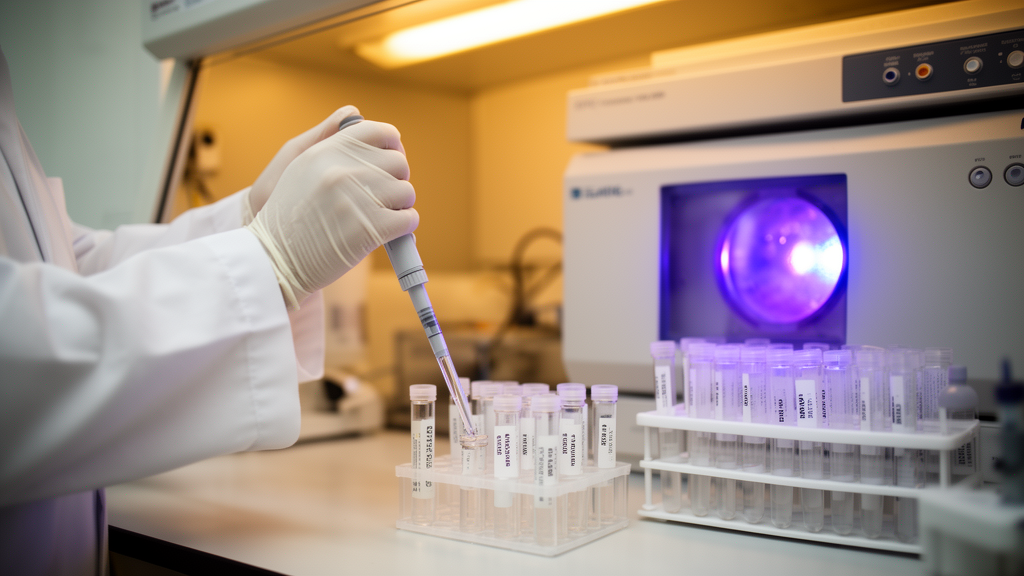
Researchers have developed a highly sensitive spectrofluorimetric method for measuring the antibiotic delafloxacin, based on derivatizing the molecule with 9-fluorenyl methyl chloroformate (FMOC-Cl) to unlock a strong fluorescent signal. The derivatization reaction takes place at room temperature in borate buffer at pH 8.0, producing a strongly fluorescent derivative that is suitable for sensitive quantitative analysis. The work, published in BMC Chemistry, was carried out by a team led by Hany A. Batakoushy, with co-authors including Galal Magdy, Anmar Anwar Khan, Rehab H. Elattar and Mai A. El-Didamoony.

The fluorescent derivative emits at wavelengths that allow precise detection: maximum excitation occurs at 264 nm and maximum emission at 314 nm. The team systematically investigated and optimized the experimental parameters that affect both the derivatization reaction and the resulting fluorescence response, tuning the conditions to maximize sensitivity and reproducibility before applying the method to real samples.

Analytical performance was a central focus of the study. The method showed good linearity over a concentration range of 5.0 to 100.0 ng mL⁻¹, with a correlation coefficient of 0.9994. The limits of detection and quantification were 1.25 and 3.81 ng mL⁻¹, respectively. Accuracy and precision were described as satisfactory, with a mean recovery of 101.43% ± 0.64. These figures indicate that the assay can reliably quantify very low concentrations of the drug, a level of sensitivity that is relevant for bioanalytical work where sample volumes and drug concentrations may be limited.

The applicability of the method was confirmed through the determination of delafloxacin in pharmaceutical preparations and in spiked human plasma samples. When the results were statistically compared with a reported reference method, no significant difference was found between the two sets of measurements, supporting the validity of the new approach. The use of spiked plasma means the method was validated on prepared samples rather than demonstrated in a clinical study, and the authors position the technique for pharmaceutical quality control and bioanalytical investigations rather than direct patient testing.

Beyond raw sensitivity, the researchers also evaluated the environmental profile of the method using two assessment frameworks: the Carbon Footprint Reduction Index (CaFRI) and the White Analytical Chemistry Evaluation (WECA).

By attaching a fluorescent tag through a simple room-temperature reaction, the method converts the target into a readily detectable species without requiring complex instrumentation beyond a spectrofluorimeter.

The authors conclude that the proposed fluorescence derivatization method provides a sensitive, precise and accurate approach for determining delafloxacin in pharmaceutical and spiked plasma samples, and that its favorable analytical performance and environmental assessment support its potential application in routine pharmaceutical quality control and bioanalytical investigations. The article was published as open access research on 28 October 2026 and is being shared early as a peer-reviewed, accepted version subject to further edits before the final Version of Record.

Subject of Research: A sensitive spectrofluorimetric method for determining delafloxacin in pharmaceutical preparations and spiked human plasma using FMOC-Cl fluorescence derivatization.

Article Title: Unlocking delafloxacin fluorescence with 9-fluorenyl methyl chloroformate: A sensitive spectrofluorimetric method for pharmaceutical and plasma analysis with greenness and whiteness assessment

Article References: Batakoushy, H. A., Magdy, G., Khan, A. A., Elattar, R. H., & El-Didamoony, M. A. (2026). Unlocking delafloxacin fluorescence with 9-fluorenyl methyl chloroformate: A sensitive spectrofluorimetric method for pharmaceutical and plasma analysis with greenness and whiteness assessment. BMC Chemistry, 20(1), Article 211. https://doi.org/10.1186/s13065-026-01951-6

Image Credits: AI Generated

DOI: 10.1186/s13065-026-01951-6

Keywords: delafloxacin, spectrofluorimetry, FMOC-Cl, fluorescence derivatization, pharmaceutical analysis, human plasma, green analytical chemistry, white analytical chemistry, method validation, BMC Chemistry, Unlocking, fluorescence

Cite Scienmag News

Bethany Barker. (October 28, 2026). Fluorescence derivatization enables sensitive delafloxacin measurement in drugs and plasma. Scienmag. https://scienmag.com/fluorescence-derivatization-enables-sensitive-delafloxacin-measurement-in-drugs-and-plasma/


Bethany Barker. "Fluorescence derivatization enables sensitive delafloxacin measurement in drugs and plasma." Scienmag, 28 October 2026, https://scienmag.com/fluorescence-derivatization-enables-sensitive-delafloxacin-measurement-in-drugs-and-plasma/. Accessed 28 October 2026.

Bethany Barker. "Fluorescence derivatization enables sensitive delafloxacin measurement in drugs and plasma." Scienmag. October 28, 2026. https://scienmag.com/fluorescence-derivatization-enables-sensitive-delafloxacin-measurement-in-drugs-and-plasma/

Tags: analytical method validationBMC ChemistrydelafloxacinDelafloxacin measurementdrug plasma concentration measurementfluorescencefluorescence derivatizationfluorescence signal enhancementfluorescence spectroscopy optimizationfluorescence-based pharmaceutical analysisFMOC-ClFMOC-Cl derivatizationgreen analytical chemistryhuman plasmamethod validationnanogram-level detection limitspharmaceutical analysisquantitative analysis of pharmaceuticalssensitive drug detection in plasmaspectrofluorimetric antibiotic analysisspectrofluorimetryUnlockingWhite Analytical Chemistry
Share26Tweet16
Previous Post

Cell stress sensors ATF4 and ATF6 steer how lung cancer cells cope with glucose starvation

Next Post

Zone 2 hepatocytes sense mechanical stress to drive liver regeneration via PIEZO1

Related Posts

New Open Access Journal Discover Surfaces Launches with Inaugural Editorial
Chemistry

New Open Access Journal Discover Surfaces Launches with Inaugural Editorial

October 28, 2026
How hot the fire was decides how fast dissolved black carbon shuttles electrons
Chemistry

How hot the fire was decides how fast dissolved black carbon shuttles electrons

October 28, 2026
Mangrove Stem Extracts Show Antibacterial and Antioxidant Activity in Lab Tests
Chemistry

Mangrove Stem Extracts Show Antibacterial and Antioxidant Activity in Lab Tests

October 28, 2026
Chitosan-Derived CoNi Carbon Aerogels Deliver Broadband Microwave Absorption with Thermal Insulation
Chemistry

Chitosan-Derived CoNi Carbon Aerogels Deliver Broadband Microwave Absorption with Thermal Insulation

October 28, 2026
Diamond MEMS carry their own quantum stress sensor inside the device
Chemistry

Diamond MEMS carry their own quantum stress sensor inside the device

October 28, 2026
Sponge-Dwelling Fungus Yields Twelve Metabolites with Antimicrobial and Cytotoxic Activity
Chemistry

Sponge-Dwelling Fungus Yields Twelve Metabolites with Antimicrobial and Cytotoxic Activity

October 28, 2026
Next Post
Zone 2 hepatocytes sense mechanical stress to drive liver regeneration via PIEZO1

Zone 2 hepatocytes sense mechanical stress to drive liver regeneration via PIEZO1

  • Mothers who receive childcare support from maternal grandparents show more optimized

    Mothers who receive childcare support from maternal grandparents show more parental warmth, finds NTU Singapore study

    27656 shares
    Share 11059 Tweet 6912
  • University of Seville Breaks 120-Year-Old Mystery, Revises a Key Einstein Concept

    1061 shares
    Share 424 Tweet 265
  • Bee body mass, pathogens and local climate influence heat tolerance

    682 shares
    Share 273 Tweet 171
  • Researchers record first-ever images and data of a shark experiencing a boat strike

    546 shares
    Share 218 Tweet 137
  • Groundbreaking Clinical Trial Reveals Lubiprostone Enhances Kidney Function

    531 shares
    Share 212 Tweet 133
Science

Embark on a thrilling journey of discovery with Scienmag.com—your ultimate source for cutting-edge breakthroughs. Immerse yourself in a world where curiosity knows no limits and tomorrow’s possibilities become today’s reality!

RECENT NEWS

  • Stepwise technique for parasellar carotid artery exposure in endoscopic endonasal surgery
  • Eating a Meal Reveals Hidden Heart Obstruction That Standard Tests Miss
  • Sensor Framework Flags When Opening Windows Helps or Hurts Indoor Air
  • New Open Access Journal Discover Surfaces Launches with Inaugural Editorial

Categories

  • Agriculture
  • Anthropology
  • Archaeology
  • Athmospheric
  • Biology
  • Biotechnology
  • Blog
  • Bussines
  • Cancer
  • Chemistry
  • Climate
  • Earth Science
  • Editorial Policy
  • Marine
  • Mathematics
  • Medicine
  • Pediatry
  • Policy
  • Psychology & Psychiatry
  • Science Education
  • Science News
  • Social Science
  • Space
  • Technology and Engineering

Subscribe to Blog via Email

Enter your email address to subscribe to this blog and receive notifications of new posts by email.

Join 5,151 other subscribers

© 2025 Scienmag - Science Magazine

Welcome Back!

Login to your account below

Forgotten Password?

Retrieve your password

Please enter your username or email address to reset your password.

Log In
No Result
View All Result
  • HOME
  • SCIENCE NEWS
  • CONTACT US

© 2025 Scienmag - Science Magazine

Discover more from Science

Subscribe now to keep reading and get access to the full archive.

Continue reading