


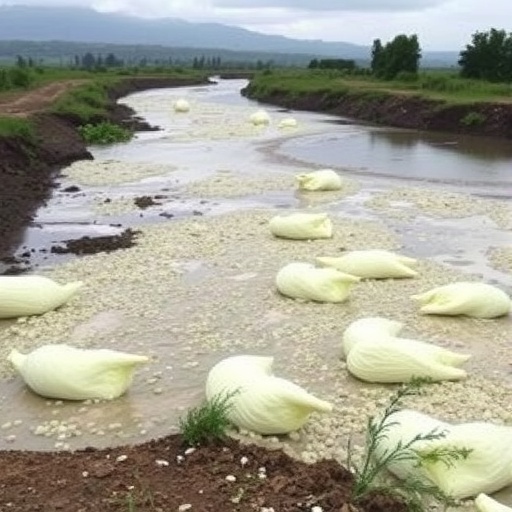
The Upper Awash Basin, a crucial area within the Oromia National Regional State of Ethiopia, has been the focal point of recent investigations concerning flood causation and adaptation strategies. This region is characterized by a unique interplay of geographical features, climatic conditions, and socio-economic factors, making it both susceptible to flooding and a site for innovative adaptation measures. The research, spearheaded by Takela et al., delves into these dynamics, offering insights that could serve as a blueprint for mitigation efforts in similar contexts.
Flooding in the Upper Awash Basin is not a new phenomenon; however, its frequency and intensity have escalated in recent years. The study identifies several causal factors, including climate change, land-use changes, and inadequate infrastructure. These elements combine to exacerbate the region’s vulnerability, leading to destructive floods that impact local communities and agricultural outputs. The complexity of these interactions highlights the need for comprehensive research to inform effective adaptation strategies.
The influence of climate change on weather patterns poses significant challenges for the Upper Awash Basin. Rising temperatures and altered rainfall patterns contribute to both prolonged droughts and intense rainfall events. This duality complicates agricultural practices, which are the backbone of the local economy. Farmers find it increasingly difficult to plan their planting and harvesting schedules, leading to diminished yields and heightened food insecurity.
In parallel, land-use changes driven by urbanization and agricultural expansion exacerbate the region’s flood risks. Deforestation and the conversion of land for agricultural purposes disrupt natural water absorption processes, leading to higher runoff and increased flooding. The significance of sustainable land management practices cannot be overstated, as they offer potential pathways to ameliorate these risks by maintaining the ecological balance.
Infrastructure deficiencies are another critical component of the flood landscape in the Upper Awash Basin. Poor drainage systems and inadequate riverbank protections amplify the effects of heavy rainfall. The existing infrastructure often fails to cope with sudden surges of water, leading to significant damage. Improving infrastructure resilience is crucial not only for flood management but also for ensuring the safety and well-being of the local population.
The research by Takela et al. also emphasizes the role of community-based adaptation strategies. Local communities often face the brunt of flooding, and their firsthand experiences are invaluable for developing effective response measures. By involving residents in the planning and implementation of flood management strategies, researchers can capture local knowledge and ensure that adaptive measures are culturally relevant and practically applicable.
One promising adaptation strategy identified in the study is the implementation of rainwater harvesting systems. These systems collect and store rainwater for agricultural and household use, alleviating the pressure on existing water resources and providing a buffer against the impacts of both floods and droughts. Such initiatives not only foster resilience but also empower communities by improving their self-sufficiency.
Moreover, reforestation and afforestation projects are presented as viable solutions to combat flooding in the Upper Awash Basin. By restoring native vegetation, these projects can enhance soil stability and water retention capabilities, thereby reducing runoff and soil erosion. Additionally, green spaces can provide multiple benefits, such as enhancing biodiversity and improving air quality, thus contributing to the overall health of the ecosystem.
The study also underscores the importance of government policy in shaping flood adaptation strategies. Enhanced coordination between government entities, local communities, and NGOs can lead to more effective mitigation plans. Policymakers must prioritize sustainable development frameworks that consider the multifaceted nature of flooding and the interconnectedness of various socio-environmental factors.
Furthermore, engaging in regional and international collaborations can foster knowledge exchange and access to resources. Sharing best practices and innovative solutions from other flood-prone regions can help inform local strategies, creating a network of support that enhances resilience to climate impacts.
The findings of Takela and colleagues offer a roadmap for future research and actions aimed at flood management in the Upper Awash Basin. As climate change continues to pose unprecedented challenges, it is imperative that adaptation strategies evolve and incorporate scientific insights along with local knowledge. The implications of such research extend beyond Ethiopia, providing valuable lessons for other regions grappling with similar environmental crises.
In conclusion, the intersection of flood risks and adaptive strategies in the Upper Awash Basin presents a compelling case for integrated approaches to disaster management. By addressing causal factors through informed strategies, we can foster resilience in affected communities and pave the way for sustainable development. The urgent nature of this research highlights an opportunity for collaborative action that could ultimately save lives and enhance ecological stability.
As the global community increasingly confronts the realities of climate change, the experiences and insights gleaned from this study will undoubtedly resonate with many. The Upper Awash Basin serves as a reminder of the interconnectedness of environmental challenges and the imperative for proactive measures to secure a stable future for vulnerable populations.
Thus, it is clear that understanding the causal factors behind flooding and the corresponding adaptation strategies is not merely an academic exercise; it is a vital necessity that could determine the livelihoods and security of communities in the region for generations to come. The urgency of this matter calls for immediate attention and action, making the research conducted by Takela et al. a significant contribution to the ongoing discourse on climate adaptation and resilience.
Cite Scienmag News
Violet Maxwell. (October 17, 2025). Flood Causes and Adaptation in Ethiopia’s Upper Awash. Scienmag. https://scienmag.com/flood-causes-and-adaptation-in-ethiopias-upper-awash/
Violet Maxwell. "Flood Causes and Adaptation in Ethiopia’s Upper Awash." Scienmag, 17 October 2025, https://scienmag.com/flood-causes-and-adaptation-in-ethiopias-upper-awash/. Accessed 4 September 2026.
Violet Maxwell. "Flood Causes and Adaptation in Ethiopia’s Upper Awash." Scienmag. October 17, 2025. https://scienmag.com/flood-causes-and-adaptation-in-ethiopias-upper-awash/


