


In recent years, the agricultural landscape of the United States has been subjected to an increasing array of climatic challenges that jeopardize food security and economic stability. Among these challenges, flash droughts have emerged as a particularly insidious hazard, undermining crop yields at a national scale in ways that are only now becoming fully appreciated. A groundbreaking study led by Liu, W., Liu, Y., Luo, Y., et al., published in Communications Earth & Environment in 2026, illuminates the profound ways in which these rapid-onset droughts reduce agricultural outputs across the United States, with significant implications for climate resilience strategies and food supply chains moving forward.
Flash droughts differ from traditional droughts in their onset speed and temporal dynamics. Unlike prolonged dry spells that develop over months or even years, flash droughts materialize swiftly, typically within days to weeks, creating severe moisture deficits that catch ecosystems, farmers, and policymakers off-guard. This study meticulously quantifies the impact of these sudden drought events on crop performance, revealing that their brevity belies the scale of damage caused. Flash droughts incapacitate soil moisture levels critical for plant growth during key phenological stages, resulting in stunted development and severely diminished yields.
Employing advanced climate modeling techniques combined with extensive agricultural datasets across multiple decades, the researchers constructed a comprehensive framework to identify and analyze flash drought episodes nationwide. They incorporated variables such as precipitation anomalies, temperature spikes, soil moisture depletion rates, and phenological crop sensitivity to elucidate the mechanistic pathways through which flash droughts impair crop productivity. Their multi-disciplinary approach underscores the necessity of integrating meteorological data with agronomic insights to fully grasp how extreme weather events translate into tangible agricultural losses.
One of the most striking revelations of this study is the temporal vulnerability of crops to flash droughts. Crops are particularly susceptible when flash droughts coincide with critical developmental phases such as flowering and grain filling. At these junctures, water deficits rapidly translate into impaired physiological processes—photosynthesis declines, nutrient transport falters, and cellular damage accrues—collectively depressing yield and quality. The rapid onset of these droughts provides little opportunity for adaptive irrigation or mitigation, highlighting a precarious vulnerability intrinsic to contemporary crop production systems.
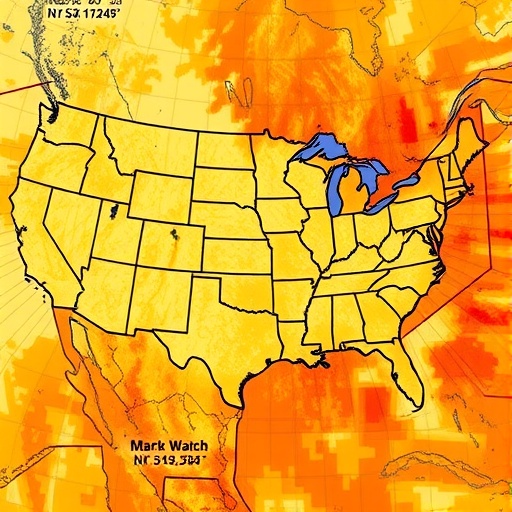
Geographically, the impact of flash droughts is neither uniform nor random. The study reveals distinct spatial patterns whereby certain agricultural heartlands—including the Midwest Corn Belt and parts of the Southern Great Plains—experience recurrent and severe flash drought events. These areas, integral to national and global food supplies, face augmented risk as climate change intensifies temperature extremes and perturbs precipitation patterns. The spatial heterogeneity of flash drought occurrence necessitates region-specific adaptation and resilience planning, a theme strongly emphasized by the authors.
The interplay between elevated temperatures and reduced precipitation during flash drought events exacerbates moisture stress beyond what soil moisture measurements alone might suggest. High temperatures elevate evapotranspiration rates, accelerating the depletion of limited water reserves in the soil, thus compounding drought severity. The study highlights that ignoring this synergistic effect understates the productivity losses and mistakenly tailors mitigation strategies, emphasizing the need for climate models that incorporate multi-faceted meteorological stresses.
In addition to physical and physiological impacts, flash droughts induce cascading socio-economic consequences. Reduced yields drive price volatility in commodity markets, which in turn affect food affordability and farmer livelihoods. The authors stress that these rapid drought episodes disrupt not only production but also supply chain logistics, emphasizing the wider ramifications that extend beyond fields and farms to the broader food distribution networks and national economies. The study calls for policy frameworks that can swiftly respond to the emergency nature of flash droughts.
A critical contribution of this research lies in its forward-looking projections. By leveraging climate scenarios reflecting varying greenhouse gas emission trajectories, the team projects an increase in the frequency, intensity, and spatial extent of flash droughts by mid-century. Such projections paint a worrying picture of future agricultural vulnerabilities under continued climate change, stressing the urgency for preemptive adaptation measures. The study’s modeling predicts that without intervention, flash drought-induced crop losses could curtail U.S. agricultural productivity by significant margins, jeopardizing food security.
Importantly, the study explores the potential of adaptive agricultural technologies and management practices as buffers against flash droughts. Innovations in drought-resistant crop varieties, precision irrigation techniques, and enhanced soil moisture conservation methods are analyzed for their efficacy in mitigating flash drought impacts. Nonetheless, the rapid onset nature of these droughts challenges traditional mitigation paradigms, requiring real-time monitoring and highly responsive management systems to protect vulnerable crops during critical stages.
The research also underscores the potential role of remote sensing and early warning systems in flash drought detection and management. Satellite-based soil moisture estimates, coupled with meteorological forecasts, offer promising avenues for real-time monitoring of flash drought onset and progression. Implementing such technologies on a national scale could empower farmers and policymakers to make timely decisions regarding irrigation scheduling, crop selection, and resource allocation, thus mitigating yield losses.
From a broader standpoint, the study highlights the complex feedback loops between climate change, land management, and hydrological cycles. Human activities such as land use change and water resource exploitation interact intricately with climatic extremes, influencing the frequency and severity of flash droughts. The authors advocate for interdisciplinary research and integrated management approaches that account for these interconnected factors to enhance agricultural resilience in a changing climate.
In summary, the research by Liu and colleagues represents a seminal advance in understanding the rapid and severe agricultural impacts of flash droughts across the United States. It calls attention to a critical but often overlooked dimension of drought risk—its rapid onset—and its profound consequences for crop yields, food security, and economic stability. This study lays a robust scientific foundation for developing resilient agricultural systems capable of withstanding the growing threat of flash droughts in an era of climatic uncertainty.
By spotlighting the urgency and complexity of flash drought hazards, this work challenges the agricultural and climate science communities to rethink drought preparedness and adaptation frameworks. The insights gained promise to inform future climate policy, agricultural management strategies, and technological innovation, steering the United States toward a more sustainable and secure food production future despite the mounting pressures of extreme weather phenomena.
As global climate systems continue to destabilize, the comprehensive analysis provided by this study offers a clarion call for immediate action. Enhancing monitoring infrastructure, scaling up research on drought-tolerant crops, improving water management, and fostering collaborative policy responses will be essential to mitigate the growing threat of flash droughts. The multidisciplinary nature of this challenge necessitates coordinated efforts across scientific disciplines, agricultural sectors, and government agencies to safeguard both national and global food supplies.
In essence, the study underscores that flash droughts are not isolated climatic anomalies but critical drivers of agricultural vulnerability in a warming world. Recognizing their significance and integrating this knowledge into practical solutions will be pivotal to future agricultural sustainability. As the frequency of these events rises, staying ahead of their impacts through innovative science and responsive policy remains a paramount imperative.
Cite Scienmag News
Alan Morgan. (April 24, 2026). Flash Droughts Lower U.S. Crop Yields Significantly. Scienmag. https://scienmag.com/flash-droughts-lower-u-s-crop-yields-significantly/
Alan Morgan. "Flash Droughts Lower U.S. Crop Yields Significantly." Scienmag, 24 April 2026, https://scienmag.com/flash-droughts-lower-u-s-crop-yields-significantly/. Accessed 4 September 2026.
Alan Morgan. "Flash Droughts Lower U.S. Crop Yields Significantly." Scienmag. April 24, 2026. https://scienmag.com/flash-droughts-lower-u-s-crop-yields-significantly/


