


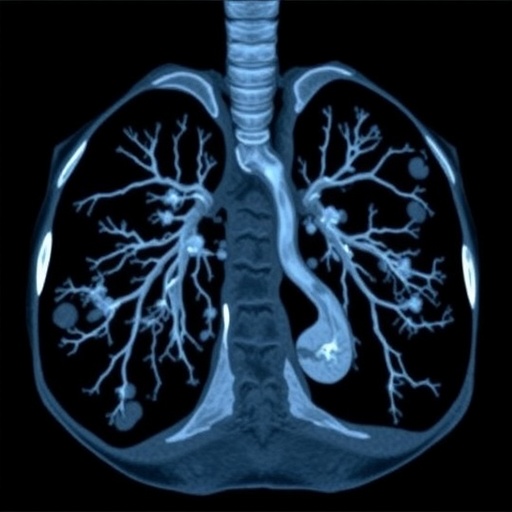
In the ever-evolving world of pediatric medicine, diagnostic technologies have continually reshaped the landscape of clinical care. One of the most compelling recent advancements centers around lung ultrasound as a pivotal tool in the management of necrotizing pneumonia in children. An insightful new study by Buonsenso, published in Pediatric Research in 2026, explores how this imaging modality transcends traditional diagnostic boundaries, offering a nuanced pathway from recognition to decisive clinical action in this severe pulmonary condition.
Necrotizing pneumonia represents a formidable challenge in pediatric healthcare, marked by lung tissue necrosis and profound inflammation. Historically, clinicians have relied heavily on chest radiographs and computed tomography (CT) scans to diagnose and assess disease progression. However, these techniques, especially CT scans, involve radiation exposure and may be less accessible in resource-limited settings. Lung ultrasound emerges in this context as a non-invasive, safe, and highly informative alternative, enabling bedside evaluation without exposing young patients to ionizing radiation.
Buonsenso’s study meticulously delineates how lung ultrasound can detect hallmark features of necrotizing pneumonia, including consolidated lung areas interspersed with hypoechoic necrotic zones and associated pleural effusions. The real-time imaging capability allows clinicians to monitor dynamic changes in lung pathology, surpassing the static information provided by X-rays or CT scans. This dynamic feedback is invaluable in gauging treatment response and tailoring antibiotic regimens or surgical interventions accordingly.
The diagnostic confirmation of necrotizing pneumonia through ultrasound hinges on recognizing specific sonographic patterns. Consolidation appears as a tissue-like echotexture, while necrotic regions manifest as irregular anechoic or hypoechoic areas within these consolidated segments. Additionally, pleural line abnormalities and fluid collections can be readily identified. These sonographic signatures not only confirm disease presence but also help quantify severity, directly informing the urgency and aggressiveness of therapeutic strategies.
Clinical decision-making in necrotizing pneumonia has traditionally been complicated by diagnostic uncertainty and delayed recognition. Buonsenso’s work highlights how integrating lung ultrasound into routine assessment protocols markedly reduces diagnostic latency. Earlier identification of necrosis and fluid accumulation leads to prompt drainage procedures or surgical consultation, reducing the risk of systemic complications such as sepsis or persistent lung abscess formation.
Moreover, lung ultrasound’s bedside spontaneity promotes safer patient monitoring, especially in critical care units. Repeated imaging can be conducted with ease, facilitating continuous assessment without the logistical constraints imposed by CT or the cumulative harm of repeated radiographs. This fosters more informed, iterative decision-making based on the patient’s evolving clinical status rather than static snapshots.
A striking advantage underscored by this study is the operator-dependent yet reproducible nature of lung ultrasound in pediatric pneumonia. With adequate training, a wide range of healthcare providers—including pediatricians and intensivists—can harness ultrasound to improve diagnostic accuracy. This democratization of diagnostic capability has far-reaching implications for global health, particularly in low-resource or rural environments where advanced imaging is unavailable.
Buonsenso further discusses how lung ultrasound aligns with antimicrobial stewardship principles. By providing granular insights into disease progression and resolution, physicians can avoid premature escalation to broad-spectrum antibiotics or overly aggressive interventions. Conversely, detection of worsening necrosis or abscess expansion prompts timely escalation, optimizing clinical outcomes while minimizing resistance development.
Importantly, the research draws attention to the potential for lung ultrasound to redefine clinical protocols for necrotizing pneumonia in children. Whereas traditional algorithms emphasize radiographic progression and systemic markers such as leukocyte count, ultrasound affords a more direct window into pulmonary pathology. This could shift standard practice towards more personalized, pathology-driven care pathways tailored to each child’s unique disease trajectory.
The implications for future research and clinical practice are profound. Buonsenso suggests that integrating lung ultrasound findings into predictive models for necrotizing pneumonia outcomes may refine risk stratification and health resource allocation. This technological synergy could foster earlier interventions, shorter hospital stays, and fewer invasive procedures while improving survival rates and long-term lung function.
From a public health perspective, this advancement offers a blueprint for enhancing pediatric pneumonia management worldwide. By reducing dependence on costly and logistically demanding imaging modalities, lung ultrasound can extend diagnostic and therapeutic benefits to previously underserved populations. This aligns with global initiatives aimed at reducing pediatric respiratory morbidity and mortality through accessible, evidence-based care.
In sum, Buonsenso’s pioneering investigation places lung ultrasound at the forefront of pediatric pulmonology innovation. It confirms that beyond diagnosis, ultrasound’s real-time, radiation-free imaging profoundly influences clinical decision-making for necrotizing pneumonia. This dual diagnostic-clinical role transforms ultrasound from a mere tool into a cornerstone of patient-centered, precision medicine in pediatric respiratory infections.
This newfound clarity in lung disease visualization fosters greater clinician confidence, enabling more nuanced discussions with families regarding prognosis and management options. As adoption of lung ultrasound grows, so too will the collective understanding of pediatric necrotizing pneumonia’s natural history and optimal treatment strategies, ultimately benefiting countless children around the world.
In closing, Buonsenso’s exemplar work heralds a paradigm shift in pediatric infectious disease diagnostics. Lung ultrasound bridges critical gaps between pathology visualization and clinical intervention, illuminating pathways to safer, faster, and more effective care. It invites clinicians, researchers, and policymakers alike to embrace ultrasound’s full potential in combating one of childhood’s most severe pulmonary challenges.
Cite Scienmag News
Denise Maddox. (June 3, 2026). Lung Ultrasound Advances in Childhood Necrotizing Pneumonia. Scienmag. https://scienmag.com/lung-ultrasound-advances-in-childhood-necrotizing-pneumonia/
Denise Maddox. "Lung Ultrasound Advances in Childhood Necrotizing Pneumonia." Scienmag, 3 June 2026, https://scienmag.com/lung-ultrasound-advances-in-childhood-necrotizing-pneumonia/. Accessed 4 September 2026.
Denise Maddox. "Lung Ultrasound Advances in Childhood Necrotizing Pneumonia." Scienmag. June 3, 2026. https://scienmag.com/lung-ultrasound-advances-in-childhood-necrotizing-pneumonia/


