


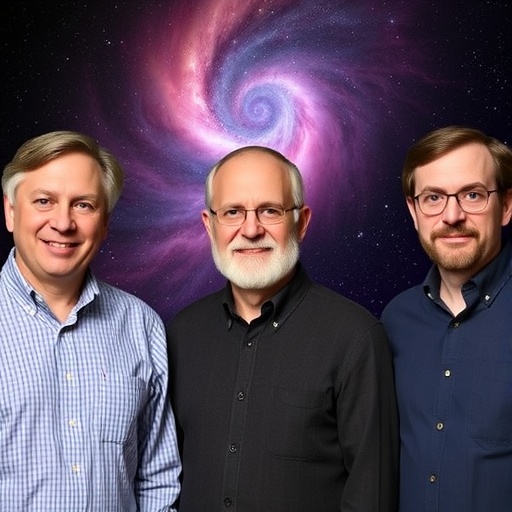
The 2026 Gruber Cosmology Prize has been awarded to three pioneering scientists—Alexei V. Filippenko, Ken’ichi Nomoto, and Stanford E. Woosley—recognizing their transformative contributions to the study of supernovae. These catastrophic stellar explosions have long fascinated astronomers, but through the efforts of these researchers, supernovae have evolved from poorly understood celestial phenomena into critical tools for probing the composition, evolution, and cosmic expansion of the universe. The prize, totaling $500,000 and to be shared equally among the laureates, will be formally presented on November 10 at the “Illuminating the Cosmos” conference in Heidelberg, Germany.
Filippenko, Nomoto, and Woosley have approached supernova research from complementary yet interlocking perspectives. Filippenko’s expertise lies in empirical observation, meticulously cataloging and characterizing supernovae with advanced telescopes. Concurrently, Nomoto and Woosley have developed sophisticated theoretical models that simulate the complex physical processes underlying these stellar explosions. This synergy between observation and theory has yielded an empirically validated framework that now underpins our understanding of supernovae in cosmology.
The astronomical term “supernova” itself only came into common usage in the 1930s to differentiate these extraordinary explosions from the more benign novae. Novae involve a temporary brightening of stars typically increasing luminosity by several magnitudes before dimming again. Supernovae, in stark contrast, mark the violent end of a star’s life cycle, releasing energy and brightness often tens of thousands of times greater than a nova. This remarkable energy output has allowed supernovae to serve as luminous beacons that enable astronomers to study distant regions of the universe with unparalleled precision.
One of the most significant cosmological implications of this work concerns dark energy, the mysterious force driving the accelerating expansion of the universe. By the mid-20th century, astronomers recognized that supernovae could be categorized primarily into two types: Type I, characterized by an absence of hydrogen signatures in their spectra, and Type II, which prominently feature hydrogen lines. Filippenko’s systematic spectroscopic observations further refined the classification of Type I supernovae into subtypes Ia, Ib, and Ic—each with distinct progenitors and explosion mechanisms. Understanding Type Ia supernovae, in particular, became essential because they represent thermonuclear explosions of white dwarf stars reaching critical mass.
The modeling efforts of Nomoto and Woosley deeply elucidated the physical processes driving Type Ia supernovae. By simulating how white dwarfs accrete matter from companion stars and eventually undergo thermonuclear runaway reactions, they reconciled theoretical predictions with the diverse observational phenomena recorded by Filippenko. Notably, Filippenko’s discovery that Type Ia supernovae are not a singular homogeneous class, but display significant variations in peak brightness, spectral features, and explosion timescales, pushed scientists to develop corrections that enhanced their utility as “standard candles” for cosmological distance measurements. Such refined models and observations formed the backbone of the groundbreaking late-1990s research by two independent teams, whose findings revealed that cosmic expansion is accelerating—a discovery that reshaped modern cosmology.
Filippenko’s innovative conception of the Lick Observatory Supernova Search stands as a landmark in observational cosmology. This intensive survey, operational from 1998 to 2008, identified a greater number of relatively nearby supernovae than all other contemporaneous searches combined. The database compiled through this effort has served as a critical resource enabling detailed statistical analyses and has driven the progress of subsequent all-sky supernova surveys. Filippenko’s continuous study of subtle variations within Type Ia supernovae and his exploration of Type II supernovae as alternative cosmological probes have broadened the scope of supernova research, reinforcing the robustness and precision of cosmic measurements.
The theoretical advances made by Nomoto and Woosley have also profoundly impacted our comprehension of massive star deaths manifested as Type II supernovae. Their numerical models accurately predicted key observational signatures—including luminosity, elemental yields, and remnant properties such as neutron stars and black holes. Furthermore, these models revealed connections between certain types of supernovae and the universe’s most energetic phenomena: gamma-ray bursts. Their concept of “hypernovae” characterized by exceptional energy output and brightness has invigorated research into the mechanics of stellar explosions and their role in cosmic events.
Nucleosynthesis, the astrophysical process whereby heavier elements form via nuclear reactions during supernova explosions, was another primary focus of Woosley and Nomoto’s research. Building on foundational theoretical frameworks from the mid-20th century, their quantitative calculations demonstrated that the elemental abundances produced by successive supernova generations closely match those observed in the sun and other stars. Their work transformed the study of nucleosynthesis from qualitative postulation to a predictive discipline, firmly establishing the causative link between stellar evolution and the chemical enrichment of the universe.
Collectively, the accomplishments of Filippenko, Nomoto, and Woosley represent a paradigm shift. The Gruber Foundation underscored their “trail-blazing work” as effectively connecting stellar evolution, supernova nucleosynthesis, and chemical evolution of the cosmos while reinforcing the indispensable role of supernovae as precision cosmological tools. This framework enables high-fidelity studies of the universe’s expansion history, enabling scientists to probe fundamental questions about the constitution and fate of the cosmos.
The Gruber Cosmology Prize itself honors those whose theoretical, analytical, conceptual, or observational innovations have spearheaded fundamental advances in understanding the universe. The laureates join an esteemed cohort whose work encompasses landmark discoveries, from the physics of cosmic inflation and the detection of gravitational waves to the study of dark matter and the cosmic microwave background. Their collective contributions continue to deepen humanity’s grasp of the cosmos at its largest scales and earliest epochs.
Awards such as the Gruber Cosmology Prize not only recognize groundbreaking scientific achievements but also spotlight the essential interplay between observational astronomy and theoretical astrophysics. The work of Filippenko, Nomoto, and Woosley exemplifies how detailed observation paired with rigorous modeling can unravel the intricacies of complex phenomena like supernovae. This integrated approach sets a standard for future generations seeking to explore the universe’s profound mysteries.
As the scientific community anticipates the formal award ceremony in Heidelberg, the impact of the three laureates’ work remains palpable across multiple scientific domains. Their pioneering frameworks open new avenues for leveraging supernovae to refine cosmological parameters, study dark energy, and understand the mechanisms that govern stellar death and cosmic chemical evolution. This legacy will undoubtedly inspire continuous breakthroughs in observational and theoretical cosmology for years to come.
News Publication Date: 2026-11-10
Web References:
https://www.gruber.yale.edu
https://indico.nbi.ku.dk/event/2262/
Cite Scienmag News
Grant Pearson. (May 19, 2026). Filippenko, Nomoto, and Woosley Awarded $500,000 Gruber Cosmology Prize for Groundbreaking Supernova Research. Scienmag. https://scienmag.com/filippenko-nomoto-and-woosley-awarded-500000-gruber-cosmology-prize-for-groundbreaking-supernova-research/
Grant Pearson. "Filippenko, Nomoto, and Woosley Awarded $500,000 Gruber Cosmology Prize for Groundbreaking Supernova Research." Scienmag, 19 May 2026, https://scienmag.com/filippenko-nomoto-and-woosley-awarded-500000-gruber-cosmology-prize-for-groundbreaking-supernova-research/. Accessed 3 September 2026.
Grant Pearson. "Filippenko, Nomoto, and Woosley Awarded $500,000 Gruber Cosmology Prize for Groundbreaking Supernova Research." Scienmag. May 19, 2026. https://scienmag.com/filippenko-nomoto-and-woosley-awarded-500000-gruber-cosmology-prize-for-groundbreaking-supernova-research/


