


Cardiovascular disease (CVD) remains the leading cause of death in the United States, overshadowing all other causes despite decades of public health campaigns and medical advancements. The American Heart Association (AHA), a seminal organization committed to changing the trajectory of heart health through research, education, and advocacy, continues to engage emerging generations to amplify this mission. One notable figure within this endeavor is Leonardo Oliveira, a determined teenager from Tampa Bay, Florida whose personal connection to cardiovascular health drives his influential advocacy work.
Oliveira’s profound motivation stems from a familial lineage deeply embedded in healthcare. His father, a practicing cardiologist, was an early recipient of an AHA research grant, which has undoubtedly shaped Oliveira’s understanding of how foundational support can catalyze groundbreaking medical discoveries. This close relationship with the medical community has encouraged Oliveira to champion heart health awareness among his peers and local community, emphasizing the importance of progressively informed health choices from an early age.
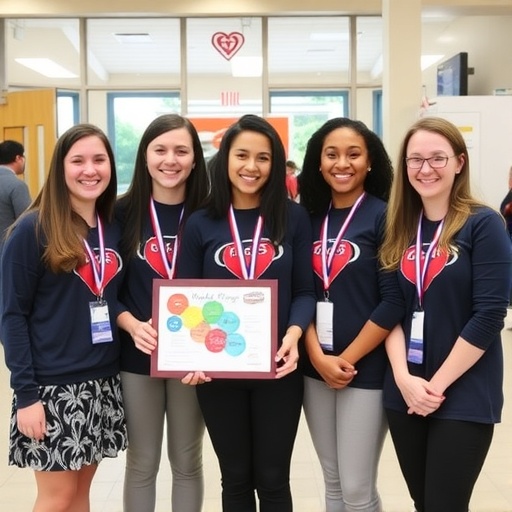
Recognized as the 2026 National Teen of Impact Winner, Oliveira embodies the spirit of the AHA’s innovative Teen of Impact™ campaign. This initiative is a comprehensive nine-week nationwide challenge aimed at inspiring teenagers to spearhead health-related projects, collaborating in teams and transforming awareness into impactful community efforts. Launched on National Wear Red Day®—a symbolic occasion dedicated to heart health awareness—the campaign has galvanized participation from nearly 65 communities with over 300 teen nominees nation-wide, demonstrating the power of youth in driving societal change.
Cardiovascular disease is often mistakenly perceived as a health concern affecting only older adults; however, mounting evidence illustrates a troubling trend of early onset risk factors. By the age of 18, many adolescents already present with markers such as hypertension, obesity, elevated cholesterol, and Type 2 diabetes. These statistics highlight an urgent preventative need, where targeted interventions during adolescence could alter long-term cardiovascular trajectories and reduce future disease burden. Oliveira’s advocacy strategically addresses these early risk factors by promoting nutrition and tackling food insecurity in underserved ‘food desert’ communities—areas with limited access to affordable, nutrient-dense foods crucial for cardiovascular health.
The technical underpinning of Oliveira’s campaign is centered on preventing the pathophysiological mechanisms that contribute to CVD. Early-life hypertension, for example, initiates vascular remodeling and endothelial dysfunction, setting the stage for atherosclerosis in adulthood. Obesity, particularly visceral adiposity, exacerbates systemic inflammation and insulin resistance, further compounding the risk of developing coronary artery disease and myocardial infarction. By fostering better dietary habits and physical activity, Oliveira’s efforts aim to attenuate these pathobiological responses.
Moreover, Oliveira’s perspective underscores the integration of genetic and environmental influences in cardiovascular risk. Learning one’s family history is critical in elucidating inherited predispositions such as familial hypercholesterolemia or hypertrophic cardiomyopathy, both of which substantially elevate CVD risk independent of lifestyle factors. Through his campaign, Oliveira promotes genetic awareness as a complementary strategy alongside lifestyle modification, advocating a holistic approach to heart health.
The American Heart Association’s leadership recognizes the transformative potential of the Teen of Impact campaign. Lee A. Shapiro, J.D., the volunteer chair of the AHA, emphasizes that young advocates like Oliveira convert awareness into action, fostering a collective movement that aspires toward health equity and improved cardiovascular outcomes. This initiative not only nurtures leadership skills among youth but also aligns community-level advocacy with broader scientific and policy efforts aimed at reducing health disparities.
With respect to community impact, the campaign’s focus on food deserts addresses a critical social determinant of health. Nutritional insufficiencies contribute heavily to chronic disease prevalence, and communities lacking access to fresh produce and whole foods experience disproportionately high rates of CVD and related outcomes. By increasing accessibility to nutrient-rich foods, Oliveira’s campaign aligns with evidence-based interventions that emphasize the importance of diet quality in preventing metabolic syndrome and subsequent heart disease progression.
The Teen of Impact program exemplifies a paradigm shift toward engaging younger demographics in public health initiatives, empowering them not only as beneficiaries of health education but as active agents of change. This approach mirrors broader trends in health promotion strategy, which prioritize community participation and responsiveness to cultural, socioeconomic, and generational contexts, thereby enhancing the scalability and sustainability of interventions.
Furthermore, the physiological implications of adolescent health behaviors are manifold. Lifestyle habits established during these formative years influence autonomic nervous system regulation, lipid metabolism, and inflammatory responses. Importantly, early intervention can modulate epigenetic markers related to cardiovascular risk, suggesting that behavioral modifications have potential transgenerational benefits.
As Oliveira joins a network of young leaders committed to combating cardiovascular disease, the American Heart Association continues to underscore the necessity of sustained, multi-faceted approaches. Combining scientific research, public policy, clinical practice, and community activism cultivates an ecosystem capable of tackling the complexity of cardiovascular health challenges. The achievements of the Teen of Impact program highlight that effective health advocacy requires not only education but also empowerment and engagement.
In conclusion, the case of Leonardo Oliveira and the AHA Teen of Impact campaign illustrates a compelling model for youth-driven health advocacy that integrates scientific understanding with community-oriented action. As cardiovascular disease continues to exert a significant toll on public health, initiatives that mobilize younger generations to adopt and promote preventive behaviors represent an invaluable asset in the ongoing effort to foster longer, healthier lives on a societal scale.
Cite Scienmag News
Daisy Hatcher. (May 19, 2026). Tampa Bay Teen Champions Community Nutrition and Heart Health, Receives National Science Honor. Scienmag. https://scienmag.com/tampa-bay-teen-champions-community-nutrition-and-heart-health-receives-national-science-honor/
Daisy Hatcher. "Tampa Bay Teen Champions Community Nutrition and Heart Health, Receives National Science Honor." Scienmag, 19 May 2026, https://scienmag.com/tampa-bay-teen-champions-community-nutrition-and-heart-health-receives-national-science-honor/. Accessed 3 September 2026.
Daisy Hatcher. "Tampa Bay Teen Champions Community Nutrition and Heart Health, Receives National Science Honor." Scienmag. May 19, 2026. https://scienmag.com/tampa-bay-teen-champions-community-nutrition-and-heart-health-receives-national-science-honor/


