


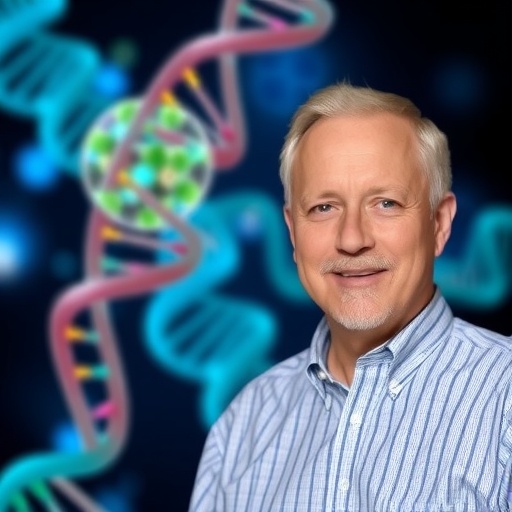
In a milestone moment for the field of molecular genetics, Alan G. Hinnebusch, PhD, a Distinguished Investigator at the National Institutes of Health, has been awarded the prestigious 2026 Gruber Genetics Prize. This accolade recognizes Hinnebusch’s trailblazing contributions to our understanding of the Integrated Stress Response (ISR), a fundamental cellular mechanism that orchestrates the reprogramming of protein synthesis during times of cellular stress. His pioneering work elucidates the genetic and biochemical underpinnings of translational control—an essential process that allows eukaryotic cells to adapt swiftly to fluctuating environmental and intracellular conditions.
Hinnebusch’s landmark discoveries began with innovative forward genetics screens in budding yeast, a model organism that has long served as a powerful system for dissecting complex biological pathways. These screens led to the identification of critical mutations in the kinase GCN2 and the transcription factor GCN4. GCN2 functions as a sensor of amino acid deprivation, phosphorylating the alpha subunit of eukaryotic initiation factor 2 (eIF2α). This modification acts as a molecular switch, downregulating global protein synthesis while selectively permitting the translation of GCN4 — a master regulator that drives the expression of genes required for amino acid biosynthesis and other stress response pathways.
At the heart of Hinnebusch’s research is the paradigm-shifting idea that cells employ translational control rather than merely transcriptional regulation to fine-tune gene expression in response to stress. By phosphorylating eIF2α, GCN2 acts as a gatekeeper that transiently stalls general translation initiation, conserving resources and mitigating proteotoxic stress. Simultaneously, this phosphorylation enhances the translation of GCN4 via an intricate mechanism involving upstream open reading frames (uORFs) in its mRNA, elegantly balancing suppression and activation within the same pathway. This dual regulation allows cells to quickly reprogram their proteome, prioritizing stress mitigation over routine protein production.
This mechanism, initially characterized in yeast, has been shown to be evolutionarily conserved across eukaryotic species, including humans. The human analogs of GCN2 and the ISR machinery mediate responses not only to amino acid scarcity but also to viral infections, hypoxia, heme deficiency, and endoplasmic reticulum (ER) stress. This universality underscores the significance of Hinnebusch’s findings, highlighting translational control as a cornerstone of cellular homeostasis and stress adaptation across life forms.
Disruptions in the ISR pathway have profound pathological implications. Aberrant regulation of eIF2α phosphorylation has been implicated in the etiology of neurodegenerative diseases such as Alzheimer’s and Parkinson’s, metabolic disorders including diabetes, and various forms of cancer. These connections have spurred extensive research into therapeutics that target components of the ISR, aiming to restore proper cellular stress responses and alleviate disease phenotypes. Hinnebusch’s elucidation of the ISR provides a blueprint for drug development pipelines presently underway in clinical settings.
Philip Hieter, professor at the University of British Columbia’s Michael Smith Laboratories and member of the Gruber Genetics Prize Selection Advisory Board, emphasized the transformative nature of Hinnebusch’s work. “His pioneering studies have led to an understanding of a universal translational control mechanism enabling cells to respond adeptly to diverse stressors,” Hieter noted. This work is not merely academic; it has tangible implications for developing new classes of therapies grounded in molecular genetics and cellular biology.
The Gruber Genetics Prize, accompanied by a $500,000 monetary award, will be formally presented to Dr. Hinnebusch in December at Cell Bio 2026 — the joint meeting of the American Society for Cell Biology (ASCB) and the European Molecular Biology Organization (EMBO) held in San Diego. Beyond the cash prize, Hinnebusch will receive a gold laureate pin and a citation commemorating his groundbreaking insights into the ISR and eukaryotic translational control.
The citation underscores Hinnebusch’s fundamental discoveries: “Through forward genetic screens in budding yeast, Hinnebusch discovered the kinase GCN2 and showed that its phosphorylation of eIF2α simultaneously suppresses global protein synthesis and selectively activates the master transcription factor GCN4 through upstream open reading frames in its mRNA. He further showed this circuit is conserved from yeast to humans. These foundational discoveries established the central paradigm for how the cell can adapt to stress using translational control.”
The Integrated Stress Response itself is a sophisticated network that governs how cells balance survival and adaptation under a host of insults including nutrient deprivation, viral assault, protein misfolding in the ER, and disruptions in heme availability. By elucidating the ISR’s components and mechanisms, Hinnebusch illuminated a network that is both ancient and indispensable for cellular health.
This prize follows a prestigious lineage of awards handed out by the Gruber Foundation, which since 2000 has honored seminal contributions in Genetics, Cosmology, and Neuroscience. The Genetics Prize celebrates scientists whose work advances our understanding of heredity, gene regulation, and the fundamental machinery of life with broad-reaching scientific and medical impact. Hinnebusch’s contributions fit this legacy perfectly, bridging insights from yeast genetics to human disease.
With the ISR increasingly recognized as a therapeutic target, the implications of Hinnebusch’s discoveries extend beyond the laboratory. Current clinical trials testing ISR modulators in cancer and neurodegenerative disease highlight the translational trajectory of his research. Hinnebusch’s elucidation of this pathway exemplifies the power of basic genetic research to yield unexpected avenues for medical innovation.
In sum, Alan G. Hinnebusch’s groundbreaking work has detailed the genetic circuitry and molecular logic that allow cells to reprogram their protein synthesis machinery in response to stress, revealing a highly conserved translational control mechanism essential for cell survival and adaptation. His contributions to the foundational understanding of the Integrated Stress Response have ushered in new conceptual frameworks and therapeutic possibilities, securing his place among the luminaries of modern genetics.
News Publication Date: 2026
Web References:
www.gruber.yale.edu
www.gruber.yale.edu/news-media
Cite Scienmag News
Juliet Wilcox. (May 19, 2026). Alan G. Hinnebusch Receives $500,000 Gruber Genetics Prize for Breakthroughs in Integrated Stress Response. Scienmag. https://scienmag.com/alan-g-hinnebusch-receives-500000-gruber-genetics-prize-for-breakthroughs-in-integrated-stress-response/
Juliet Wilcox. "Alan G. Hinnebusch Receives $500,000 Gruber Genetics Prize for Breakthroughs in Integrated Stress Response." Scienmag, 19 May 2026, https://scienmag.com/alan-g-hinnebusch-receives-500000-gruber-genetics-prize-for-breakthroughs-in-integrated-stress-response/. Accessed 3 September 2026.
Juliet Wilcox. "Alan G. Hinnebusch Receives $500,000 Gruber Genetics Prize for Breakthroughs in Integrated Stress Response." Scienmag. May 19, 2026. https://scienmag.com/alan-g-hinnebusch-receives-500000-gruber-genetics-prize-for-breakthroughs-in-integrated-stress-response/


