


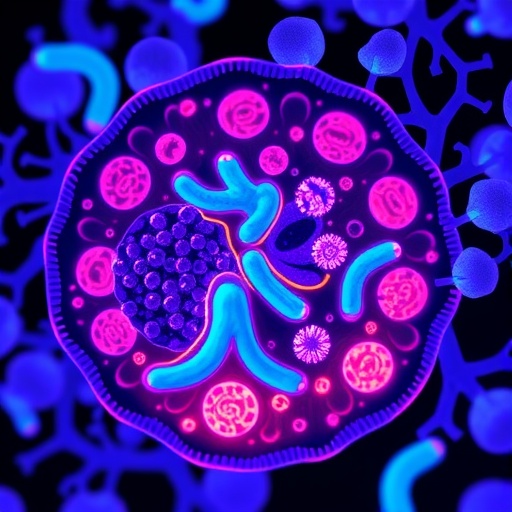
In a pioneering exploration into the microscopic ecosystems thriving within tumors, a recent comprehensive review has illuminated the complex relationship between intra-tumoral microbiota and various human cancers. This breakthrough synthesis of current research delineates how bacteria, viruses, fungi, and even parasitic elements residing inside tumors intricately influence cancer development, progression, and treatment outcomes—a startling development that blurs traditional boundaries between oncology and microbiology.
Microorganisms inhabiting tumor microenvironments are now recognized not merely as passive bystanders but as active participants that modulate genetic stability and immune dynamics. Among the multifaceted mechanisms, intra-tumoral microbes promote oncogenesis by integrating their genetic material into host DNA, causing mutations and genomic instability. They also hijack oncogenic signaling pathways essential for tumor survival and proliferation, thereby exacerbating malignant transformation and growth.
Of particular interest is the profound effect these microbes have on the tumor immune microenvironment. In general, they appear to dampen the immune system’s capacity to recognize and attack tumor cells, creating immunosuppressive niches that shield cancer from therapeutic assault. Yet, paradoxically, some bacterial species have been noted to enhance tumor immunotherapy efficacy, a duality that opens new avenues for precision medicine interventions harnessing microbial allies.
The diagnostic and prognostic potential of intra-tumoral microbiota is equally compelling. Distinct microbial signatures have been identified within tumor tissues and circulating blood that distinguish cancerous from normal tissues across a variety of cancers, including breast, lung, pancreatic, and colorectal malignancies. For example, the bacterium Fusobacterium nucleatum serves as a promising biomarker for cervical carcinoma, providing clinicians with novel tools for early detection and monitoring of disease progression.
Crucially, these microbial communities influence the response to standard cancer therapies. Their metabolic activities can inactivate chemotherapeutic agents or reprogram tumor cell metabolism to resist radiation, complicating patient management. The Gammaproteobacteria class, found in pancreatic tumors, produce enzymes that degrade gemcitabine, a first-line chemotherapy drug, directly conferring drug resistance and prompting treatment failure. Similarly, Lactobacillus iners in cervical cancer alters signaling pathways that promote resistance to both chemotherapy and radiotherapy.
The translational implications are profound. Scientists are now experimenting with therapeutic bacteria as delivery vehicles for cancer immunotherapies and vaccines. Engineered strains of Bifidobacterium, Salmonella, Clostridium, Listeria, and Escherichia coli have demonstrated enhanced anti-cancer responses in preclinical models, either by directly stimulating immune mechanisms or by modulating the tumor microenvironment to improve drug penetration and efficacy.
This paradigm shift signals a transformative era where cancer treatment transcends targeting malignant cells alone to include modulation of the tumor microbiome. The intricate molecular dialogue between cancer cells and their microscopic cohabitants demands a multidisciplinary approach integrating molecular biology, microbial ecology, immunology, and bioengineering to devise next-generation precision treatments.
The challenges ahead include fully deciphering the complexity of microbial communities within diverse tumor types and understanding how they evolve through the course of disease and therapy. Mapping these dynamic ecosystems requires cutting-edge sequencing technologies, metagenomic analyses, and sophisticated computational models to unravel causal relationships and therapeutic targets.
Moreover, clinical translation mandates robust validation of microbial biomarkers in large patient cohorts and the development of safe, controllable microbial therapeutics. Regulatory frameworks must evolve to accommodate living drugs, while ethical considerations arise around manipulating host microbiota with genetically modified organisms.
This newly articulated role of intra-tumoral microbiota also compels a re-examination of cancer etiology. The 2018 estimate attributing 13% of global cancer incidence to microorganisms underscores an often-underappreciated dimension of oncogenesis. Beyond well-known oncogenic viruses like HPV and EBV, emerging evidence implicates bacteria and fungi in tumor initiation and persistence, expanding the scope of microbial oncology.
The review, authored by leading researchers at the Army Medical University and affiliated institutions in China, comprehensively surveys these dimensions and calls for integrated research efforts to harness the tumor microbiome for diagnostic, prognostic, and therapeutic advancements. The recognition of microbes as central agents in cancer biology revolutionizes our understanding and opens extraordinary possibilities for personalized medicine.
As this field matures, the notion of “cancer as a microbial disease” gains scientific traction, catalyzing innovation in microbiome-targeted interventions that complement conventional therapies. Harnessing the tumor microbiota’s dual capacity to promote or impede malignancy could transform patient outcomes and herald a new chapter in oncology—a testament to the profound interdependence between humans and their microbial inhabitants.
Cite Scienmag News
Nathaniel Bowman. (October 24, 2025). Exploring the Intra-Tumoral Microbiome and Its Role in Cancer: A Comprehensive Review. Scienmag. https://scienmag.com/exploring-the-intra-tumoral-microbiome-and-its-role-in-cancer-a-comprehensive-review/
Nathaniel Bowman. "Exploring the Intra-Tumoral Microbiome and Its Role in Cancer: A Comprehensive Review." Scienmag, 24 October 2025, https://scienmag.com/exploring-the-intra-tumoral-microbiome-and-its-role-in-cancer-a-comprehensive-review/. Accessed 3 September 2026.
Nathaniel Bowman. "Exploring the Intra-Tumoral Microbiome and Its Role in Cancer: A Comprehensive Review." Scienmag. October 24, 2025. https://scienmag.com/exploring-the-intra-tumoral-microbiome-and-its-role-in-cancer-a-comprehensive-review/


