


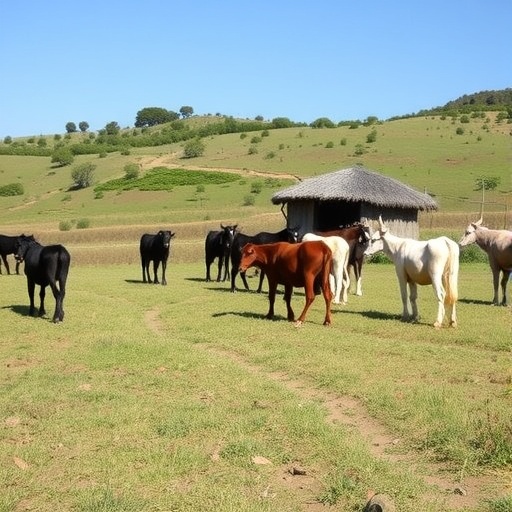
In the heart of Islamic Cártama, Málaga, Spain, there lies a treasure trove of archaeological insights, intricately woven into the study of livestock husbandry. The research conducted by Banerjea et al. delves deep into the micro and bioarchaeological complexities of an open-air Fumier sequence, shedding light on ancient techniques and cultural practices that have shaped the region’s agricultural landscape over centuries. This unique examination not only contributes to our understanding of historical livestock management but also highlights the importance of interdisciplinary approaches in archaeology.
As we explore the findings from Cártama, we are reminded of the intricate relationships that existed between humans and animals in medieval Islamic societies. The detailed analysis of faunal remains provides researchers with a nuanced understanding of the types of livestock cultivated and the methods employed in their management. These insights are pivotal, as they allow scholars to reconstruct not only agricultural practices but also broader socio-economic structures of the time.
The Fumier sequence represents an open-air context that offers a rare opportunity to study archaeological deposits in situ. This aspect of the research is particularly significant as it provides a chronological sequence of organic material that can be analyzed for various environmental indicators. Such a sequence is critical for tracking changes in livestock management practices over time, particularly in response to climatic shifts or socio-political influences.
Microarchaeological techniques, which involve the examination of small-scale archaeological material, play a crucial role in this study. By analyzing soil samples and residues from livestock pens, researchers are able to identify microfossils that reflect ancient dietary habits and livestock health. This granular level of detail unveils a sophisticated understanding of species preferences and breeding practices, enabling a more in-depth reconstruction of the husbandry techniques utilized by past societies.
Through bioarchaeology, which explores the human connections to animals, the study reveals how livestock were not merely agricultural assets but integral components of cultural identity and daily life. The remains of domesticated animals, evaluated through a bioarchaeological lens, indicate how they were woven into the fabric of agricultural rituals, socio-economic exchanges, and even spiritual beliefs of the communities in Cártama.
The findings from this expansive research project also emphasize the role of livestock in trade and economy. As Cártama was strategically located, it served as a nexus of agricultural exchange during the Islamic period. The abundance of faunal remains suggests that livestock not only supported local subsistence needs but also contributed significantly to regional commerce. The interplay between local practices and broader economic networks draws attention to the complexity of medieval Islamic agricultural societies.
In addition to livestock husbandry, the study also investigates the environmental context of the region during the period of interest. Understanding the flora and fauna that existed alongside domesticated animals provides essential insights into land use practices and ecological adaptations. This environmental aspect is critical in contextualizing agricultural activities, revealing how human interventions shaped, and were in turn shaped by, the natural landscape.
One of the compelling aspects of this research is its potential to inform contemporary sustainable agricultural practices. By examining historical models of livestock husbandry, modern farmers and agricultural scientists can glean valuable lessons on biodiversity, soil health, and resource management. The insights from these ancient practices could inspire sustainable methods that are both ecologically responsible and economically viable.
Moreover, Cártama’s rich pastoral history serves as a case study for understanding transitions in agricultural practices throughout history. Researchers trace how shifts in climate, technology, and societal needs prompted adaptations in livestock management. This historical perspective is vital as it provides a long-term view of agricultural resilience and adaptation strategies that can be particularly relevant in addressing current challenges posed by climate change.
In examining the broader implications of this research, we recognize its significance in the ongoing discourse surrounding food security and agricultural sustainability. The lessons drawn from historical practices underscore the importance of diversification and resilience in farming systems, resonating with contemporary issues faced by agricultural communities worldwide.
This comprehensive study not only enriches our understanding of medieval Islamic agricultural practices but also contributes to a broader narrative about human-animal relationships. The intricate interplay of biology, culture, and environment showcased in the study urges us to rethink how we perceive livestock in both historical and modern contexts.
As we stand at the crossroads of progressive agricultural practices and historical wisdom, the research conducted in Islamic Cártama illustrates the importance of interdisciplinary approaches in archaeology. It invites scholars to explore the symbiotic relationships that have existed between humans and animals, encouraging a deeper appreciation for the complexities of ancient agrarian societies.
In conclusion, the research on livestock husbandry in Islamic Cártama unveils a rich tapestry of interconnections between culture, environment, and economy. Through meticulous analysis of faunal remains and microarchaeological techniques, Banerjea and colleagues provide invaluable insights into the past, reminding us that the lessons of history can guide our future endeavors in agriculture and sustainability.
Cite Scienmag News
William Thompson. (November 20, 2025). Exploring Islamic Livestock Practices in Cártama, Málaga. Scienmag. https://scienmag.com/exploring-islamic-livestock-practices-in-cartama-malaga/
William Thompson. "Exploring Islamic Livestock Practices in Cártama, Málaga." Scienmag, 20 November 2025, https://scienmag.com/exploring-islamic-livestock-practices-in-cartama-malaga/. Accessed 4 September 2026.
William Thompson. "Exploring Islamic Livestock Practices in Cártama, Málaga." Scienmag. November 20, 2025. https://scienmag.com/exploring-islamic-livestock-practices-in-cartama-malaga/


