


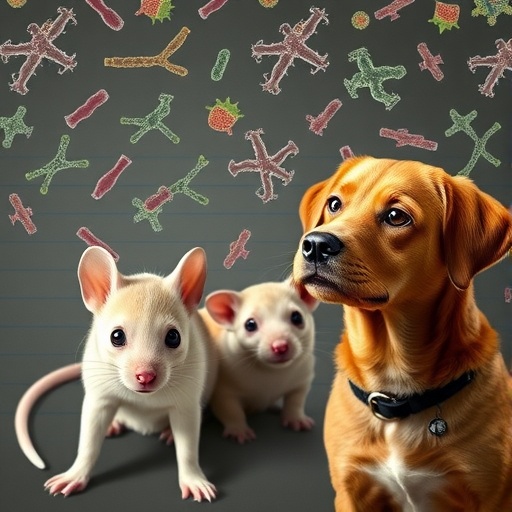
In a groundbreaking study, researchers aimed to dissect the intricacies of microbial ecosystems within the Ngorongoro district of Tanzania, focusing specifically on the bacterial communities present in rodents, dogs, and humans. This comparative metagenomic analysis reveals essential insights into the interactions between these species and their shared environments, highlighting the importance of understanding microbial diversity for public health and environmental conservation.
The research emerges from an area known for its rich biodiversity, including unique fauna and flora characteristic of the East African ecosystem. The Ngorongoro district, famous for its stunning landscapes and wildlife, provides a rare opportunity to study the intricate relationships among different species and the microbial communities that inhabit them. Understanding these relationships is critical, especially given the rising concerns over zoonotic diseases, which can be transmitted between animals and humans.
Metagenomics, the key methodology used in this study, transcends traditional microbiological techniques by allowing scientists to analyze genetic material recovered directly from environmental samples. This approach enables researchers to investigate the full spectrum of microbial life, without the need for culturing individual species. By employing this technique, the researchers were able to capture a comprehensive snapshot of the bacterial communities associated with rodents, dogs, and humans.
The findings of this study indicate significant differences in the composition of bacterial communities among the three groups. Rodents, often viewed as reservoir hosts for various pathogens, exhibited a distinct microbial profile that differed markedly from that found in domestic dogs. The complexity of the microbial communities in these rodents raises pertinent questions about their role in the transmission of zoonotic pathogens.
Dogs, on the other hand, displayed a more homogenized bacterial community, potentially reflective of their close association with human environments. The research suggests that domestic dogs may serve as intermediaries in the transmission of bacterial populations from wildlife to humans. This observation emphasizes the need for further investigation into the implications of pet ownership on human health, particularly in regions with heavy interactions between wildlife and domestic animals.
What is particularly striking about this research is the close evolutionary relationships shared by bacterial communities across all three groups. The presence of certain bacterial taxa in both human and canine samples suggests pathways for cross-species transmission, which may pose significant public health risks. Understanding these pathways is essential for developing effective preventive strategies against infectious diseases that might emerge from these interactions.
The comparative aspect of the study allows for a deeper understanding of how environmental factors shape microbial communities. The researchers noted that factors such as habitat type, diet, and social behavior significantly influence the microbial compositions of the studied species. This finding underscores the necessity for holistic approaches in disease prevention and public health initiatives which consider ecological, environmental, and social dimensions.
Moreover, the implications of these findings extend beyond the realm of public health. They play a crucial role in conservation strategies aimed at preserving biodiversity within this unique ecosystem. By acknowledging the interconnectedness of species and their microbial counterparts, conservationists can better address the risks associated with biodiversity loss, particularly in regions vulnerable to climate change and habitat destruction.
In addition to their ecological significance, the study’s findings have ramifications for the development of targeted antimicrobial therapies. Understanding the diversity and functions of bacterial communities can assist in identifying potential microorganisms for biotechnological applications. Such insights could lead to innovative solutions in agriculture, medicine, and biotechnology.
The prevalence of antibiotic resistance among bacteria is an urgent global issue, and this study provides a critical viewpoint on the identification of antibiotic profiles within these communities. By analyzing resistance genes present in the bacterial DNA, the researchers can propose recommendations for antibiotic stewardship programs, aimed at reducing the spread of resistant bacteria from animals to humans.
Through their meticulous work, the researchers have laid the groundwork for future studies aimed at unraveling the complexities of host-microbe interactions. Their findings advocate for an interdisciplinary approach, where microbiology, ecology, and public health converge to generate more comprehensive strategies against infectious diseases. The necessity for collaborative efforts extends to policymakers, healthcare providers, and conservationists who must work together to tackle the pressing challenges posed by zoonotic diseases.
As the study comes to light, it encourages other researchers in the field to consider the implications of their findings on public health policies and practices. The need for continued exploration of similar ecological niches around the globe is vital to improve our understanding of how diverse environments influence microbial behavior and their relationship with host organisms.
The revelations presented by this research underscore the urgency of addressing the interplay between wildlife, domestic animals, and humans in the context of infectious disease management. By recognizing the interconnectedness of these species through the lens of microbial diversity, we can better prepare for future health crises that may arise from our expanding interactions with wildlife and our environment.
In conclusion, the comparative metagenomic analysis conducted by Issae et al. represents a significant advancement in our understanding of bacterial communities across species. As we navigate the challenges of infectious diseases and biodiversity conservation, it is imperative to utilize such research to inform and shape our strategies in public health and environmental stewardship for generations to come.
Issae, A.R., Njau, E.P. & Chengula, A.A. Comparative metagenomic analysis of bacterial communities across rodents, dogs, and humans in Ngorongoro district, Tanzania.
Discov Anim 2, 58 (2025). https://doi.org/10.1007/s44338-025-00117-3
Cite Scienmag News
Morgan Morrow. (September 3, 2025). Exploring Bacterial Diversity in Rodents, Dogs, and Humans. Scienmag. https://scienmag.com/exploring-bacterial-diversity-in-rodents-dogs-and-humans/
Morgan Morrow. "Exploring Bacterial Diversity in Rodents, Dogs, and Humans." Scienmag, 3 September 2025, https://scienmag.com/exploring-bacterial-diversity-in-rodents-dogs-and-humans/. Accessed 6 September 2026.
Morgan Morrow. "Exploring Bacterial Diversity in Rodents, Dogs, and Humans." Scienmag. September 3, 2025. https://scienmag.com/exploring-bacterial-diversity-in-rodents-dogs-and-humans/


