


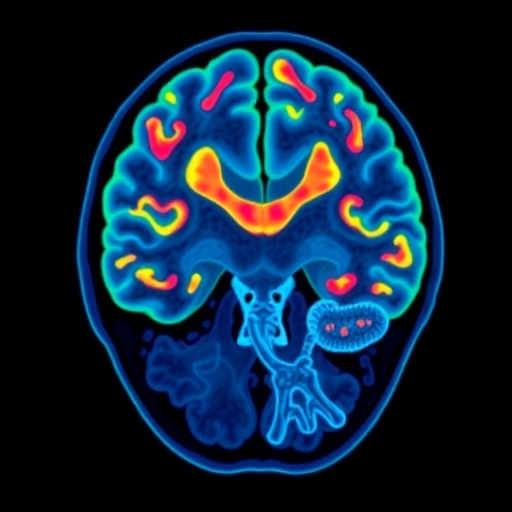
Recent advancements in artificial intelligence and machine learning have begun to significantly change the landscape of healthcare, particularly in the area of predicting patient outcomes. One of the most intriguing applications of these technologies is in the field of endocrinology, specifically the prediction of recurrence after surgery for pituitary adenomas. A recent systematic review and meta-analysis conducted by Mohammadzadeh et al. delves deeply into machine learning-based models that aim to improve recurrence prediction in patients with this specific type of brain tumor.
Pituitary adenomas, benign tumors that occur in the pituitary gland, can lead to various hormonal imbalances and a range of medical conditions. Surgical removal is often a primary treatment, yet the recurrence of these tumors post-surgery poses a significant challenge for both patients and healthcare providers. Understanding the factors that contribute to recurrence is crucial for developing strategies to mitigate risks and improve long-term patient outcomes. This is where machine learning comes into play.
The systematic review by Mohammadzadeh and colleagues compiles existing studies that have attempted to utilize machine learning algorithms in predicting the likelihood of recurrence for patients. By analyzing multiple datasets and applying advanced statistical techniques, their review sought to provide a comprehensive overview of the current capabilities of these predictive models. The findings are indicative of a growing trend whereby machine learning methodologies are being increasingly recognized for their potential to revolutionize prognostic assessments in clinical settings.
One of the key advantages of machine learning models lies in their ability to analyze large volumes of data quickly and efficiently. Traditional methods of analysis may be constrained by human limitations in processing capabilities, whereas machine learning algorithms can scrutinize tens of thousands of variables simultaneously. This allows for the identification of subtle patterns and correlations that might otherwise go unnoticed. In the context of pituitary adenoma recurrence, such models take into account not only clinical variables but also demographic and genetic factors that might influence outcomes.
The review highlights a variety of machine learning techniques, including decision trees, support vector machines, and neural networks, each contributing uniquely to the predictive accuracy of recurrence models. The discussed methodologies encompass both supervised and unsupervised learning strategies, allowing researchers to train models on historical data while also uncovering latent patterns in unlabelled data. By integrating diverse machine learning approaches, researchers have demonstrated enhanced prediction capabilities that could lead to more tailored and effective patient management strategies.
The findings presented in this review also emphasize the importance of data quality and integrity in the development of reliable predictive models. A significant challenge in machine learning applications in medicine is the incidence of noisy or incomplete data. The systematic review underscores the necessity for meticulous data collection and preprocessing to fortify the predictive performance of machine learning models. Ensuring the quality of input data can markedly influence the robustness and trustworthiness of the outcomes generated by these algorithms.
Moreover, the ethical implications of utilizing machine learning in healthcare cannot be overstated. As algorithms gain traction in predicting patient outcomes, concerns regarding bias in the training data arise. The review calls for vigilance in ensuring that machine learning models are trained on diverse and representative datasets to avoid perpetuating existing health disparities. Only through careful consideration of ethical factors can we ensure that these tools serve the best interests of all patients.
An intriguing aspect of Mohammadzadeh et al.’s study is the focus on how these machine learning models can be integrated into existing clinical workflows. The transition from academic research to practical application is fraught with challenges, yet it is essential for translating predictive capabilities into actionable clinical strategies. By demonstrating the utility of machine learning in assisting healthcare providers with decision-making, this review paves the way for a new era in personalized medicine.
Importantly, the generalizability of machine learning models across different populations is another focal point of the systematic review. While some algorithms have shown impressive results within specific cohorts, the potential for broader application remains to be evaluated. Ongoing validation studies will be necessary to determine how these models perform in diverse clinical contexts and populations, which is essential for ensuring equitable healthcare solutions.
As researchers continue to refine machine learning algorithms and expand their capabilities, the potential for significantly improving the management of pituitary adenomas becomes increasingly evident. The systematic review acts as a catalyst for further exploration into the integration of these advanced technologies within the realms of endocrinology and neurosurgery. Given the potential for real-time analytics, healthcare providers may soon be empowered with tools that allow for immediate assessments based on the latest data inputs.
In conclusion, the pioneering work conducted by Mohammadzadeh et al. on the application of machine learning to predict recurrence after pituitary adenoma surgery serves as a significant milestone in the intersection of artificial intelligence and medicine. As the body of evidence grows and machines become more capable of understanding complex medical data, the inevitability of machine learning becoming a staple in clinical practice becomes clearer. The prospect of personalized treatment plans tailored to the individual needs of patients holds remarkable promise for the future of medical care.
As we embrace these technological advancements, ongoing collaboration between data scientists, clinicians, and ethicists will be fundamental to navigate the complexities of implementing machine learning solutions. By harnessing the power of artificial intelligence and ensuring responsible application, we stand at the precipice of a revolutionary shift in how we approach the treatment of pituitary adenomas and indeed, many other medical conditions. The convergence of technology and healthcare is no longer a distant possibility, but a present reality that holds the potential to transform patient outcomes for the better.
Mohammadzadeh, I., Hajikarimloo, B., Niroomand, B. et al. Prediction of recurrence after surgery for pituitary adenoma using machine learning- based models: systematic review and meta-analysis.
BMC Endocr Disord 25, 158 (2025). https://doi.org/10.1186/s12902-025-01955-8
Cite Scienmag News
Blake Davidson. (September 3, 2025). Machine Learning Models Predict Pituitary Adenoma Recurrence. Scienmag. https://scienmag.com/machine-learning-models-predict-pituitary-adenoma-recurrence/
Blake Davidson. "Machine Learning Models Predict Pituitary Adenoma Recurrence." Scienmag, 3 September 2025, https://scienmag.com/machine-learning-models-predict-pituitary-adenoma-recurrence/. Accessed 5 September 2026.
Blake Davidson. "Machine Learning Models Predict Pituitary Adenoma Recurrence." Scienmag. September 3, 2025. https://scienmag.com/machine-learning-models-predict-pituitary-adenoma-recurrence/


