


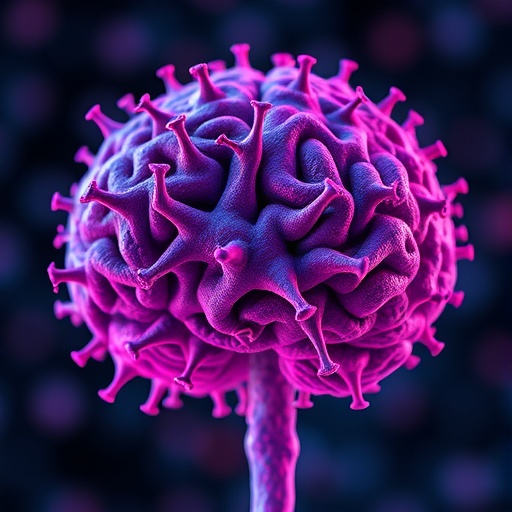
In a groundbreaking study that redefines our understanding of Ebola virus biology within the human brain, researchers have unveiled the key host-virus dynamics responsible for viral persistence using an advanced human cerebral organoid model. This pioneering work not only elucidates the molecular interplay enabling Ebola virus to evade immune clearance but also opens new avenues for tackling viral reservoirs that have long hindered complete therapeutic eradication. The cerebral organoid, a sophisticated three-dimensional tissue culture replicating critical aspects of human brain architecture, provides an unprecedented window into virus-host interactions at the neurological frontier.
Ebola virus is notorious for causing severe hemorrhagic fever with high fatality rates, yet little is known about its potential to persist in immune-privileged sites such as the central nervous system. The human brain poses formidable barriers, including the blood-brain barrier and specialized immune environments, which complicate viral clearance. By employing organoids that recapitulate human neuronal and glial populations, the researchers were able to simulate infection scenarios that mimic natural pathways of neuroinvasion. This innovation sidesteps ethical and practical challenges inherent in studying viral persistence in human brains postmortem, granting real-time insights into viral lifecycle stages within neural tissues.
The authors meticulously characterized the spatiotemporal kinetics of Ebola virus replication and spread within the cerebral organoids. Initial infection events predominantly targeted neuronal progenitor populations, triggering a cascade of cellular responses that include antiviral signaling and inflammatory cytokine production. However, subsets of infected neural cells demonstrated attenuated antiviral responses, suggesting viral modulation of host defense pathways. These susceptible cellular niches appear to harbor persistent viral RNA and proteins, indicating reservoirs capable of evading innate immune clearance mechanisms.
Crucially, the study identifies several host determinants implicated in maintaining viral persistence. Transcriptomic profiling revealed differential expression of interferon-stimulated genes and apoptosis regulators in persistently infected cells. Notably, the virus modulates expression of key genes connected to cellular metabolism and immune sensing, which likely creates a microenvironment conducive to its survival. The discovery that Ebola virus can actively reprogram host gene networks to dampen antiviral states sheds new light on the virus’s survival tactics beyond acute infection periods.
One of the compelling technical advancements in this research is the use of single-cell RNA sequencing coupled with high-resolution imaging within the organoid model. This approach allowed the team to dissect heterogeneity in viral infection at a single-cell level. It revealed that viral persistence is not uniform but rather occurs in specialized cell subsets displaying unique transcriptional and phenotypic signatures. These insights highlight the importance of cellular diversity in shaping viral reservoir formation and underscore that targeting persistent infection requires cell-type-specific therapeutic strategies.
Furthermore, the study explores the viral determinants contributing to persistence, demonstrating that specific Ebola virus proteins are instrumental in modulating host-cell responses. The viral glycoprotein GP emerged as a multifaceted factor, facilitating entry into neural cells and influencing intracellular signaling pathways that blunt antiviral defenses. Mutational analyses pinpointed domains within GP essential for establishing and maintaining persistence, offering potential targets for antiviral drug development focused on disrupting these critical interactions.
In addition to viral factors, the extracellular matrix composition within the cerebral organoid appears to play a supportive role in viral persistence. Matrix remodeling enzymes are upregulated in persistently infected organoids, hinting at a dynamic environment where physical and biochemical barriers favor viral sequestration and protection from immune effector molecules. This novel aspect of the host microenvironment’s contribution to viral survival expands the conceptual landscape of viral persistence beyond purely cellular mechanisms.
The implications of this study extend to understanding post-recovery sequelae in Ebola survivors, particularly neurological complications that have been clinically documented but remain mechanistically obscure. Persistent brain infection may underlie long-term cognitive and motor deficits observed after apparent clinical resolution. By mimicking human brain tissue infection, the cerebral organoid model enables the investigation of these chronic neurological manifestations and paves the way for better prognostic markers and tailored therapeutic interventions.
Another domain addressed involves the interaction between the virus and the resident glial cells, which are pivotal for maintaining brain homeostasis and immune surveillance. The researchers found that infected astrocytes and microglia undergo phenotypic changes indicative of activation yet paradoxically fail to mount effective antiviral responses. This dysfunctional glial activation could contribute to a permissive environment for viral reservoirs, delineating a complex crosstalk between neuroinflammation and viral persistence that warrants further exploration.
Importantly, the research does not overlook the potential translational applications of the cerebral organoid model. It establishes a platform for preclinical testing of antiviral compounds targeting persistent infection within neural tissues. Screening of candidate drugs revealed differential efficacy patterns compared to peripheral infection models, highlighting the necessity of brain-targeted therapeutics. These findings advocate for a paradigm shift in Ebola virus treatment strategies, emphasizing the need to address CNS reservoirs to prevent relapse and transmission.
The ethical dimension of using human-derived cerebral organoids also brings renewed focus on the refinement of experimental virology methods. This model bypasses reliance on animal studies and provides a human-specific context, which is often lost in traditional in vivo systems. The study exemplifies how cutting-edge bioengineering can drive both scientific discovery and ethical progress, fostering a more precise understanding of infectious diseases impacting the brain.
Notably, the study draws attention to the parallels between Ebola virus persistence mechanisms and those employed by other neurotropic viruses, such as herpesviruses and flaviviruses. These similarities hint at conserved strategies employed by RNA viruses to establish quasi-latent or low-level chronic infections within the brain. Cross-disciplinary investigations leveraging the cerebral organoid model could uncover universal principles governing viral persistence, with implications for a broad spectrum of neuroinfectious diseases.
The researchers also emphasize that the cerebral organoid model can be genetically manipulated to dissect host factors genetically involved in viral persistence. Using CRISPR-Cas9 mediated gene editing, they disrupted candidate host genes to validate their functional roles, confirming the importance of several antiviral signaling pathways in containing viral spread. This functional genomics capability accelerates hypothesis-driven research and enables the identification of host targets amenable to pharmacological modulation.
Concluding, this body of work represents a landmark achievement in infectious disease research, integrating virology, neuroscience, genomics, and bioengineering to tackle one of the most formidable viral pathogens known to humanity. It not only demystifies the elusive nature of Ebola virus persistence in the brain but also offers a robust experimental foundation for the next generation of antiviral interventions aimed at eradicating latent brain reservoirs. The broad scientific and clinical implications extend beyond Ebola, affirming the cerebral organoid model as an indispensable tool for decoding viral pathogenesis and persistence in human neural tissues.
This research heralds a transformative moment in our quest to understand and ultimately eliminate persistent viral infections in the human brain. As we deepen our molecular and cellular insights, the hope for effective cures that prevent long-lasting neurological damage and recurrent outbreaks moves closer to reality. The fusion of organoid technology and detailed host-virus interaction studies will undoubtedly shape the future landscape of neuroinfectious disease research and therapy development.
Cite Scienmag News
Cassandra Pierce. (June 12, 2026). Decoding Ebola Persistence in Human Brain Organoids. Scienmag. https://scienmag.com/decoding-ebola-persistence-in-human-brain-organoids/
Cassandra Pierce. "Decoding Ebola Persistence in Human Brain Organoids." Scienmag, 12 June 2026, https://scienmag.com/decoding-ebola-persistence-in-human-brain-organoids/. Accessed 3 September 2026.
Cassandra Pierce. "Decoding Ebola Persistence in Human Brain Organoids." Scienmag. June 12, 2026. https://scienmag.com/decoding-ebola-persistence-in-human-brain-organoids/


