


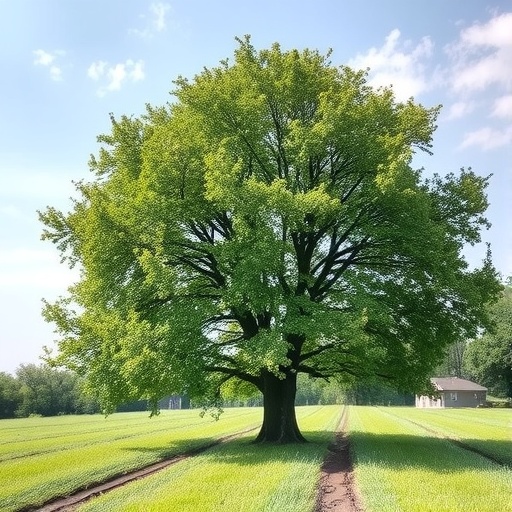
In recent years, environmental concerns surrounding air quality have escalated, primarily due to rapid industrial expansion and urbanization. This has initiated numerous studies aimed at understanding how different plant species respond to air pollution. A pivotal study conducted by Ubaekwe and colleagues focuses on the assessment of air pollution tolerance and the anticipated performance index of selected tree species located around oil and gas industrial sites in Southern Nigeria. As crucial components of urban ecosystems, trees not only provide aesthetic value but also play an essential role in air quality management.
The study highlights the urgent need to evaluate how tree species react to common pollutants such as sulfur dioxide, nitrogen oxides, and particulate matter, which are released in high quantities from fossil fuel extraction and processing. With the ongoing climate crisis and increasing energy demands, it becomes necessary to investigate plant resilience and their ability to thrive despite harsh environmental conditions. This research not only emphasizes the importance of trees in combating air pollution but also offers insights into the selection of suitable tree species for urban greening initiatives.
Researchers sampled a variety of tree species located in industrial zones, measuring various physiological indicators of air pollution tolerance. The study particularly focused on the presence of inherent characteristics within these trees that allow them to absorb or resist pollutants, thus enhancing their sustainability. The criteria used to gauge air pollution tolerance included leaf chlorophyll content, photosynthetic rate, and overall leaf health. Such detailed parameters are critical for understanding the adaptive traits of trees in polluted environments.
The anticipated performance index provides a holistic view of each species’ capability to survive, adapt, and contribute positively to their surroundings. By utilizing this index, the researchers could effectively rank the species based on their air quality improving abilities. This ranking serves as a guide not merely for scientific understanding but also for practical applications in urban planning and landscape management in industrial regions. Selecting the right species is vital for reforestation and afforestation programs aimed at enhancing air quality.
The implications of this study extend beyond Southern Nigeria. Many nations, especially those with booming industrial sectors, face similar challenges regarding air pollution. The findings offer a framework that can be adapted to other geographical locations, guiding policymakers in selecting the most efficient tree species for urban greenery projects designed to mitigate air pollution. Understanding the ecological processes that enable certain trees to flourish in polluted environments can lead to better environmental management technologies.
In addition to their air-purifying properties, trees contribute to biodiversity, offering habitats for various wildlife species and enriching local ecosystems. The findings of the study underscore the multifaceted role trees play beyond simply being a green façade in metropolitan settings. The interrelationships within ecosystems involve intricate trade-offs; thus, the survival of these tree species can lead to enhanced biodiversity, which, in turn, can foster sustained ecological resilience.
Furthermore, the ongoing research emphasizes the need for integrating ecological considerations into urban development plans. There is a growing recognition that trees are not merely ornamental but are integral to urban health and well-being. They serve as natural barriers against noise pollution and provide shade, which can mitigate urban heat islands—a pressing concern in densely populated areas. Trees fundamentally alter the urban microclimate, promoting a more livable environment.
Through this comprehensive assessment, the study reinforces the importance of collaboration between scientific research and policy advocacy. Data-driven approaches are essential for informing urban planners and local governments to make evidence-based decisions on green spaces’ integration into industrial landscapes. Organizations and communities are urged to engage in discussions about preserving and enhancing tree cover in the face of ongoing urbanization pressures.
The study by Ubaekwe and colleagues is an excellent case study showcasing the relevance of scientific exploration in contemporary environmental issues. Their work beckons further research into not only the tolerance of tree species but also the underlying mechanisms that promote their resistance to air pollutants. Additional investigations could lead scientists to discover new traits and genetic variations that could be harnessed for more sustainable forestry practices.
By offering a detailed analysis of tree species’ abilities to withstand the challenges posed by air pollution, this research contributes significantly to the conversation on sustainable urban development. As cities continue to grow, strategies promoting biodiversity, green cover, and cleaner air must be at the forefront of ecological discussions.
The intricate balance achieved by integrating ecological research with urban planning can yield substantial long-term benefits for public health and the environment. Transitioning towards greener infrastructures is no longer optional but essential in curbing the profound impacts of pollution on both human and ecological health. The future hinges on our ability to adapt and resilience within our urban ecosystems, where trees play a pivotal role.
Policymakers, scientists, and citizens alike must prioritize the findings of such studies in order to foster a future marked by sustainable urban practices that harmonize with the environment rather than exploit it. The significant role that selected tree species can play in alleviating air pollution should not be underestimated, as their preservation and integration into urban landscapes may hold the key to safeguarding both current and future generations against the ramifications of industrial impacts.
Cite Scienmag News
Russell Cooper. (January 11, 2026). Evaluating Tree Species Tolerance to Oil Industry Pollution. Scienmag. https://scienmag.com/evaluating-tree-species-tolerance-to-oil-industry-pollution/
Russell Cooper. "Evaluating Tree Species Tolerance to Oil Industry Pollution." Scienmag, 11 January 2026, https://scienmag.com/evaluating-tree-species-tolerance-to-oil-industry-pollution/. Accessed 3 September 2026.
Russell Cooper. "Evaluating Tree Species Tolerance to Oil Industry Pollution." Scienmag. January 11, 2026. https://scienmag.com/evaluating-tree-species-tolerance-to-oil-industry-pollution/


