


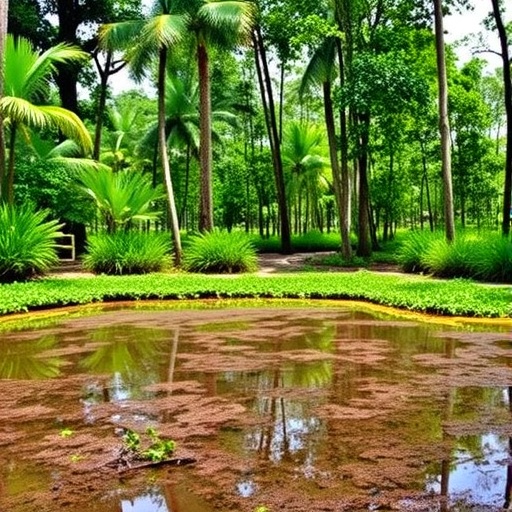
In a groundbreaking study, researchers have delved into the spatiotemporal dynamics of land use and land cover (LULC) changes within the freshwater swamp forests of Bangladesh. This region, characterized by its unique biodiversity and complex ecosystem dynamics, has attracted significant attention from ecologists and environmental scientists alike. The study hinges on the utilization of advanced remote sensing indices, namely the Normalized Difference Vegetation Index (NDVI) and the Enhanced Vegetation Index (EVI), to assess these changes over time.
The freshwater swamp forests of Bangladesh have long been recognized as critical habitats that provide essential ecosystem services. These forests support a wealth of biodiversity, including various flora and fauna that are endemic to the region. However, recent anthropogenic pressures, such as agriculture, urbanization, and industrialization, have raised alarms regarding the sustainability of these ecosystems. Understanding how land use and land cover have evolved is crucial for conservation efforts and policymaking.
The researchers, led by I.A. Fagun and colleagues, employed sophisticated satellite imagery and remote sensing tools to monitor changes in the swamp forest ecosystem over a specified period. NDVI and EVI are key indicators used to measure vegetation health and density, which can be indicative of broader ecological shifts. By analyzing these indices, the team aimed to create a comprehensive picture of how land use has transformed in this biodiverse locale.
The study’s methodology involved meticulous data collection and analysis. By utilizing time series data from satellite images, the researchers were able to generate detailed maps illustrating LULC changes across different seasonal and climatic conditions. These maps revealed critical insights into the extent of deforestation, habitat fragmentation, and the encroachment of agricultural activities into swamp forest areas.
One of the most remarkable findings of this study was the quantification of the rates at which the swamp forests have changed over time. The statistical analysis conducted by the researchers provided a clear narrative of the landscape’s transformation, highlighting both the losses and gains experienced within the ecosystem. The findings underscore the urgency for conservation initiatives aimed at protecting these vital habitats from ongoing degradation.
As agricultural practices expand, primarily driven by population growth and urban development, the pressure on swamp forests intensifies. The researchers observed a notable shift in land cover, with certain areas experiencing extensive deforestation while others showed signs of persistent vegetation. This duality highlights the complex interactions between human activities and environmental resilience, shedding light on the multifaceted nature of ecosystem responses.
Another pivotal aspect of the research was the exploration of the seasonal variations in NDVI and EVI readings. The study revealed that changes in moisture levels, temperature, and human encroachment cyclically influences vegetation health. Understanding these seasonal dynamics is essential for creating effective conservation strategies, as it offers critical insights into when and how to implement protective measures.
The implications of this research extend beyond academic interest; they resonate with the urgent need for informed environmental policy and management strategies. The findings lay the groundwork for dialogues among stakeholders ranging from governmental agencies to local communities. Establishing collaborative conservation efforts will be key to balancing ecological needs with socioeconomic realities.
In the realm of climate change, the role of swamp forests as carbon sinks cannot be understated. The participants in this study emphasized the importance of preserving these ecosystems to mitigate the impacts of climate fluctuations. The restoration and conservation of swamp forests are critical not just for preserving biodiversity, but also for combatting climate change and ensuring the sustainability of the region’s natural resources.
Moreover, the transferability of the methods employed in this study opens avenues for assessing LULC changes in other vulnerable ecosystems across the globe. The utilization of NDVI and EVI as standard indicators can enhance the global understanding of vegetation dynamics under varying environmental pressures. In a world increasingly challenged by ecological degradation, the insights derived from this research could serve as a model for similar assessments elsewhere.
Overall, the study conducted by Fagun et al. represents a vital contribution to the field of ecological research. It not only provides crucial data on the spatiotemporal changes within Bangladesh’s freshwater swamp forests but also emphasizes the need for continual monitoring of these ecosystems. The interplay between human activity and environmental health underscores the mission of future research endeavors to foster resilience in vulnerable habitats.
In conclusion, as the researchers shed light on the health and trajectory of the swamp forests in Bangladesh, they also spark a conversation about the need for sustainable practices that prioritize ecological integrity. The stewardship of such unique ecosystems is not just an academic exercise but a moral imperative for current and future generations. This study serves as a call to action for both researchers and policymakers alike.
Through the integration of advanced remote sensing technologies and robust statistical analysis, this research stands as a beacon of hope in the fight against environmental decline. As the world grapples with the dual challenges of biodiversity loss and climate change, studies like this could pave the way towards a more sustainable and equitable future.
Fagun, I.A., Chowdhury, S.J.K., Shipra, N.T. et al. Assessing spatiotemporal LULC changes using NDVI and EVI in a freshwater swamp forest of Bangladesh.
Discov. For. 1, 34 (2025). https://doi.org/10.1007/s44415-025-00037-w
Cite Scienmag News
Margaret Porter. (September 15, 2025). Evaluating Land Use Changes in Bangladesh’s Swamp Forest. Scienmag. https://scienmag.com/evaluating-land-use-changes-in-bangladeshs-swamp-forest/
Margaret Porter. "Evaluating Land Use Changes in Bangladesh’s Swamp Forest." Scienmag, 15 September 2025, https://scienmag.com/evaluating-land-use-changes-in-bangladeshs-swamp-forest/. Accessed 6 September 2026.
Margaret Porter. "Evaluating Land Use Changes in Bangladesh’s Swamp Forest." Scienmag. September 15, 2025. https://scienmag.com/evaluating-land-use-changes-in-bangladeshs-swamp-forest/


