


In the years since devastating wildfires have swept across the American West, scientists have grown increasingly concerned about a danger that arrives after the flames are extinguished: flash floods and debris flows that cascade down burned hillslopes with little warning, threatening lives, homes, and infrastructure far beyond the fire’s footprint. A new study published in Communications Earth & Environment by Matthew A. Thomas, Joseph Kostelnik, and Christopher W. Bombard documents for the first time the full scale of mounting damage and economic losses in the United States caused by post-wildfire hydrologic hazards, and the numbers reveal a crisis that has been quietly building alongside the country’s worsening fire regime.
The research team assembled a comprehensive national database of post-wildfire flash flood and debris flow incidents, compiling records of documented damage, fatalities, injuries, and monetary losses across multiple decades. The resulting catalog demonstrates that these hazards, long treated by emergency managers as secondary consequences of fire rather than primary disasters in their own right, have inflicted billions of dollars in cumulative losses and caused numerous casualties. The authors show that the frequency and severity of damaging events have increased markedly in recent years, tracking the expansion of burned area across the western United States and the growing density of development at the wildland-urban interface.
The physical mechanism behind post-fire flooding and debris flows is well understood in the geomorphology community, but its consequences have historically been underestimated. Wildfire consumes vegetation and can render soils hydrophobic by vaporizing organic compounds that then condense on soil particles, creating water-repellent layers beneath the surface. When intense rainfall strikes a recently burned catchment, infiltration is drastically reduced, and instead of soaking into the ground, water races downslope as sheet flow and rill flow, eroding sediment and coalescing into channelized floods. Where enough sediment is available and the runoff is sufficiently powerful, the flowing mixture of water, mud, boulders, and charred debris becomes a debris flow, a dense slurry that can travel far faster than a water flood of comparable volume and exert forces on structures that conventional flood engineering is not designed to withstand.
What makes these events especially dangerous is their timing relative to the fire and the rainfall that triggers them. Burned-area emergency response teams typically issue assessments in the weeks following containment, identifying basins at elevated risk. But the hazard window can extend for years, until vegetation regrows and soil structure recovers. Within the first year or two after a fire, even moderate rainstorms that would ordinarily be absorbed harmlessly can generate runoff coefficients many times higher than those of unburned hillslopes. The new study emphasizes that rain-on-burned-landscape events are frequently triggered by storms of surprisingly modest intensity, particularly in the first rainy season after burning, when thresholds for debris flow initiation can be reached by rainfall that poses no threat to adjacent unburned terrain.
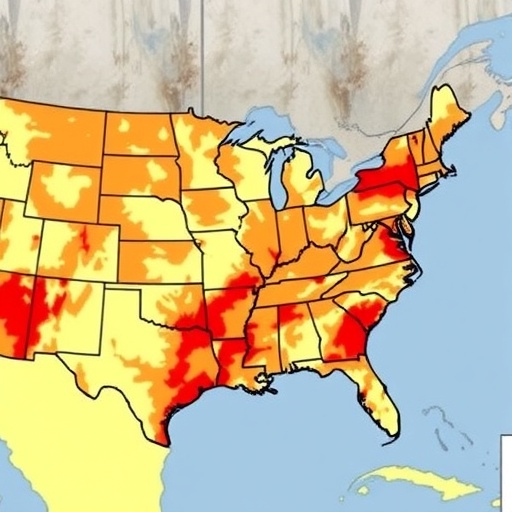
The database compiled by Thomas and colleagues allowed the authors to trace the geography of these losses in unprecedented detail. California emerges as the epicenter of documented impacts, consistent with its combination of frequent large wildfires, steep terrain, sediment-rich geology, and dense downstream development. But the study makes clear that the problem is national in scope. Events have been documented across the Intermountain West, the Southwest, the Rocky Mountains, and the Pacific Northwest, and in some cases hundreds of kilometers from the fire perimeters that set them in motion. Debris flows and floods have inundated highways, buried rail lines, damaged water-treatment and utility infrastructure, destroyed homes, and forced evacuations of entire communities. The Montecito disaster of January 2018, in which debris flows following the Thomas Fire killed more than twenty people and destroyed over a hundred structures, remains the most sobering illustration of what post-fire hazards can do, but the database shows that damaging events of smaller magnitude occur nearly every year somewhere in the country.
One of the study’s central findings concerns the trajectory of monetary losses. By normalizing reported damage figures and examining them over time, the authors document a steep upward trend in both the number of damaging events and the associated losses, a pattern consistent with the combined effect of expanding burned area, more frequent high-intensity rainfall in burned basins, and continued construction in hazard-prone canyons and alluvial fans. Alluvial fans, the gently sloping landforms at the mouths of mountain canyons, are natural deposition zones for debris flows, and they are also among the most sought-after real estate in the mountainous West. The study highlights the mismatch between the pace of development on these fans and the recognition, in hazard maps and building codes, that post-wildfire process zones extend well beyond mapped floodplains.
The authors also address a gap in the national disaster accounting system. Post-wildfire flooding and debris flows are often classified administratively as flood events, if they are recorded at all, which obscures their connection to wildfire and frustrates efforts to quantify the true cost of fire. A wildfire whose flames never touch a single structure can still generate downstream hazards that destroy homes and kill people, yet the damage is seldom attributed back to the fire that created the conditions. By systematically linking documented flood and debris flow damage to the fires that preceded them, the new database provides the first robust national accounting of this hidden toll, and the authors argue that such attribution is essential for correct valuation of fire mitigation, burned-area rehabilitation, and downstream protection investments.
The implications for emergency management are significant. The National Weather Service issues post-wildfire flash flood and debris flow warnings, and the United States Geological Survey has developed predictive models that estimate debris flow likelihood and volume for individual burned basins given rainfall forecasts. These tools have improved materially in recent years, incorporating relations between burn severity, basin steepness, soil properties, and rainfall intensity-duration thresholds. Yet the study’s casualty and damage records indicate that warning lead times remain short and that many residents of burned watersheds are unaware of the hazard. Unlike wildfire evacuation zones, which are increasingly mapped and communicated, post-fire flow hazard zones are rarely designated in advance, leaving responders and residents to improvise after ignition.
Rehabilitation treatments intended to reduce post-fire hazard, including mulching, seeding, contour felling of burned trees, and installation of debris basins and debris racks, show mixed effectiveness in the scientific literature. Physical modeling and field monitoring suggest that hillslope treatments can reduce erosion modestly but are often overwhelmed by storms of the intensity capable of generating debris flows, while structural measures such as debris basins, where they exist, can prevent catastrophic deposition but require maintenance capacity that many small communities lack. The study’s loss data underscore the economic argument for preventive investment: the documented costs of repeated debris removal, road reconstruction, and home destruction in repeatedly affected basins far exceed the cost of pre-storm mitigation in many of the locations analyzed.
Climate change threads through the entire problem. Fires in the western United States have increased in area and severity as warming temperatures, earlier snowmelt, and longer fire seasons dry fuels, and the atmospheric rivers and convective storms that deliver intense rainfall are projected to intensify in a warmer atmosphere. The combination means that the overlap between recent large fires and intense precipitation is likely to become more frequent, not less. The study’s authors note that several of the largest documented loss events occurred when a significant storm arrived within the first autumn after a major summer fire, a scenario that climate projections suggest will recur with greater regularity. The first rainy season after a fire is thus emerging as a distinct and recurring disaster window that federal, state, and local agencies can anticipate and prepare for in ways they historically have not.
The publication of a national, fire-linked database of post-wildfire flood and debris flow losses marks a turning point in how these hazards can be studied and managed. Researchers can now quantify exposure and vulnerability with the same rigor applied to riverine flooding, insurers can begin to price a risk that has been largely invisible to the market, and planners can incorporate post-fire hazard zones into land-use decisions for the growing communities at the base of the nation’s fire-prone mountains. The authors hope that the database will be maintained and expanded as new events occur, providing a continuously updated record of a hazard class that is no longer possible to dismiss as an occasional footnote to wildfire.
What the study ultimately documents is a cascading disaster cycle that the United States has been experiencing without fully counting. Fire transforms landscapes, rain converts burned landscapes into hazards, and development places people and property in the path of the resulting flows. The mounting damage and losses quantified by Thomas, Kostelnik, and Bombard make clear that the true cost of wildfire in America extends far beyond the burned acres, and that managing the post-fire months and years must become as central to national fire policy as suppression and prevention themselves.
Cite Scienmag News
Violet Maxwell. (September 5, 2026). Post-wildfire flash floods and debris flows drive rising US losses. Scienmag. https://scienmag.com/post-wildfire-flash-floods-and-debris-flows-drive-rising-us-losses/
Violet Maxwell. "Post-wildfire flash floods and debris flows drive rising US losses." Scienmag, 5 September 2026, https://scienmag.com/post-wildfire-flash-floods-and-debris-flows-drive-rising-us-losses/. Accessed 5 September 2026.
Violet Maxwell. "Post-wildfire flash floods and debris flows drive rising US losses." Scienmag. September 5, 2026. https://scienmag.com/post-wildfire-flash-floods-and-debris-flows-drive-rising-us-losses/


