


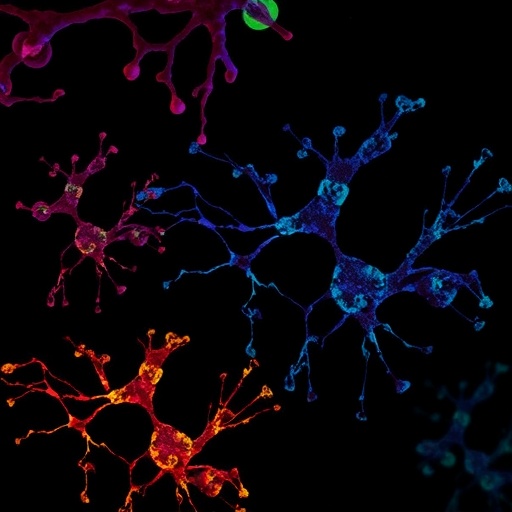
In a discovery that could reshape how scientists think about cancer immunosurveillance, researchers have uncovered striking abnormalities in the long non-coding RNA landscape of natural killer cells taken from breast cancer patients. The study, published in the journal Immunogenetics, provides the most detailed picture yet of how these molecular regulators behave inside the very immune cells that are supposed to hunt down and destroy tumors — and the picture they reveal is one of profound molecular disarray.
Natural killer cells are the sentinels of the innate immune system. Unlike T cells, which require prior exposure to a target and the presentation of antigens through specialized surface molecules, NK cells can recognize stressed, infected, or malignant cells on first contact and kill them within hours. This capacity makes them central to the body’s frontline defense against cancer, a process known as cancer immune surveillance. Yet tumors frequently persist and spread despite the presence of abundant NK cells in circulation, and one of the enduring mysteries of tumor immunology is precisely why these lethal cells appear to stand down in cancer patients.
The new research points to an unexpected answer that lies not in the proteins NK cells produce, but in a layer of gene regulation that operates above the genome’s protein-coding instructions. Long non-coding RNAs, or lncRNAs, are RNA transcripts longer than 200 nucleotides that are not translated into proteins but instead act as master regulators of gene expression. Many of them guide chemical modifications to DNA and histones, sculpt the three-dimensional architecture of chromatin, and determine which stretches of the genome are silenced or activated. In recent years, evidence has mounted that NK cell development, maturation, and cytotoxic function are all governed in part by these epigenetic mechanisms, making lncRNAs a compelling place to look for the origins of NK cell dysfunction in cancer.
To investigate, the research team — Mona Rady, Eman Mohamed, Ola Khorshid, and Khaled Abou-Aisha — isolated NK cells from the peripheral blood of patients with invasive breast cancer and from healthy donors, then systematically measured the expression of 84 carefully selected lncRNAs using a quantitative PCR array platform. This technique relies on the reverse transcription of RNA into complementary DNA followed by real-time amplification, allowing researchers to quantify transcript abundance with exquisite sensitivity. Expression differences between patient and control samples were calculated using the standard comparative threshold cycle method, which converts the difference in amplification kinetics between groups into a fold change in expression.
The results were unambiguous. Of the 84 lncRNAs profiled, 26 were significantly dysregulated in the NK cells of breast cancer patients. Ten genes showed significant downregulation, while 16 were significantly upregulated. Among the downregulated transcripts with known biological functions, the losses were dramatic. TSIX, a non-coding RNA intimately involved in regulating the X chromosome, was reduced to just 5 percent of its normal expression level, representing a fold change of 0.05 with a P value of 0.0037. CCAT1, a transcript implicated in chromatin organization and cancer biology, fell to 9 percent of control levels. XIST, the master orchestrator of X chromosome inactivation, dropped to 42 percent, and PTENP1-AS, an antisense transcript connected to the PTEN tumor suppressor axis, was reduced to 27 percent of its expression in healthy NK cells.
The upregulated side of the ledger was equally striking, and in one case extraordinary. CDKN2B-AS1, also known as ANRIL, a lncRNA that regulates the INK4b-ARF-INK4a tumor suppressor locus through chromatin remodeling, was expressed at more than 80 times its normal level, with a fold change of 81.80 and a P value of 0.0087. MEG3, a transcript involved in genomic imprinting and growth control, was elevated nearly 47-fold. HOTAIR, one of the most notorious lncRNAs in cancer research because of its role in reprogramming chromatin states and promoting metastasis, was increased almost 7-fold. AIRN, an imprinting-associated transcript, rose nearly 8-fold, and GNAS-AS1 was elevated more than 5-fold.
To make sense of these expression shifts, the researchers performed gene ontology and functional enrichment analysis, a computational approach that asks whether groups of altered genes share common biological roles more often than would be expected by chance. The analysis revealed coherent functional themes. The downregulated lncRNAs were significantly enriched in biological processes including chromatin organization, epigenetic regulation of gene expression, and dosage compensation through X chromosome inactivation. The upregulated lncRNAs converged on a complementary but distinct set of processes: epigenetic regulation, genomic imprinting, and chromatin remodeling. In other words, the entire epigenetic control apparatus of the NK cell appears to be rewired in breast cancer, with some regulatory programs collapsing and others running into overdrive.
Statistical rigor was central to the study’s design. Enrichment findings were validated using the Bonferroni correction, the most conservative method for controlling false positives in multiple testing, and differential expression significance was assessed using the two-stage step-up method of Benjamini, Krieger, and Yekutieli to calculate false discovery rate-adjusted q-values, with the significance threshold set at 10 percent. This approach, the authors explain, strikes a deliberate balance between stringency and statistical power, controlling the risk of chasing genes that appear dysregulated by chance alone while preserving the ability to detect genuine biological differences. Individual transcript comparisons were further evaluated with one-sample t-tests, and only transcripts meeting thresholds of at least a two-fold change in expression and statistically significant FDR-adjusted P values were considered dysregulated.
The visualization of the data reinforces the strength of the signal. A heatmap generated with the pheatmap package in R displays the average negative delta Ct values across patient and control groups without clustering, using a blue-white-red color gradient in which blue indicates lower expression and red indicates higher expression. Because the heatmap preserves true expression values rather than applying row-wise scaling, the color differences reflect genuine magnitude differences between groups rather than artifacts of normalization. A companion volcano plot plots the log2 fold change of all 84 lncRNAs against the negative logarithm of adjusted P values, with red dots marking upregulated transcripts and blue dots marking downregulated ones, while a bar chart of log-transformed relative expression values, complete with significance annotations, offers a clear view of the direction and size of each significant change.
What makes these findings potentially viral in their implications is the identity of the RNAs involved. HOTAIR and CDKN2B-AS1 are not obscure transcripts; they are pillars of cancer epigenetics literature, best known for their roles inside tumor cells, where they silence tumor suppressor programs and promote invasion. Finding them massively overexpressed inside immune cells — specifically inside the cytotoxic lymphocytes tasked with eliminating tumors — suggests that tumors may not merely escape NK cells by hiding from them, but may actively corrupt the internal regulatory machinery of their would-be executioners. Circulating factors such as tumor-derived extracellular vesicles, cytokines, and metabolites are known to travel through the bloodstream, and lncRNAs are increasingly recognized as molecules that can be shuttled between cells and can reprogram recipient cell behavior.
Likewise, the collapse of XIST and TSIX expression raises provocative questions about X chromosome dosage regulation in immune cells. Proper X inactivation is essential for gene dosage balance, and disruption of this process in NK cells could alter the expression of dozens of X-linked genes, including immune receptors and signaling molecules that govern NK cell activation and tolerance. Similarly, the downregulation of PTENP1-AS hints at perturbation of PTEN-linked signaling, a pathway central to cell survival, metabolism, and cytotoxic function in lymphocytes.
The researchers are careful to note that this study establishes correlation, not causation. The measurements were performed on circulating NK cells, and it remains to be demonstrated whether these lncRNA changes cause NK cell dysfunction or are a consequence of the tumor-bearing state. Nor is it yet clear whether the dysregulation is reversible. But the therapeutic horizon is tantalizing. LncRNAs are tractable targets for antisense oligonucleotides and small interfering RNA technologies, both of which have advanced rapidly in clinical development. If specific lncRNAs prove to be drivers of NK cell exhaustion or suppression in breast cancer, restoring their normal expression could rejuvenate the anti-tumor activity of a patient’s own immune system, potentially in combination with existing NK cell-based therapies or checkpoint inhibitors.
The study also adds breast cancer to a growing list of malignancies in which immune cell lncRNA profiles diverge dramatically from healthy states, reinforcing the idea that cancer is a disease of the entire tumor ecosystem, not just the malignant cells themselves. With more than 2 million new breast cancer cases diagnosed globally each year, and with NK cells emerging as a major platform for next-generation cancer immunotherapy, understanding the RNA-level circuitry that governs NK cell behavior could prove decisive. This work, by mapping 84 regulatory transcripts and pinpointing 26 that go awry, provides both a hypothesis-generating atlas and a set of concrete molecular targets for the next generation of investigations into why the immune system’s most rapid killers fall silent in the face of cancer.
Cite Scienmag News
Nathaniel Bowman. (September 6, 2026). Altered lncRNA profiles in breast cancer NK cells impair immune function. Scienmag. https://scienmag.com/altered-lncrna-profiles-in-breast-cancer-nk-cells-impair-immune-function/
Nathaniel Bowman. "Altered lncRNA profiles in breast cancer NK cells impair immune function." Scienmag, 6 September 2026, https://scienmag.com/altered-lncrna-profiles-in-breast-cancer-nk-cells-impair-immune-function/. Accessed 6 September 2026.
Nathaniel Bowman. "Altered lncRNA profiles in breast cancer NK cells impair immune function." Scienmag. September 6, 2026. https://scienmag.com/altered-lncrna-profiles-in-breast-cancer-nk-cells-impair-immune-function/


