


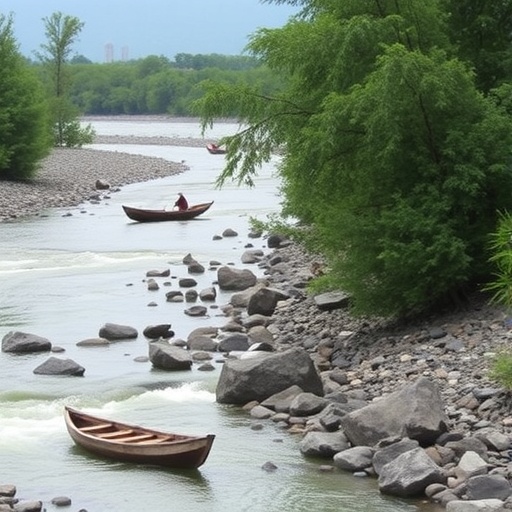
In a groundbreaking study published in Discov Sustain, researchers M. Sivasakthi, S. Sathiyamurthi, and K. Dhanasekaran have delved into the climatological dynamics of the Vellar River Basin in India. Utilizing the latest data from the Coupled Model Intercomparison Project Phase 6 (CMIP6), the authors assess both historical and projected climate trends affecting this crucial hydrological region. The implications of their findings are monumental, potentially influencing water resource management, agricultural practices, and ecosystem conservation strategies in the area, which is vital for both local communities and biodiversity.
The research begins by acknowledging the intensifying effects of climate change, particularly in the Indian subcontinent, where varied geographical landscapes are uniquely impacted. The Vellar River Basin, characterized by its diverse ecosystems and agricultural lands, serves as a poignant example where ecological and climatic variables intersect. The study meticulously charts the historical climate data, establishing a baseline from which future projections can be discerned. By employing advanced climate modeling techniques, the researchers could discern nuanced trends that traditional methods might overlook.
The diligent work presented in the article meticulously categorizes various climatic factors such as temperature shifts, precipitation patterns, and their correlation with river flow dynamics. The team’s analysis reveals a troubling trend: rising temperatures coupled with erratic rainfall patterns, a phenomenon likely exacerbated by anthropogenic influences. Surprisingly, while overall precipitation may seem stable, the study indicates significant increases in extreme weather events, disrupting the local climate equilibrium and posing risks to water security.
Building on these findings, the authors employ the sophisticated CMIP6 models to predict future climate scenarios for the Vellar River Basin. These models, regarded among the most reliable and advanced climate projection tools available today, provide insights into potential future scenarios based on various greenhouse gas emission trajectories. The predictions suggest a worrying continuation of temperature increases that could significantly impact river flows and groundwater recharge in this verdant basin.
This study stands out not only for its robust scientific methodology but also for its implications on policy-making in India. As the Vellar River Basin supports a significant population reliant on its waters for drinking, agriculture, and industry, understanding the future of its ecology is paramount. The researchers strongly advocate for adaptive management strategies that can respond to changing climatic conditions, emphasizing the importance of integrated water resource management.
Furthermore, the urgency to address these climate shifts is underscored by the study’s call for interdisciplinary approaches involving hydrologists, climatologists, and local stakeholders. Engaging communities in discussions about their water use and conservation methods is essential, ensuring long-term sustainability. This participative approach can lead to innovative solutions for water conservation and even ways to harness climate resilience strategies, thereby empowering local populations.
Aside from the immediate implications for water management, Sivasakthi and colleagues highlight how the study could inform broader ecological restoration efforts. As shifts in climate contribute to habitat degradation and biodiversity loss, timely data can help tailor conservation strategies that safeguard vulnerable species and ecosystems within the basin. The research champions a proactive stance, advocating for a symbiotic relationship between climate science and ecology.
Moreover, implications extend beyond regional considerations. As the world grapples with the broader challenges posed by climate change, findings from the Vellar River Basin can offer valuable lessons. Similar basins elsewhere in India and across the globe may very well experience parallel shifts, thus providing a template for understanding complex interplays in different contexts. The dissemination of this study through accessible platforms could elevate public awareness, galvanizing collective action against climate change.
The extensive nature of the research highlights the importance of continued scientific inquiry in understanding climate variability and resilience. It opens the door for future research that could build upon these findings, creating a feedback loop that combines past data with emerging realities. By fostering a culture of rigorous scientific investigation, we equip ourselves with the knowledge needed to tackle the global climate crisis head-on.
In essence, Sivasakthi, Sathiyamurthi, and Dhanasekaran’s study is not just a wake-up call for those in the Vellar River Basin, but for the global community. It underscores the urgency of adapting to climate change and the necessity of informed policy-making grounded in robust scientific research. As climate change continues to evolve, so too must our strategies and actions in preserving both the natural world and the communities that depend on it.
In summary, the meticulous work presented through their research sheds light on the pressing climatological issues `pertaining to the Vellar River Basin. With its profound implications for local ecosystems and human communities, the study sets a precedent for future research while also serving as a clarion call for urgency in addressing the impacts of climate change. As stakeholders convene to discuss pathways forward, the insights generated within this paper may guide policy, societal shifts, and conservation initiatives globally.
Cite Scienmag News
Violet Maxwell. (February 1, 2026). Evaluating Climate Trends in India’s Vellar River Basin. Scienmag. https://scienmag.com/evaluating-climate-trends-in-indias-vellar-river-basin/
Violet Maxwell. "Evaluating Climate Trends in India’s Vellar River Basin." Scienmag, 1 February 2026, https://scienmag.com/evaluating-climate-trends-in-indias-vellar-river-basin/. Accessed 3 September 2026.
Violet Maxwell. "Evaluating Climate Trends in India’s Vellar River Basin." Scienmag. February 1, 2026. https://scienmag.com/evaluating-climate-trends-in-indias-vellar-river-basin/


