


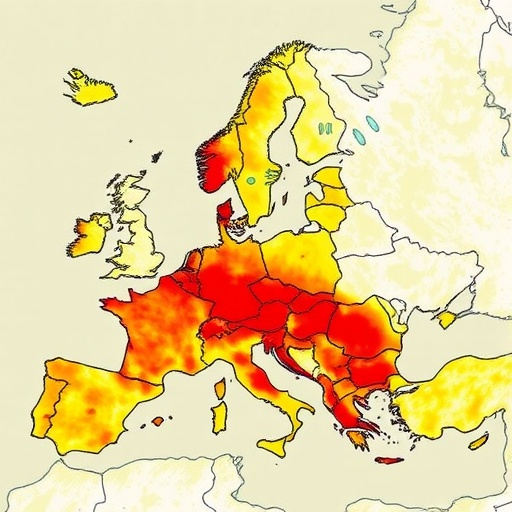
The alarming rise in global temperatures poses an escalating threat to human health, particularly through the intensification of heat-related mortality. A groundbreaking study recently published in Nature Communications by Wu, Wang, Ge, and colleagues has shed new light on how compound day-night heatwaves, combined with demographic shifts, will dramatically amplify heat-induced deaths across Europe in the coming decades. This research pushes the boundaries of conventional climate health assessments by considering not only the daytime heat extremes but also the often-overlooked nocturnal temperatures, revealing a more dire picture of future climate impacts on public health.
Traditionally, heatwave studies have largely focused on daytime temperatures when the sun blazes and heat is most obvious. However, this new study breaks that mold by incorporating the synergistic effects of high temperatures persisting through both day and night—a phenomenon termed compound day-night heatwaves. Unlike single-phase heat events occurring during the day or night, these compound events expose populations to a continuous, unrelenting heat burden, severely limiting physiological recovery during cooler night periods and exacerbating heat stress.
The study’s authors deploy cutting-edge climate models combined with demographic projections to simulate the spatial and temporal distribution of future heatwaves across Europe. They show that compound day-night heatwaves are expected to increase both in frequency and intensity throughout the 21st century, fueled by anthropogenic climate change. This rise is compounded by changing population structures, including aging demographics, which greatly increase vulnerability to heat stress.
One of the pivotal findings is that the geographical footprint of compound day-night heatwaves will expand substantially, encompassing regions historically considered safer from extreme heat events. Southern and Western Europe, already accustomed to warmer climates, will face heightened exposure, but even Northern and Eastern Europe will not be spared, indicating a pan-European health risk. This challenges the assumption that cooler climates will serve as refuges from future heat stress, emphasizing the need for continent-wide preventative strategies.
The physiological implications of sustained day-night heat exposure are profound. Human bodies rely on cooler nighttime temperatures to recover from daytime heat stress, regulating core temperature and reducing dehydration risks. Continuous heat undermines this recovery mechanism, leading to cumulative cardiovascular and respiratory strain. Vulnerable groups—particularly the elderly, children, and those with pre-existing health conditions—are disproportionately at risk, underlining the importance of integrating demographic trends into risk assessments.
The researchers utilize advanced mortality projection models which incorporate demographic changes such as population aging and urbanization patterns. These models reveal a worrying synergy: Europe’s rapidly aging population will face exponentially higher heat-related mortality under future heatwave scenarios. The study illustrates that ignoring these demographic dynamics leads to significant underestimation of future heat-health burdens.
Wu and colleagues also emphasize the critical role of nighttime temperature rises, which have been increasing at a faster rate in recent decades compared to daytime temperatures. This nocturnal warming intensifies the cumulative exposure to harmful heat and disrupts sleep, further compromising health outcomes. Unlike typical daytime heatwaves that might prompt behavioral adaptations such as seeking shade or reducing outdoor activities, rising night temperatures limit mechanisms such as sleep quality, further stressing public health systems.
Interestingly, the study’s high-resolution climate projections underscore the variability of heatwave impacts across urban and rural settings. Urban heat islands exacerbate local temperature extremes, particularly at night, magnifying risks in densely built environments. This calls for urban adaptation strategies that mitigate heat accumulation, such as increasing green spaces, implementing cool roofs, and enhancing ventilation corridors.
This research also highlights the importance of considering compound climate extremes beyond heatwaves alone. Interactions with humidity, air pollution, and other meteorological variables can compound physiological stress, but the focus on relentless day-to-night heat underscores a critical yet underexplored driver of mortality. Such compound events represent a new frontier in climate-health research, demanding multidisciplinary approaches to understanding and addressing these challenges.
Policymakers and public health authorities must integrate the knowledge that future heat risks are not confined to isolated hot days but extend into prolonged, continuous heat exposure that challenges human resilience. Heat-health warning systems, emergency response plans, and climate adaptation policies need to prioritize compound heat extremes and vulnerable demographics to minimize avoidable deaths.
The study’s findings carry profound implications for the design of early warning and intervention systems. Traditional heat alerts based on daytime thresholds may fail to capture the risk posed by combined day-night heat stress, potentially delaying critical warnings and undermining protective actions. These insights advocate for the development of more nuanced heat-health indices that reflect compound heat stress.
Furthermore, this research signals an urgent call for investments in healthcare infrastructure capable of coping with increased patient loads during extended heatwave episodes. Hospitals and emergency services will need to anticipate surges in heat-related illnesses, particularly among older adults with chronic conditions exacerbated by heat.
At the societal level, the study urges raising public awareness about the compounded dangers of prolonged heat exposure. Behavioral adaptations must extend beyond daytime cooling strategies to include nighttime cooling interventions, such as promoting ventilated sleeping environments and hydration strategies that counteract overnight heat stress.
Climate mitigation efforts remain paramount. While adaptation can reduce vulnerability, the underlying driver of increasingly intense and frequent compound heatwaves is unabated greenhouse gas emissions. This research reinforces the urgency of aggressive climate policies aimed at limiting global warming trajectories in order to avert catastrophic health outcomes.
In conclusion, the work by Wu, Wang, Ge, and their team offers a sobering forecast for Europe’s future under climate change. By illuminating the deadly interaction between compound day-night heatwaves and demographic vulnerabilities, this study reframes how societies must prepare for an era of unprecedented heat exposure. Addressing this emerging threat requires innovative science, robust policy frameworks, and collective societal resolve to safeguard human health in a warming world.
Cite Scienmag News
Sloane Callahan. (August 11, 2025). Europe’s Future Heat Deaths Linked to Compound Heatwaves. Scienmag. https://scienmag.com/europes-future-heat-deaths-linked-to-compound-heatwaves/
Sloane Callahan. "Europe’s Future Heat Deaths Linked to Compound Heatwaves." Scienmag, 11 August 2025, https://scienmag.com/europes-future-heat-deaths-linked-to-compound-heatwaves/. Accessed 4 September 2026.
Sloane Callahan. "Europe’s Future Heat Deaths Linked to Compound Heatwaves." Scienmag. August 11, 2025. https://scienmag.com/europes-future-heat-deaths-linked-to-compound-heatwaves/


