


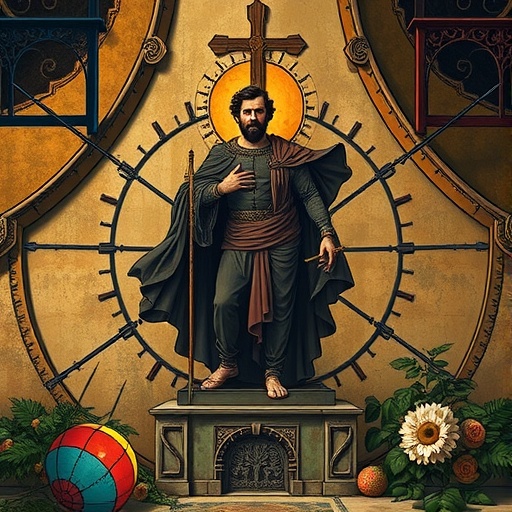
In the realm of psychiatric education, the utilization of innovative teaching methodologies can significantly enhance the learning experience. A groundbreaking study spearheaded by researchers J. Siegel and K.H. Mao suggests a novel approach to training mental health professionals by integrating art into the traditional framework of mental status examinations. This creative fusion aims to deepen the understanding of psychological evaluations, imparting a rich, holistic perspective to psychiatrists-in-training that extends far beyond conventional techniques.
Mental status examinations (MSE) serve as a cornerstone of psychiatric assessment. They allow clinicians to evaluate a patient’s cognitive, emotional, and behavioral state. However, traditional methods often lack engagement, leaving students feeling detached from the material. Siegel and Mao’s research posits that incorporating artistic elements into this examination process can cultivate a more immersive and stimulating learning environment. By challenging students to engage creatively, they can improve observational acuity, empathy, and overall assessment skills, essential facets of psychiatric practice.
The study involves a series of interactive workshops where medical students and residents are encouraged to engage with various forms of art, including painting, sculpture, and drama. Through these activities, participants reflect on the emotional and psychological states represented in the works, thereby honing their ability to discern subtle cues in real patients during clinical evaluations. This experiential learning model fosters a deeper connection between theory and practice, revealing the nuances of mental health that may not be captured through standard academic instruction.
One of the pivotal findings of Siegel and Mao’s research is the enhancement of observational skills among participants. When students analyze art, they are trained to notice details, interpret nonverbal expressions, and approach subjects from multiple perspectives. This multifaceted analysis translates directly into the clinical setting, where understanding a patient’s behavior and emotions is crucial. Students reported feeling more confident in their interactions with patients, attributing this boost in confidence to their training in art-based methodologies.
Moreover, the integration of art into psychiatric training promotes emotional intelligence, a critical asset for mental health professionals. By engaging with artistic expressions, students are encouraged to explore their emotional responses and develop greater empathy—a quality that is indispensable when establishing a therapeutic rapport with patients. This aspect of training encourages budding psychiatrists to view their patients not just as a set of symptoms but as individuals with complex emotional landscapes.
As the research progresses, Siegel and Mao are compiling comprehensive feedback from participants, revealing a consistent positive trend in student satisfaction and understanding. Many expressed that the traditional curriculum felt rigid and limiting but that incorporating artistic elements injected a sense of excitement and curiosity into their studies. Such feedback highlights the necessity for educational institutions to adapt and evolve their training approaches, continually seeking methods that resonate with the current generation of medical students.
Importantly, the implications of their findings extend beyond the confines of the classroom. As mental health awareness continues to rise globally, it is critical that future psychiatrists cultivate skills that allow for more holistic patient assessments. Art, in its myriad forms, can serve as a powerful tool in bridging the gap between abstract theory and real-world application, preparing students to encounter the complexities of human experience in a compassionate and nuanced manner.
Furthermore, the study advocates for a broader movement within the medical education community to adopt interdisciplinary approaches. Merging fields, such as art and medicine, can foster innovation in ways that challenge the status quo. Institutions that embrace these changes will likely see a shift in how new professionals approach their medical and psychiatric practices, making them more adaptable to diverse patient needs.
The researchers plan to widely disseminate their findings through academic conferences and publications, encouraging other medical schools to consider the integration of art into their curricula. They argue that cultivating creativity within psychiatry training can lead to more thoughtful, empathetic, and well-rounded practitioners, ultimately benefiting the patients they serve. Encouraging such methodologies, as established by Siegel and Mao, will require commitment, open-mindedness, and a willingness to embrace the unfamiliar—principles that are foundational to the evolution of psychiatry as a whole.
Siegel and Mao’s innovative research not only redefines educational expectations in psychiatry but also emphasizes that mental health professionals should be well-equipped to understand and navigate the rich tapestry of human emotions. After all, emotional health cannot be extracted from human experience or reduced to mere clinical observations; it necessitates a compassionate, informed approach. The incorporation of art promises to bring us closer to realizing this ideal in psychiatric education, ushering in a new era of empathetic mental health practice.
This transformative approach encourages a reconsideration of how aspiring mental health professionals are prepared for their roles. It tantalizingly poses the question: How might the integration of arts in medicine inspire future generations of practitioners to think differently about their patients and their craft? In an increasingly complex world, this inquiry becomes not just relevant but crucial. Training focused on artistic engagement may become a defining feature of a successful psychiatric education, leading to more innovative, empathetic, and effective mental health care.
As the study continues to unfold, the legacy of Siegel and Mao’s influential work may very well serve as a catalyst for a paradigm shift in psychiatric training, revolutionizing how healthcare providers approach mental status exams. Engaging with art could spark a cultural transformation within psychiatric education, empowering future clinicians to embrace a holistic view of mental health that appreciates the intricate interplay of creativity, emotion, and clinical practice.
Through the lens of art, we are presented an opportunity to reimagine mental health training as a dynamic journey rather than a static process. By fostering creative thinking skills intertwined with empathy, educators can prepare healthcare professionals not only to evaluate others more effectively but to engage in self-reflection and continuous growth as practitioners themselves. Art’s role in forging deeper connections and enhancing the understanding of complex human emotions proposes a future where compassionate mental healthcare flourishes, transforming the landscape of psychiatry for both clinicians and patients alike.
Siegel, J., Mao, KH. . Teaching Outside the Lines: Using Art to Enhance Mental Status Exam Skills.
Acad Psychiatry (2025). https://doi.org/10.1007/s40596-025-02258-9
Cite Scienmag News
Glenn Wilkins. (January 17, 2026). Enhancing Mental Exams: The Role of Art. Scienmag. https://scienmag.com/enhancing-mental-exams-the-role-of-art/
Glenn Wilkins. "Enhancing Mental Exams: The Role of Art." Scienmag, 17 January 2026, https://scienmag.com/enhancing-mental-exams-the-role-of-art/. Accessed 3 September 2026.
Glenn Wilkins. "Enhancing Mental Exams: The Role of Art." Scienmag. January 17, 2026. https://scienmag.com/enhancing-mental-exams-the-role-of-art/


