


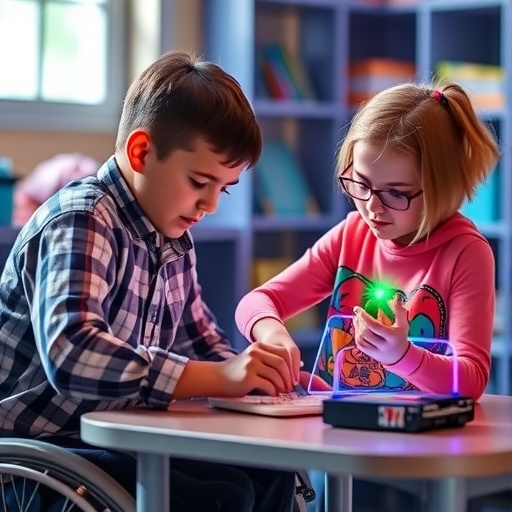
In an era where inclusive education is more pertinent than ever, the integration of Science, Technology, Engineering, and Mathematics (STEM) into the curriculum for children with disabilities is gaining momentum. A recent systematic review conducted by Ata-Aktürk, Capraro, and Capraro presents a comprehensive insight into the current state of STEM education for children facing various disabilities. This review sheds light on the educational landscape, offering a synthesis of existing studies and identifying gaps that require urgent attention.
With the advent of new teaching methods and technological advancements, educators are increasingly recognizing the importance of adapting STEM curricula to cater to students with disabilities. This demographic has historically been overlooked in mainstream educational approaches, which often fail to consider the unique challenges these children face. The systematic review argues that inclusive STEM education is not just beneficial but essential for fostering an equitable learning environment.
One crucial aspect of the review highlights the effectiveness of tailored instructional strategies that resonate with diverse learning needs. Traditional teaching methods may not suffice for children with disabilities, and the researchers advocate for a more differentiated approach. Strategies such as the use of assistive technologies, hands-on activities, and collaborative learning models are suggested as ways to engage these learners more effectively. By doing so, educators can help students overcome barriers and cultivate a genuine interest in STEM subjects.
The review also discusses the critical role of teacher training in implementing inclusive STEM education. Educators must be equipped with the skills and knowledge necessary to adapt their teaching methods and materials. Professional development programs that focus on inclusive practices and the use of assistive tools are essential. The researchers underscore the need for ongoing support and resources for teachers, pointing to the correlation between educator preparedness and student outcomes in STEM learning.
Moreover, the analysis reveals that parental involvement is a significant factor in the educational success of children with disabilities. Parents often serve as advocates for their children, helping to navigate the complexities of both the educational system and the unique needs of their children. The review emphasizes fostering partnerships between schools and families to create a cohesive support system that nurtures student learning and engagement in STEM fields.
While the study presents various instructional strategies and approaches, it also identifies persistent barriers that hinder progress in this area. For instance, many educational institutions lack the necessary resources to implement inclusive practices effectively. The review calls for more funding and policy changes to support schools in adopting inclusive STEM education. Without the proper infrastructure and resources, the vision of an equitable educational landscape remains a distant goal.
Furthermore, the review draws attention to the positive impact that inclusive STEM education can have on society. By enabling children with disabilities to engage with STEM subjects, we are not only fostering individual growth but also paving the way for a more diverse and innovative workforce. This diversity is crucial, as it encourages varied perspectives and ideas, leading to enhanced problem-solving and creativity in scientific fields.
The role of technology in facilitating inclusive STEM education cannot be overstated. Assistive technology, such as communication devices and specialized software, has transformed the way children with disabilities access and engage with STEM content. The systematic review highlights several case studies illustrating the successful integration of these tools into the classroom, demonstrating their potential to enhance learning experiences.
The researchers also contend that the integration of social and emotional learning (SEL) within the STEM curriculum can yield positive outcomes for students with disabilities. Programs that incorporate SEL components not only support academic learning but also foster resilience, self-advocacy, and interpersonal skills, crucial for thriving in any educational setting. This holistic approach addresses not only intellectual growth but also emotional well-being.
Moreover, the review identifies a lack of longitudinal studies on the long-term effects of inclusive STEM education on children with disabilities. Long-term data is vital for assessing the effectiveness of various teaching strategies and resources over time. Policymakers and educational leaders are encouraged to invest in research that follows students throughout their educational journeys to gauge the impact of inclusive practices on their academic and personal development.
In summary, the systematic review by Ata-Aktürk, Capraro, and Capraro makes a compelling case for the urgent need to prioritize inclusive STEM education for children with disabilities. By adopting tailored teaching strategies, emphasizing teacher training, involving parents, and leveraging technology, educational institutions can create a more equitable learning environment. The road ahead may be challenging, but with focused effort and collaboration, the vision of truly inclusive STEM education can become a reality.
In closing, the insights offered in this comprehensive review serve as a call to action for educators, policymakers, and stakeholders within the educational community. The future of STEM education for children with disabilities is promising, but it requires commitment and innovative thinking to ensure that no child is left behind.
Ata-Aktürk, A., Capraro, R.M., Capraro, M.M. et al. STEM Education for Children with Disabilities: A Systematic Review.
Early Childhood Educ J (2025). https://doi.org/10.1007/s10643-025-02069-5
Cite Scienmag News
Courtney Benton. (November 29, 2025). Empowering Disabled Kids Through STEM Education: Review. Scienmag. https://scienmag.com/empowering-disabled-kids-through-stem-education-review/
Courtney Benton. "Empowering Disabled Kids Through STEM Education: Review." Scienmag, 29 November 2025, https://scienmag.com/empowering-disabled-kids-through-stem-education-review/. Accessed 3 September 2026.
Courtney Benton. "Empowering Disabled Kids Through STEM Education: Review." Scienmag. November 29, 2025. https://scienmag.com/empowering-disabled-kids-through-stem-education-review/


