


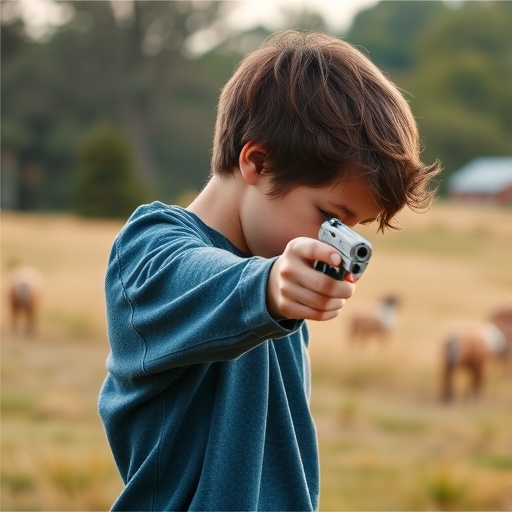
Rural youth in the United States face a distinctly perilous landscape when it comes to firearm exposure, handgun carrying, and the compounded mental health challenges that frequently accompany these experiences. Recent research conducted by scholars affiliated with Rutgers University reveals a troubling disparity between rural and urban populations, underscoring rural youth as an increasingly vulnerable demographic. Their exposure to firearms, particularly handguns, correlates strongly with elevated rates of violence, substance abuse, and notably, suicide ideation and attempts. This emerging body of work highlights the urgent need for nuanced intervention strategies tailored to the specific socio-cultural and geographic realities of rural communities.
Groundbreaking findings stem from an integrative systematic review published in the journal Behavioral Medicine, which synthesizes peer-reviewed studies over the past decade, from 2014 to 2024. The review focused on 19 studies that meticulously examine firearm-related risks and adverse outcomes among rural youth, categorized broadly into themes of violence exposure, handgun carrying, and suicide. The analysis exposes distinct patterns of behavior and consequence that set rural youth apart from their urban peers, revealing how the rural environment itself cultivates unique risk factors that traditional urban-centric research frameworks often overlook.
One of the most alarming trends identified is the persistent elevation of suicide rates in rural youth populations—a phenomenon that has outpaced urban rates consistently over many years. Firearms now represent the leading cause of death in these communities, illustrating the lethal intersection between accessibility and mental health crises. Furthermore, subpopulations within rural areas, specifically American Indian and Alaska Native youth, bear a disproportionate burden of suicide risk, punctuating critical health disparities and necessitating culturally informed prevention efforts. These findings elevate the issue from a general public health concern to a targeted call for equity-driven research and action.
The research led by Catherine Heitz, a doctoral candidate at Rutgers University–Camden and an affiliate of the New Jersey Gun Violence Research Center, elucidates the stark realities rural youth face. According to Heitz, studies consistently associate handgun carrying in rural youth not only with increased violent behavior but also with earlier initiation of substance use and the manifestation of mental health difficulties like suicidal ideation. This co-occurrence suggests that firearm carrying is both a symptom and a catalyst of underlying psychosocial distress, thereby complicating prevention strategies that focus solely on firearm access without addressing broader behavioral health dynamics.
From a methodological standpoint, the systematic review orchestrated by the Rutgers team applies rigorous integrative analytic techniques to pool data across multiple qualitative and quantitative studies. This approach enhances the robustness of their conclusions while highlighting gaps in the existing literature, particularly regarding underrepresented rural populations. The researchers emphasize that rural youth are significantly understudied relative to urban youth, despite facing unique and intensifying risks. This gap is especially pronounced among marginalized groups such as American Indian and Alaska Native communities, which frequently encounter layered socio-economic and cultural challenges that exacerbate firearm-related harms.
The interplay between rurality and firearm exposure extends beyond mere access to guns. The review reveals that rural environments shape patterns of handgun carrying and violence differently than urban settings, influenced by factors including social norms, geographic isolation, economic conditions, and cultural values tied to firearm ownership. Significantly, the mental health sequelae associated with these patterns—such as profound sadness, hopelessness, and suicide ideation—are elevated in rural youth, promoting a pressing need for context-driven mental health interventions that address trauma, violence, and substance abuse concurrently.
Notably, the researchers identify a pressing need for holistic, community-based intervention models tailored to rural settings. They advocate for culturally competent programs that incorporate safe firearm storage education, mental health promotion, and suicide prevention within schools and community organizations. Such programs should engage trusted local messengers who can effectively communicate and resonate with rural youth populations, particularly in American Indian and Alaska Native communities, where culturally discordant approaches have historically limited intervention success. This locally grounded, inclusive methodology offers promise for mitigating the multifaceted risks that rural firearm exposure entails.
Furthermore, the findings underscore the necessity of embedding culturally responsive practices into intervention frameworks. Researchers call for the integration of indigenous perspectives, values, and knowledge systems to enhance program legitimacy and efficacy among groups experiencing the highest harms. Without this critical cultural alignment, firearm-related violence intervention programs risk perpetuating health disparities rather than alleviating them, especially for already underserved rural youth demographics.
Looking ahead, the authors emphasize expanding representational diversity in rural firearm research by deepening inclusion of varied geographic and cultural rural subgroups. Such efforts would refine understanding of differential risk mechanisms and enable the development of targeted interventions calibrated to the distinct experiences of rural youth across regions and communities. This research trajectory positions firearm violence prevention and youth mental health as deeply intertwined challenges requiring collaboration among public health, social science, and community stakeholders.
In conclusion, the Rutgers-led systematic review presents a compelling and sobering portrait of rural youth firearm exposure. It crystallizes the linkages among handgun carrying, violence, and suicide within rural settings, highlighting these populations’ distinctive vulnerabilities and the insufficiency of generalized public health responses. By illuminating the urgent need for culturally tailored and contextually adapted interventions, this research chart a critical pathway forward—not only to curb firearm-related harms but to foster resilience and hope among America’s rural youth.
Cite Scienmag News
Glenn Wilkins. (April 27, 2026). Elevated Firearm Risk and Mental Health Challenges Among Rural Youth: A Scientific Perspective. Scienmag. https://scienmag.com/elevated-firearm-risk-and-mental-health-challenges-among-rural-youth-a-scientific-perspective/
Glenn Wilkins. "Elevated Firearm Risk and Mental Health Challenges Among Rural Youth: A Scientific Perspective." Scienmag, 27 April 2026, https://scienmag.com/elevated-firearm-risk-and-mental-health-challenges-among-rural-youth-a-scientific-perspective/. Accessed 4 September 2026.
Glenn Wilkins. "Elevated Firearm Risk and Mental Health Challenges Among Rural Youth: A Scientific Perspective." Scienmag. April 27, 2026. https://scienmag.com/elevated-firearm-risk-and-mental-health-challenges-among-rural-youth-a-scientific-perspective/


