


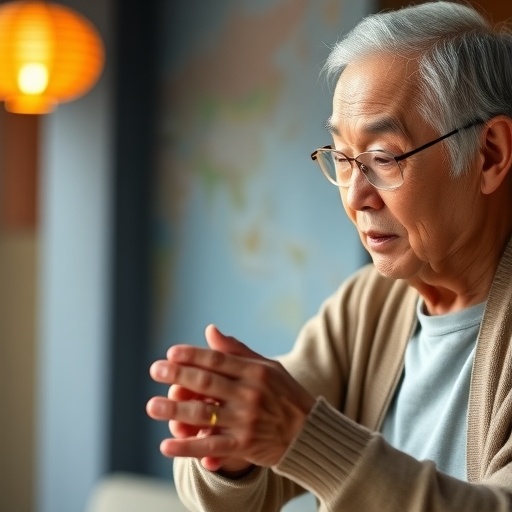
In a rapidly aging world, understanding the complex interplay between physical resilience and how older adults perceive their own aging process has become a critical area of study. Recent research emerging from China sheds new light on this relationship, offering fresh insights that could reshape how communities and healthcare systems support their aging populations. This groundbreaking study, conducted by Yao, Wang, Liu, and colleagues, explores how physical resilience correlates with self-perceptions of aging among older adults living within community settings.
At the core of this work lies the concept of physical resilience, which refers to an individual’s capacity to maintain or regain physical function and health following stressors or health challenges typically associated with aging. Unlike clinical measures that focus solely on disease or impairment, physical resilience encompasses a broader psychological and physiological adaptability that enables older adults to sustain autonomy and quality of life. In this context, self-perceptions of aging become a vital psychological dimension influencing health outcomes. How older adults view their own aging trajectory may profoundly affect their motivation, behaviors, and ultimately their physical health.
The study employs a cross-sectional design, surveying a diverse group of Chinese community-dwelling elders using validated scales to measure both physical resilience and various aspects of aging self-perception. The participants represent a wide spectrum of socioeconomic statuses and regional backgrounds, providing a comprehensive snapshot of the contemporary aging experience in a rapidly modernizing society. The authors leverage sophisticated statistical models to isolate the association between these variables, adjusting for age, gender, educational background, and existing health conditions.
Findings from this research reveal that higher physical resilience is strongly associated with more positive self-perceptions of aging. Older adults who report better adaptability and recovery from physical setbacks are more likely to conceptualize aging not as inevitable decline but as a phase of life that can include growth, learning, and meaningful activity. This positive view does not merely reflect optimism; it may actively contribute to better health trajectories by enhancing engagement with health-promoting behaviors, increasing social participation, and fostering psychological well-being.
Moreover, the study illuminates culturally specific factors influencing these associations. In many East Asian societies, including China, traditional values emphasizing filial piety, community interconnectedness, and respect for elders may shape how aging is internally framed. This cultural backdrop interacts with individual physical resilience, creating a dynamic matrix in which social expectations, family support, and personal agency coalesce to influence aging perceptions. Understanding these culturally inflected pathways is essential for developing interventions tailored to diverse populations.
The research further delves into the neurobiological underpinnings of physical resilience, discussing emerging evidence that links resilience with neuroplasticity, inflammatory regulation, and hormonal responses. These mechanisms highlight that resilience is not simply a psychological construct but a biopsychosocial phenomenon with measurable physiological correlates. The ability to bounce back from physical insults is intertwined with brain health and systemic physiological integrity, suggesting potential targets for medical and lifestyle interventions aimed at promoting healthy aging.
Interestingly, the study also addresses gender disparities, noting that women generally report different self-perceptions of aging and exhibit distinct patterns of physical resilience compared to men. These differences may stem from biological factors, such as hormonal fluctuations, as well as sociocultural influences, including gender roles and access to healthcare resources. Recognition of these nuances is pivotal for Health professionals seeking to design gender-sensitive approaches to improve outcomes in older populations.
Importantly, this research contributes to ongoing debates about successful aging and the factors that facilitate or hinder aging well. By emphasizing the modifiable nature of both physical resilience and self-perceptions, the authors suggest practical avenues for intervention. Enhancing physical resilience through tailored exercise programs, nutritional support, and mental health services could foster more positive perceptions of aging, creating a virtuous cycle that promotes longevity and life satisfaction.
The study also critiques existing public health policies which often underemphasize the psychological dimensions of aging in favor of physical health metrics alone. It advocates for integrated models of elder care, where psychological well-being and physical resilience are jointly assessed and supported through community resources. This holistic vision aligns with contemporary geriatric frameworks that prioritize person-centered care and the preservation of function and autonomy.
Technological innovations are highlighted as promising tools in this endeavor. Wearable devices that track physical activity and physiological markers can provide real-time feedback to both older adults and healthcare providers, enabling personalized interventions to boost resilience. Furthermore, digital platforms for social connection and cognitive stimulation may positively influence aging self-perceptions, counteracting isolation and cognitive decline.
Nevertheless, the authors caution that cross-sectional design limits causal inferences. While associations are robust, longitudinal studies are needed to unpack the directional pathways and potential bidirectional influences between physical resilience and aging self-perceptions. Ongoing cohorts and experimental designs will enrich understanding and help tailor dynamic, context-sensitive interventions.
In sum, this seminal research underscores the intricate and powerful links between body and mind as people age. Integrating physical resilience and subjective aging experiences into clinical practice has the potential to revolutionize elder care, fostering not just longevity but thriving in later life. Communities, families, and health systems stand to benefit from these insights, crafting supportive environments that honor the agency and potential of older adults.
As the global population ages at an unprecedented rate, innovative and culturally attuned approaches like those illuminated by Yao and colleagues will be indispensable. They remind us that aging is not merely a biological inevitability but a profoundly human experience shaped by resilience, perception, and context. Harnessing these insights promises a future where aging is embraced as an opportunity for continued vitality and meaning.
This study offers a compelling call to action for researchers, clinicians, and policymakers alike to deepen their commitment to understanding and enhancing the holistic aging experience. By bridging physical, psychological, and cultural dimensions, this work paves the way for more adaptive and empowering strategies to navigate the challenges and opportunities of growing older.
Ongoing dialogues between disciplines—including geriatrics, psychology, sociology, and public health—will be critical for translating these findings into real-world benefits. As the evidence base grows, so too does the potential to redefine what it means to age successfully in diverse settings around the globe.
Ultimately, fostering physical resilience and nurturing positive self-perceptions of aging may hold the key to unlocking healthier, happier, and more fulfilling later years for millions. The future of aging, it seems, is as much about mindset and community as it is about medicine.
Cite Scienmag News
Beatrice Stafford. (May 17, 2026). Physical Resilience Linked to Aging Views in Chinese Elders. Scienmag. https://scienmag.com/physical-resilience-linked-to-aging-views-in-chinese-elders/
Beatrice Stafford. "Physical Resilience Linked to Aging Views in Chinese Elders." Scienmag, 17 May 2026, https://scienmag.com/physical-resilience-linked-to-aging-views-in-chinese-elders/. Accessed 4 September 2026.
Beatrice Stafford. "Physical Resilience Linked to Aging Views in Chinese Elders." Scienmag. May 17, 2026. https://scienmag.com/physical-resilience-linked-to-aging-views-in-chinese-elders/


