


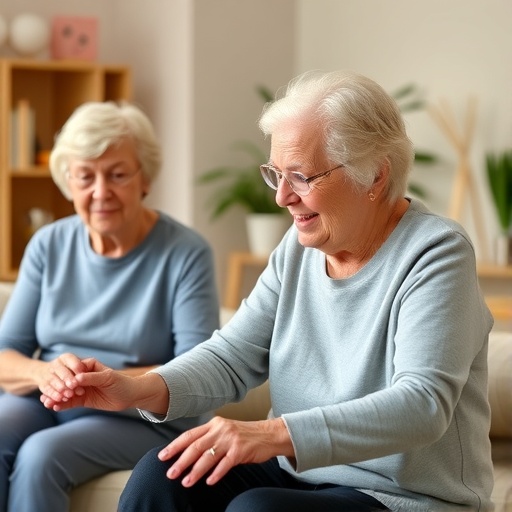
A groundbreaking study has recently explored the prospects of an intensive, short-term, home-based cognitive and physical training program specifically designed for older adults. In an era where aging populations are increasing worldwide, the challenge to maintain cognitive and physical abilities during the golden years has become a focal point of scientific inquiry. This pioneering pilot study delves deeply into the feasibility of delivering an intensive regimen within the comfort of participants’ homes, rather than in clinical or institutional settings, which often present accessibility and adherence barriers.
The investigation, led by Shin, Lim, Baik, and colleagues, offers a compelling outlook on how condensed training protocols might yield meaningful benefits in a population segment particularly vulnerable to decline in cognitive and physical functions. The study’s novelty lies in its concentrated approach: delivering both cognitive exercises and physical workouts in a timeframe that is both brief and intensive. The home-based aspect of the program underscores a shift toward personalized, accessible healthcare solutions that leverage the familiarity and convenience of the participant’s environment.
Critically, the trial adopted a single-arm design, focusing initially on feasibility rather than efficacy, thus setting the stage for broader clinical applications. Participants underwent a carefully structured regimen that combined cognitive stimulation with physical endurance and strength activities, aiming to synergize the impacts on neuroplasticity and muscular health. This integrative approach stems from growing evidence that the combination of cognitive and physical training yields superior outcomes compared to either intervention in isolation, particularly in mitigating age-related decline.
The cognitive component of the program utilized tasks targeting critical domains such as working memory, attention, executive function, and processing speed. Structured digitally or via guided manuals, these exercises pushed the boundaries of mental engagement, designed to promote sustained neural activity and adaptivity. On the physical front, the exercises emphasized aerobic capacity, core strength, flexibility, and balance training, all tailored to accommodate varying baseline fitness levels among older adults. The physical training was meticulously calibrated to ensure safety while maximizing physiological stimulus.
One particularly innovative element of this study was its intensive delivery over a constrained time period. Traditional training programs for older adults often span months, requiring long-term commitment that can be challenging to maintain. By condensing the program into a short duration but increasing the frequency and intensity of sessions, the researchers hypothesized that substantial neurocognitive and physical adaptations could occur more rapidly, potentially boosting motivation and compliance through quicker observable benefits.
The results demonstrated not only the feasibility of such a home-based intensive program but also participant adherence and engagement exceeding initial expectations. Older adults reported high levels of satisfaction, emphasizing the convenience of the home environment and the manageable structure of daily routines. Importantly, no serious adverse events were reported, affirming the safety of combining cognitive and physical training in a high-intensity, short-term format tailored for an aging population.
This pilot study also provides critical insights into the modalities and tools best suited for home administration. The use of digital platforms for cognitive training allowed for scalable and standardized delivery, while physical exercises were supported with remote oversight through virtual coaching and monitoring technologies. These advancements signify a meaningful leap toward the democratization of effective intervention strategies, potentially reducing healthcare costs and enhancing quality of life among older adults worldwide.
Underlying the entire approach is the concept of neuroplasticity, which postulates that the aging brain retains a remarkable capacity for adaptation and reorganization if sufficiently stimulated. Engaging both cognitive faculties and motor systems simultaneously may promote complex neural network strengthening, facilitating improved functional independence. Additionally, physical exercise modulates systemic inflammation, vascular health, and metabolic functioning, creating an environment conducive to brain health.
Another pivotal aspect spotlighted by the researchers was the psychological benefits gleaned from the program. Participants exhibited signs of improved mood and reduced anxiety levels, outcomes consistent with the dual action of physical endorphin release and cognitive empowerment. This holistic improvement hints at the broader therapeutic potential of such interventions, extending beyond mere functional gains to impact emotional well-being.
Given the study’s design, the next steps logically involve randomized controlled trials to robustly evaluate efficacy and compare outcomes with standard care or alternative approaches. Expanding sample sizes and diversifying participant demographics will be essential to ascertain generalizability and optimize program components. Moreover, longitudinal follow-ups could illuminate the durability of effects and the necessity of maintenance training sessions.
This research also opens avenues for exploring tailored adaptations of the program to cater to individuals with mild cognitive impairment, early dementia, or mobility challenges. Integrating wearable biosensors and artificial intelligence-driven personalization could further enhance real-time feedback, engagement, and outcome tracking. Such innovations align with the broader precision medicine trend, emphasizing individualized care plans grounded in continuous data monitoring.
In a world grappling with aging societies and stretched healthcare infrastructures, this study pioneers a model whereby scientifically based, intensive interventions circumvent traditional barriers. The home environment emerges as a powerful venue for neurocognitive and physical health preservation, empowered by technology and evidence-based structured protocols. The implications for health policy, clinical practice, and caregiver support are profound, underscoring a paradigm shift in geriatric care.
One must consider the potential socioeconomic benefits of scaling such programs. Reducing hospitalizations, delaying institutionalization, and enabling older adults to maintain autonomy have enormous cost-saving implications. Moreover, the psychological and social gains fostered by remaining active and mentally engaged may alleviate caregiver burden and improve societal productivity indirectly.
Overall, the feasibility study by Shin and colleagues maps an exciting frontier in aging research. It highlights a harmonious blending of cognitive science, exercise physiology, telemedicine, and gerontology. As populations age globally, interventions that are accessible, acceptable, and effective become not only scientific ambitions but social necessities, with direct implications for millions of lives.
The study’s encouraging outcomes serve as a clarion call for additional academic and commercial investment into home-based, intensive cognitive and physical training programs. They challenge assumptions about the limitations of aging and demonstrate that with strategically designed interventions, cognitive and physical vitality can be preserved and even enhanced well into later life.
Ultimately, this investigation embodies an altruistic scientific agenda—to foster independence, enhance quality of life, and empower older adults to lead fulfilling lives. It stands at the confluence of innovation, healthcare, and human dignity, offering a blueprint for future research and practical applications in the realm of healthy aging.
Cite Scienmag News
Ophelia Keating. (May 16, 2026). Short-Term Home Cognitive & Physical Training Tested in Seniors. Scienmag. https://scienmag.com/short-term-home-cognitive-physical-training-tested-in-seniors/
Ophelia Keating. "Short-Term Home Cognitive & Physical Training Tested in Seniors." Scienmag, 16 May 2026, https://scienmag.com/short-term-home-cognitive-physical-training-tested-in-seniors/. Accessed 4 September 2026.
Ophelia Keating. "Short-Term Home Cognitive & Physical Training Tested in Seniors." Scienmag. May 16, 2026. https://scienmag.com/short-term-home-cognitive-physical-training-tested-in-seniors/


