


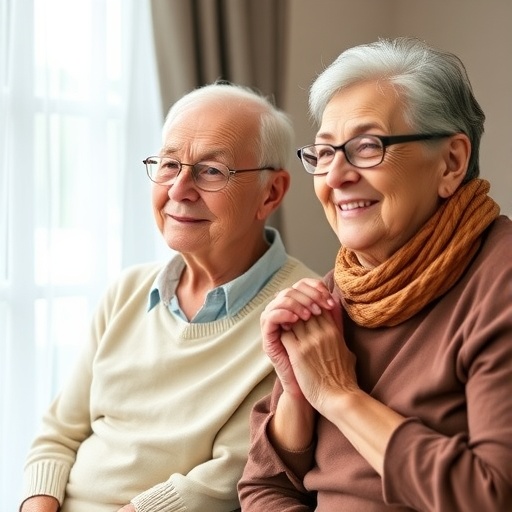
In a groundbreaking stride toward reshaping how society perceives aging, a novel intervention dubbed RE-PAIR is set to redefine the intersection of physical activity and psychological well-being among older couples. Developed by Sabatini, Pagnini, Pederiva, and colleagues, this innovation addresses the pervasive stereotypes and often negative self-perceptions that accompany the aging process. At its core, RE-PAIR stands for Reframing Expectations about Aging – Physical Activity and Inclusive Reappraisal, and it presents a randomized design strategically poised to foster more positive aging experiences through an integrative approach combining physical exercise and cognitive reframing techniques.
Aging is invariably linked to a spectrum of biological and psychosocial changes. The global increase in life expectancy, while a monumental achievement, has also amplified concerns related to functional decline, social isolation, and mental health challenges. Traditional paradigms frequently fixate on the deficits associated with aging, inadvertently entrenching ageist attitudes that impact motivation, behavior, and overall quality of life for older adults. RE-PAIR challenges this narrative by blending physical activity—a well-documented mitigator of age-related health decline—with reappraisal therapies aimed at transforming self-perceptions and societal expectations.
This intervention operates on the principle of inclusive reappraisal, a psychological framework encouraging individuals to reinterpret age-related changes positively. Unlike conventional cognitive behavioral methods that might target symptom reduction, inclusive reappraisal promotes acceptance alongside proactive engagement with the aging experience. By embedding this cognitive strategy within the structure of couple-based physical activity programs, RE-PAIR acknowledges the critical social dimension of aging, leveraging interpersonal support to enhance adherence and emotional resilience.
Central to the RE-PAIR protocol is a randomized intervention design allowing for rigorous evaluation of its efficacy. Participants—older couples—are allocated to either the intervention arm, which receives both physical activity coaching and cognitive reframing exercises, or a control group receiving standard care or generalized health information. This randomized approach ensures that the observed effects on self-perceptions of aging, physical activity levels, and health outcomes can be attributed to the intervention’s unique confluence of elements rather than external confounds.
From a physiological standpoint, exercise interventions in older populations are recognized for their capacity to preserve muscle mass, improve cardiovascular health, and enhance neuroplasticity. However, the challenge remains that declining motivation and internalized ageist beliefs often inhibit sustained engagement. RE-PAIR’s innovation lies in its ability to counteract these psychological barriers by actively transforming how participants conceptualize their aging process. This cognitive shift not only fosters more optimistic outlooks but may precipitate behavioral changes conducive to maintaining physical health.
Moreover, the inclusion of couples in the intervention design addresses the relational context often overlooked in gerontological research. Aging is not experienced in isolation; the mutual influence between partners regarding health behaviors and attitudes can be a powerful driver of sustained lifestyle changes. By promoting joint participation, RE-PAIR harnesses social reinforcement, enhances mutual accountability, and fortifies emotional bonds through shared goals centered on health and well-being.
Technically, the intervention employs structured physical activity regimens tailored to the capacities and preferences of older adults, with adjustments made to accommodate varying levels of fitness and mobility. These regimens are complemented by guided sessions focusing on reappraisal strategies, such as identifying and challenging negative automatic thoughts, cultivating gratitude for aging-related wisdom, and reframing physical limitations as opportunities for adaptive growth. This synergistic methodology targets both the mind and body, creating a holistic framework for healthier aging trajectories.
The researchers also highlight the potential for RE-PAIR to be scalable and cost-effective, given its reliance on a structured, manualized protocol suitable for delivery in community and clinical settings. Digital platforms may also facilitate remote engagement, expanding accessibility for couples unable to participate in person. The intervention’s emphasis on positive psychology aligns well with contemporary health promotion models advocating for strengths-based approaches rather than deficit-focused care.
Importantly, the RE-PAIR study protocol is designed to capture a broad spectrum of outcome variables, including quantitative measures of physical activity (such as accelerometer-based data), self-reported scales assessing aging self-perceptions, mental health indices, and quality of life metrics. This comprehensive assessment strategy will elucidate not only the physical health impacts of the intervention but also its psychological resonance, thereby providing multidimensional evidence of its utility.
The forthcoming trial will address essential questions surrounding the mechanisms linking cognitive reappraisal with health behavior change in older adults. Does enhancing positive self-perceptions merely correlate with increased activity, or does it serve as a causal driver? Moreover, understanding how couple dynamics interact with individual motivational processes could inform tailored interventions that maximize engagement and long-lasting benefits.
As populations across the world continue aging rapidly, interventions such as RE-PAIR represent critical advances in maintaining health and well-being. Rather than resigning to the inevitabilities of decline, this paradigm champions agency, emphasizing that aging need not be synonymous with loss but rather can embody growth, partnership, and vitality. Such work has profound implications not only for individual health trajectories but also for health systems aiming to support aging populations sustainably.
Beyond immediate health outcomes, facilitating positive aging perceptions may reduce the stigma and social marginalization often experienced by older adults. Interventions like RE-PAIR could transform societal narratives, inspiring policies and cultural shifts that recognize the intrinsic value and ongoing contributions of older individuals. In this sense, the trial transcends clinical practice, contributing to broader social change.
Sabatini and colleagues’ initiative also exemplifies the integration of multidisciplinary approaches, combining insights from psychology, gerontology, kinesiology, and social sciences. This convergence reflects a growing recognition that complex challenges in aging require equally multifaceted solutions. The RE-PAIR protocol’s design and anticipated implementation underscore how collaborative research can lead to innovative, person-centered care models.
Anticipation now builds for the trial’s results, which promise to advance the evidence base for interventions that not only promote physical activity but also harness the power of mindset to shape aging trajectories. Should the findings corroborate the hypothesized benefits, RE-PAIR may pave the way for widespread adoption of interventions that reimagine aging as a stage filled with opportunity, positivity, and connectedness.
In sum, the RE-PAIR protocol stands at the frontier of intervention science aimed at older adults, merging cognitive and physical health strategies in a synergistic, dyadic framework. Its pioneering approach holds tremendous promise for enhancing the lived experiences of aging individuals by promoting physical vitality along with empowering, inclusive narratives of growing older. This innovative work heralds a new era where aging is reframed not as decline but as an ongoing journey of discovery and resilience.
Cite Scienmag News
Beatrice Stafford. (May 17, 2026). Boosting Aging Positivity and Activity in Older Couples. Scienmag. https://scienmag.com/boosting-aging-positivity-and-activity-in-older-couples/
Beatrice Stafford. "Boosting Aging Positivity and Activity in Older Couples." Scienmag, 17 May 2026, https://scienmag.com/boosting-aging-positivity-and-activity-in-older-couples/. Accessed 4 September 2026.
Beatrice Stafford. "Boosting Aging Positivity and Activity in Older Couples." Scienmag. May 17, 2026. https://scienmag.com/boosting-aging-positivity-and-activity-in-older-couples/


