


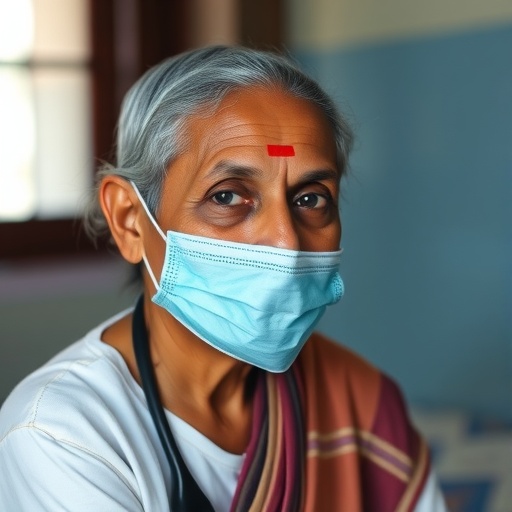
In a groundbreaking study poised to redefine how we understand healthcare access among India’s aging population, researchers have uncovered the subtle yet pervasive effects of age-based discrimination on healthcare utilization. This research, which leverages a sophisticated sequential mediation model, further explores the vital rural-urban divide, painting a nuanced picture of the barriers older adults face in seeking and receiving appropriate medical care. As India’s demographic landscape rapidly ages, this investigation arrives at a critical juncture, urging policymakers, healthcare providers, and society at large to reconsider strategies that ensure equitable healthcare for all elders.
At the heart of this study lies the phenomenon of ageism—a form of discrimination based on someone’s age—which has long simmered beneath the surface of healthcare systems worldwide. In India, where cultural reverence for elders is often contrasted by burgeoning modernization and healthcare disparities, the consequences of ageism are complex and multifaceted. The researchers embarked on an analysis to unveil how such discrimination influences healthcare decision-making and help-seeking behaviors in older adults, an area relatively underexplored in low- and middle-income countries.
Employing a sequential mediation model, the study meticulously examines the pathway through which age-based discrimination affects healthcare utilization. This approach is particularly innovative because it does not merely assess surface correlations; rather, it uncovers intermediate psychological and social processes that mediate the relationship between discrimination and the final outcome of healthcare utilization. By doing so, the researchers illuminate the invisible mechanisms—like diminished perceived self-worth, reduced motivation to seek care, and altered health beliefs—that tether discrimination and actual health behaviors.
Crucially, the research does not treat the elderly as a monolithic group but distinguishes between urban and rural populations to account for the stark differences in infrastructure, cultural norms, and access to services. India’s rural areas often suffer from limited healthcare facilities, fewer trained professionals, and greater travel distances, which compound the effects of discrimination. In contrast, urban centers, despite better healthcare resources, present unique challenges such as anonymity and fragmented social support. This dual focus allows the study to compare how ageism manifests and impacts healthcare patterns across diverse settings.
The findings reveal a pervasive underutilization of healthcare services among older adults who perceive or experience age-based discrimination. This phenomenon persists even when controlling for economic status, educational background, and existing health conditions, underscoring the powerful role of social stigma. Many elders internalize negative stereotypes, leading to self-neglect or resignation to their deteriorating health. This internalization acts as a psychological barrier, often stronger than physical or financial obstacles, inhibiting timely medical consultations and preventive care.
Moreover, the study details how rural elders face a compounded risk. Alongside infrastructural deficits, they encounter deeply entrenched traditional beliefs coupled with discriminatory attitudes from both healthcare professionals and community members. This intersection of systemic and interpersonal ageism drastically reduces healthcare engagement. The model further highlights that in rural contexts, the lack of social support and community advocacy exacerbates feelings of isolation and helplessness, discouraging elders from seeking needed care.
Another striking aspect uncovered is the role of healthcare providers in perpetuating or mitigating ageism. The research suggests that discriminatory behavior sometimes emanates from biases among medical personnel, who may underestimate older patients’ complaints or prioritize younger individuals for scarce resources. Training deficits and systemic pressures contribute to this bias, shaping a care environment where elders feel undervalued or marginalized. The study calls attention to the urgency of sensitization programs and structural reforms within healthcare institutions.
This research also delves deep into the psychological sequelae of age-based discrimination, specifically how it leads to decreased health self-efficacy and engagement in health-promoting behaviors. When older adults perceive discrimination, their confidence in managing chronic illnesses or adhering to treatment plans weakens. Such negative self-appraisals initiate a cascade effect, lowering preventive health measures, vaccination rates, and regular screenings. These downstream impacts threaten public health by escalating morbidity and mortality among India’s elderly.
Furthermore, the study’s urban-rural comparative lens reveals intriguing differences in the mediating psychological factors. For example, urban elders might experience more cognitive dissonance between their expectations and reality, fueling frustration and disengagement. Conversely, rural elders’ responses are often shaped by collectivist cultural values that stigmatize dependency, further discouraging overt help-seeking. These nuances add depth to our understanding of how context intersects with discrimination and health behaviors.
The researchers underscore the significance of integrating cultural sensitivity into policy frameworks aimed at older adults. Ageism is not just an attitudinal problem but a public health concern that necessitates multifaceted interventions, including community education, healthcare worker training, and development of elder-friendly healthcare systems. Special emphasis must be placed on rural areas, where resource scarcity collides with social stigma to compound health inequities.
In light of these findings, the study advocates for the mobilization of social support networks as protective buffers against discrimination. Family involvement, peer groups, and community outreach can foster environments where older adults feel empowered and valued. Such social capital is particularly influential in encouraging healthcare utilization, breaking the cycle of neglect fostered by ageist attitudes.
The use of a sequential mediation model in this research exemplifies methodological advances in social epidemiology. By untangling complex causal chains, the model offers policymakers concrete intervention points—such as targeting self-efficacy and perceived discrimination—to improve health outcomes. This approach encourages a shift from reactive to proactive healthcare strategies in geriatric populations.
Ultimately, this study provides a clarion call for the global health community, especially in rapidly aging nations like India, to acknowledge and address the insidious role of age-based discrimination. As the elder population expands, ignoring these social determinants could exacerbate healthcare disparities and inflate public health burdens. Pioneering research like this not only maps the challenges but also lights the path towards more inclusive, equitable care systems.
The ripple effects of this research will likely extend beyond academic circles, influencing policy debates and healthcare practice reforms. By spotlighting the lived experiences of older adults and the invisible barriers embedded in social attitudes, it challenges stakeholders to dismantle ageism boldly and systematically. In doing so, India can better fulfill its commitment to health for all, ensuring elders live not just longer, but with dignity and well-being.
In conclusion, the emerging evidence points to an urgent need for multidisciplinary collaborations—combining public health, psychology, sociology, and geriatric medicine—to design interventions that recognize the social fabric underlying healthcare utilization. Future research can build on this foundation by exploring longitudinal effects and testing targeted programs. As the world watches demographic transitions unfold, this work stands as a pioneering beacon on the journey toward age-inclusive health equity.
Cite Scienmag News
Ophelia Keating. (May 17, 2026). Age Discrimination Affects Healthcare Use in India. Scienmag. https://scienmag.com/age-discrimination-affects-healthcare-use-in-india/
Ophelia Keating. "Age Discrimination Affects Healthcare Use in India." Scienmag, 17 May 2026, https://scienmag.com/age-discrimination-affects-healthcare-use-in-india/. Accessed 3 September 2026.
Ophelia Keating. "Age Discrimination Affects Healthcare Use in India." Scienmag. May 17, 2026. https://scienmag.com/age-discrimination-affects-healthcare-use-in-india/


