

Monday, October 26, 2026
Science
No Result
View All Result
  • Login
  • HOME
  • SCIENCE NEWS
  • CONTACT US
  • HOME
  • SCIENCE NEWS
  • CONTACT US
No Result
View All Result
Scienmag
No Result
View All Result
Home Science News Agriculture

Eight Reseda Species Show Strong Antioxidant and Skin Protection Potential

October 26, 2026
in Agriculture
Alan Morgan
By Alan Morgan Scienmag Editorial Profile - Precision Agriculture
Reading Time: 3 mins read
0
Eight Reseda Species Show Strong Antioxidant and Skin Protection Potential

Eight Reseda Species Show Strong Antioxidant and Skin Protection Potential

65
SHARES
587
VIEWS
Share on FacebookShare on Twitter
ADVERTISEMENT

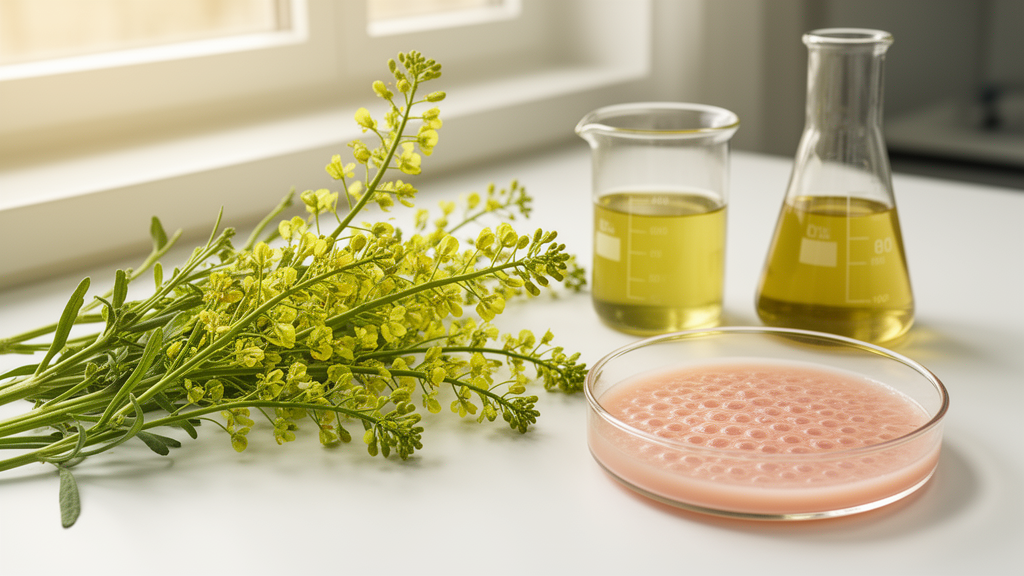
Researchers have completed a comprehensive comparative evaluation of eight species within the genus Reseda, a group of plants belonging to the family Resedaceae. The study, published in Plant Biosystems, focuses on the biological potential of these plants, which are native to Türkiye and include several endemic species. While Reseda lutea is known for its use in folk medicine and Reseda luteola for its traditional role as a dye plant, the scientific community has had limited data regarding the broader biological activities of the other species in the genus.

This new investigation aims to fill that gap by systematically analyzing the chemical composition and bioactivity of eight distinct species, including R. alba, R. aucheri subsp. rotundifolia, R. lutea, R. luteola, R. orientalis, and the endemic R. balansae, R. coodei, and R. tomentosa. The research team employed methanol extracts from the aerial parts of these plants to conduct a series of rigorous laboratory assays. The primary objective was to quantify the total phenolic content (TPC) and total flavonoid content (TFC).

To assess antioxidant capacity, the study utilized five different chemical methods: DPPH, ABTS, CUPRAC, FRAP, and nitric oxide (NO) scavenging assays. In addition to antioxidant properties, the researchers investigated the inhibitory effects of the extracts on specific enzymes, namely α-amylase and elastase. The study also measured the Sun Protection Factor (SPF) of the extracts.

These tests provide a multi-faceted view of the plants' utility in potential dermo-cosmetic and pharmaceutical applications, as outlined in the study's purpose and conclusion. The results revealed that Reseda lutea, R. luteola, and the endemic R. tomentosa exhibited the strongest antioxidant activities among the eight species tested. Reseda luteola stood out with the highest total phenolic content, measured at 104.31 mg GAE/g, and the highest total flavonoid content, recorded at 262.88 mg QE/g.

Furthermore, R. luteola demonstrated the greatest elastase inhibitory activity. However, the study noted that none of the extracts showed significant inhibitory activity against α-amylase. Regarding sun protection, the endemic species R. tomentosa recorded the highest SPF value.

Safety is a critical consideration for any plant-derived compound intended for human use, and the study included cytotoxicity and genotoxicity assessments to evaluate this. Cytotoxicity was measured using the MTT assay on human dermal fibroblasts. The results indicated that most of the Reseda extracts showed low cytotoxicity.

Notably, extracts from R. aucheri subsp. rotundifolia and R. tomentosa actually enhanced fibroblast viability above the control level. To assess the risk of genetic damage, the researchers conducted genotoxicity and antigenotoxicity tests using the SMART assay in Drosophila melanogaster. The results confirmed that none of the eight Reseda extracts were genotoxic.

More positively, Reseda lutea and R. luteola displayed antigenotoxic activity at both tested concentrations. The study concludes that Turkish Reseda species, particularly R. luteola and R. tomentosa, represent promising and non-toxic sources of antioxidant and skin-protective compounds. The combination of high phenolic content, strong antioxidant capacity, elastase inhibition, and high SPF makes these plants valuable candidates for dermo-cosmetic and pharmaceutical applications.

Subject of Research: Comparative bioactivity and chemical composition of eight Reseda species

Article Title: Comparative evaluation of antioxidant capacity, enzyme inhibition, cytotoxicity, and (anti) genotoxic effects of eight species of the genus Reseda (Resedaceae)

Article References: Zare, G., Diker, N. Y., Emecen, G., Arıtuluk Aydın, Z. C., Çilden, E., Altıntaş, Ö. E., Erdoğmuş, S. F., & Tatlı Çankaya, İ. İ. (2026). Comparative evaluation of antioxidant capacity, enzyme inhibition, cytotoxicity, and (anti) genotoxic effects of eight species of the genus Reseda (Resedaceae). Plant Biosystems, 160(6), 300. https://doi.org/10.1007/s44473-026-00306-2

Image Credits: AI Generated

DOI: 10.1007/s44473-026-00306-2

Keywords: Reseda, Antioxidant, Phenolic compounds, Cytotoxicity, Genotoxicity, Dermo-cosmetic, Enzyme inhibition, Sun protection factor, Plant bioactivity, Türkiye endemics, Comparative, evaluation

Cite Scienmag News

Alan Morgan. (October 26, 2026). Eight Reseda Species Show Strong Antioxidant and Skin Protection Potential. Scienmag. https://scienmag.com/eight-reseda-species-show-strong-antioxidant-and-skin-protection-potential/

Alan Morgan. "Eight Reseda Species Show Strong Antioxidant and Skin Protection Potential." Scienmag, 26 October 2026, https://scienmag.com/eight-reseda-species-show-strong-antioxidant-and-skin-protection-potential/. Accessed 26 October 2026.

Alan Morgan. "Eight Reseda Species Show Strong Antioxidant and Skin Protection Potential." Scienmag. October 26, 2026. https://scienmag.com/eight-reseda-species-show-strong-antioxidant-and-skin-protection-potential/


Tags: antioxidantantioxidant activity in Resedabioactivity of Reseda endemic speciescomparativecomparative study of Reseda speciescytotoxicityDermo-cosmeticenzyme inhibitionevaluationgenotoxicitylaboratory assays for plant antioxidant capacitymedicinal and dye plant properties of Reseda.natural plant-based antioxidantsphenolic and flavonoid content in ResedaPhenolic compoundsphytochemical analysis of Reseda plantsPlant bioactivitypotential cosmetic applications of Reseda extractsResedaReseda plant speciesskin protection properties of Resedasun protection factortraditional uses of Reseda lutea and Reseda luteolaTürkiye endemics
Share26Tweet16
Previous Post

How You Brew It Matters: Preparation Method Shapes the Digestive Fate of Yerba Mate Bioactives

Next Post

Featherweight drone methane sensor catches emissions conventional aircraft miss

Related Posts

CRISPR promoter editing trims rice stomata to boost water efficiency with a yield trade-off
Agriculture

CRISPR promoter editing trims rice stomata to boost water efficiency with a yield trade-off

October 26, 2026
Spermidine and CaSPDS gene sustain salt tolerance in pepper seedlings
Agriculture

Spermidine and CaSPDS gene sustain salt tolerance in pepper seedlings

October 26, 2026
Three-Year Trial Crowns Vietnamese Red and Purple Dragon as Top Dragon Fruit Genotypes in Bangladesh Lowlands
Agriculture

Three-Year Trial Crowns Vietnamese Red and Purple Dragon as Top Dragon Fruit Genotypes in Bangladesh Lowlands

October 26, 2026
Olive Leaves and Almond Enzymes Offer a Route to Enriched Olive Oil, With a Catch
Agriculture

Olive Leaves and Almond Enzymes Offer a Route to Enriched Olive Oil, With a Catch

October 26, 2026
Farm Management Beats Soil Type in Explaining Carbon on Working Organic Farms
Agriculture

Farm Management Beats Soil Type in Explaining Carbon on Working Organic Farms

October 26, 2026
Oat leaf hyperspectral workflow hits R2 of 0.8575 with 80% fewer bands
Agriculture

Oat leaf hyperspectral workflow hits R2 of 0.8575 with 80% fewer bands

October 26, 2026
Next Post
Featherweight drone methane sensor catches emissions conventional aircraft miss

Featherweight drone methane sensor catches emissions conventional aircraft miss

  • Mothers who receive childcare support from maternal grandparents show more optimized

    Mothers who receive childcare support from maternal grandparents show more parental warmth, finds NTU Singapore study

    27656 shares
    Share 11059 Tweet 6912
  • University of Seville Breaks 120-Year-Old Mystery, Revises a Key Einstein Concept

    1061 shares
    Share 424 Tweet 265
  • Bee body mass, pathogens and local climate influence heat tolerance

    682 shares
    Share 273 Tweet 171
  • Researchers record first-ever images and data of a shark experiencing a boat strike

    546 shares
    Share 218 Tweet 137
  • Groundbreaking Clinical Trial Reveals Lubiprostone Enhances Kidney Function

    531 shares
    Share 212 Tweet 133
Science

Embark on a thrilling journey of discovery with Scienmag.com—your ultimate source for cutting-edge breakthroughs. Immerse yourself in a world where curiosity knows no limits and tomorrow’s possibilities become today’s reality!

RECENT NEWS

  • GSTK1 Ties Inflammation, Glycolysis, and Lactylation in Gastric Cancer
  • Featherweight drone methane sensor catches emissions conventional aircraft miss
  • Eight Reseda Species Show Strong Antioxidant and Skin Protection Potential
  • How You Brew It Matters: Preparation Method Shapes the Digestive Fate of Yerba Mate Bioactives

Categories

  • Agriculture
  • Anthropology
  • Archaeology
  • Athmospheric
  • Biology
  • Biotechnology
  • Blog
  • Bussines
  • Cancer
  • Chemistry
  • Climate
  • Earth Science
  • Editorial Policy
  • Marine
  • Mathematics
  • Medicine
  • Pediatry
  • Policy
  • Psychology & Psychiatry
  • Science Education
  • Science News
  • Social Science
  • Space
  • Technology and Engineering

Subscribe to Blog via Email

Enter your email address to subscribe to this blog and receive notifications of new posts by email.

Join 5,151 other subscribers

© 2025 Scienmag - Science Magazine

Welcome Back!

Login to your account below

Forgotten Password?

Retrieve your password

Please enter your username or email address to reset your password.

Log In
No Result
View All Result
  • HOME
  • SCIENCE NEWS
  • CONTACT US

© 2025 Scienmag - Science Magazine

Discover more from Science

Subscribe now to keep reading and get access to the full archive.

Continue reading