


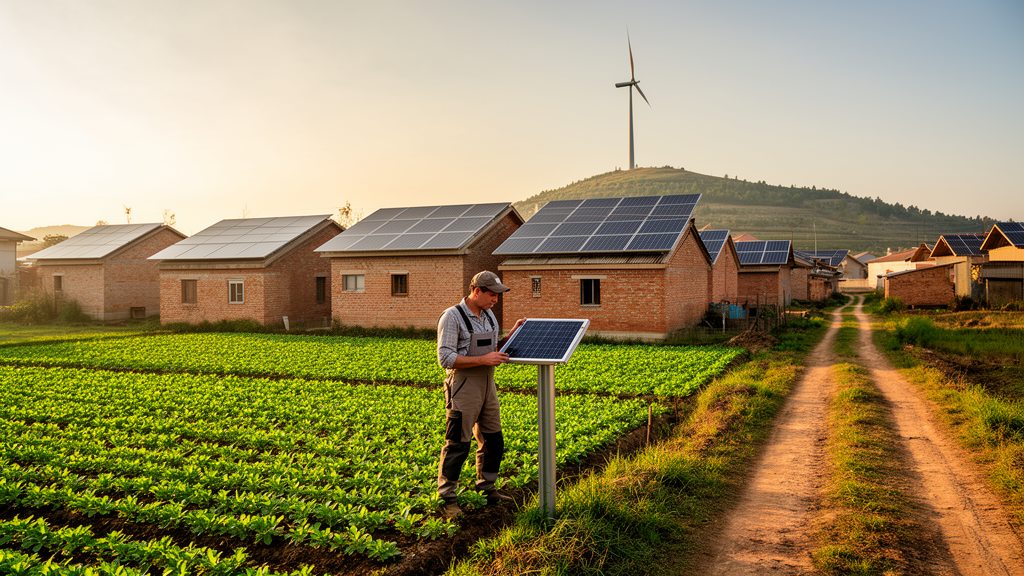
A qualitative case study published in Discover Sustainability examines how a rural eco-innovative enterprise in an emerging market embedded ecological innovation into its business model and strengthened its organisational capabilities and competitive position. The paper, authored by Ranjith V K, Bijuna C Mohan, M Ananth Pai and Bharathi Karanth, focuses on a paper seed company and traces its development from 2019 to 2023, using a process-oriented approach to describe how eco-innovation unfolded inside a small rural firm. The researchers combined semi-structured interviews, field observations, organisational records and secondary documents in a single-case qualitative design.
To track change over time, they applied the McKinsey organisational capacity assessment grid across seven dimensions, following how the company's capabilities evolved during the study window. This approach allowed the team to document business model innovation activities alongside observed changes in organisational capacity. The findings show that business model innovation progressed along four identifiable lines: cognitive search, creation, experiential learning and experimentation.
Alongside this process, the company enhanced capabilities in six areas captured by the assessment grid: strategic, operational, human-resource, infrastructural, structural and cultural. Competitive positioning at the case level was achieved by embedding eco-innovation into the business through five mechanisms: recycling, waste utilisation, product diversification, resource efficiency and circular practices. The study identifies these practices as the basis of the company's sustainable competitive advantage, documenting how recycled materials and waste streams were incorporated into its operations and product range.
Beyond firm-level outcomes, the study documents socio-economic effects in the surrounding rural community. These include rural employment, participation of women in the workforce, skill development, community participation and environmental activities. The authors present these as case-level observations, noting that the evidence base is a single enterprise, so the findings are illustrative rather than statistically generalisable across the rural sector or other emerging markets.
Subject of Research: Eco-innovation, business model innovation and organisational capacity development in a rural emerging-market enterprise
Article Title: Eco-innovation and sustainable rural transformation in emerging markets
Article References: V K, R., Mohan, B. C., Pai, M. A., & Karanth, B. (2026). Eco-innovation and sustainable rural transformation in emerging markets. Discover Sustainability. https://doi.org/10.1007/s43621-026-05039-y
Image Credits: AI Generated
DOI: 10.1007/s43621-026-05039-y
Keywords: eco-innovation, business model innovation, organisational capacity, rural development, emerging markets, circular economy, case study, sustainability, qualitative research, waste utilisation, sustainable, rural
Cite Scienmag News
Sloane Callahan. (October 23, 2026). Eco-innovation and sustainable rural transformation in emerging markets. Scienmag. https://scienmag.com/eco-innovation-and-sustainable-rural-transformation-in-emerging-markets/
Sloane Callahan. "Eco-innovation and sustainable rural transformation in emerging markets." Scienmag, 23 October 2026, https://scienmag.com/eco-innovation-and-sustainable-rural-transformation-in-emerging-markets/. Accessed 23 October 2026.
Sloane Callahan. "Eco-innovation and sustainable rural transformation in emerging markets." Scienmag. October 23, 2026. https://scienmag.com/eco-innovation-and-sustainable-rural-transformation-in-emerging-markets/


