Bisphenol F and bisphenol S were detected in breast milk from South Korean lactating women nearly as often as bisphenol A, according to a study of 203 mothers that estimated exposure for breastfed infants through three calculation methods. BPF was detected in 26% of milk samples, BPS in 28% and BPA in 39%. The findings indicate that a focus on BPA alone would not capture the full range of bisphenol exposure in this population, including compounds that currently lack compound-specific health-based guidance values in any jurisdiction.
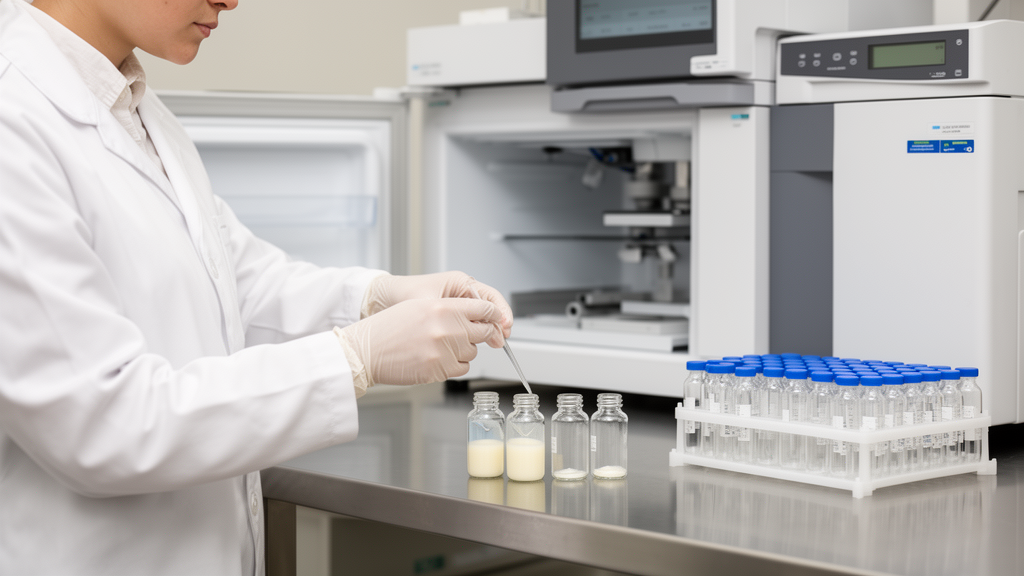
Researchers measured concentrations of BPA, BPF and BPS in breast-milk samples using validated liquid chromatography with tandem mass spectrometry, or LC–MS/MS. The study then calculated estimated daily intakes, or EDIs, for the associated infants through deterministic assessment, probabilistic Monte Carlo simulation with 10,000 iterations and individualized pair-level assessment based on information for each mother-infant pair. The multi-method design was intended to reduce uncertainty arising from different assumptions about contaminant concentrations, milk consumption and the calculation of exposure. The geometric mean concentrations were 0.101 micrograms per liter for BPA, 0.127 micrograms per liter for BPF and 0.070 micrograms per liter for BPS.
Median EDIs across the three assessment approaches ranged from 5.37 to 11.61 nanograms per kilogram of body weight per day for the three bisphenols. Risk characterization changed substantially depending on which international health-based guidance value was selected, demonstrating that the choice of benchmark can materially alter how measured exposure is interpreted. Sensitivity analysis identified breast-milk bisphenol concentrations as the largest source of exposure variability, accounting for 65% to 82% of the variation.
Milk intake contributed a further 15% to 30%. The results therefore show that analytical measurements were the dominant influence on the calculated exposure estimates, although infant consumption patterns also played a meaningful role. The individualized assessment also identified a potentially high-exposure subgroup in which calculated BPS exposure exceeded 1,000 nanograms per kilogram of body weight per day.
The study does not establish that any infant experienced adverse health effects, and the selected population of South Korean lactating mothers limits how broadly the findings can be generalized. Its principal result is an exposure-assessment comparison supported by breast-milk measurements, rather than evidence of clinical harm. The authors called for expedited regulatory review of BPF and BPS because the substitutes were detected almost as frequently as BPA despite lacking compound-specific health-based guidance values, with the aim of preventing substitution from reproducing the exposure concern that restrictions on BPA were intended to address.
Subject of Research: Breast-milk exposure to BPA, BPF and BPS among South Korean lactating women and their infants
Article Title: Risk assessment of bisphenol A and its analogues via breast milk within a select population of lactating women in South Korea: A multi-method approach for reducing exposure assessment uncertainty
Article References: Park, S., Lee, H.-Y., Ji, K., Im, H., & Kim, J. H. (2026). Risk assessment of bisphenol A and its analogues via breast milk within a select population of lactating women in South Korea: A multi-method approach for reducing exposure assessment uncertainty. Environmental Science and Pollution Research. https://doi.org/10.1007/s11356-026-38324-4
Image Credits: AI Generated
DOI: 10.1007/s11356-026-38324-4
Keywords: bisphenol A, bisphenol F, bisphenol S, breast milk, infant exposure, risk assessment, Monte Carlo simulation, LC–MS/MS, South Korea, chemical exposure, Risk, assessment
Cite Scienmag News
Violet Maxwell. (October 22, 2026). Breast milk testing finds BPA substitutes nearly as frequent as BPA. Scienmag. https://scienmag.com/breast-milk-testing-finds-bpa-substitutes-nearly-as-frequent-as-bpa/
Violet Maxwell. "Breast milk testing finds BPA substitutes nearly as frequent as BPA." Scienmag, 22 October 2026, https://scienmag.com/breast-milk-testing-finds-bpa-substitutes-nearly-as-frequent-as-bpa/. Accessed 22 October 2026.
Violet Maxwell. "Breast milk testing finds BPA substitutes nearly as frequent as BPA." Scienmag. October 22, 2026. https://scienmag.com/breast-milk-testing-finds-bpa-substitutes-nearly-as-frequent-as-bpa/