

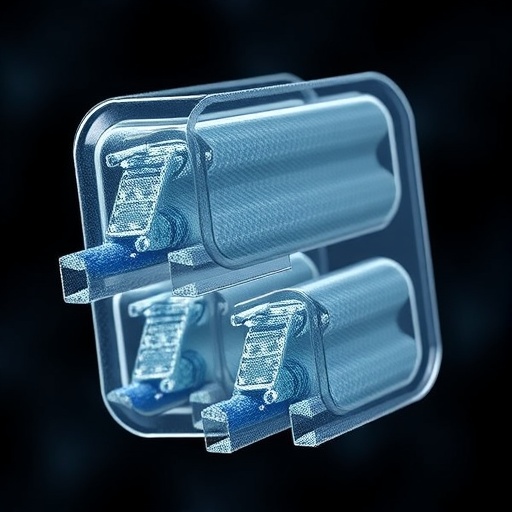
A new study has cracked open a critical barrier to global vaccine equity by showing exactly how to keep fragile mRNA vaccines stable without freezers. Researchers from RMIT University, the Massachusetts Institute of Technology, and Harvard Medical School have mapped the physical and chemical fate of mRNA-carrying lipid nanoparticles as they are dried into dissolvable microneedle patches, revealing the precise formulation conditions that preserve their structure and potency. The work, published in Advanced Functional Materials, provides a long-sought mechanistic blueprint for manufacturing room-temperature-stable mRNA vaccines and therapies, potentially eliminating the costly and logistically nightmarish cold chain that has constrained distribution to low-resource regions.
At the heart of the challenge is the inherent instability of mRNA, a molecule so fragile that it requires encapsulation in lipid nanoparticles—tiny protective spheres of carefully designed fats—to survive delivery into cells. For conventional liquid vaccines, those nanoparticles must be kept frozen at subzero temperatures to prevent degradation, which adds enormous cost and complexity to transportation and storage. Microneedle patches, which embed hundreds of microscopic projections that dissolve in the skin, have emerged as a promising alternative because the vaccine can be dried directly into the polymer matrix of the patch. Yet until now, the precise structural changes that occur as lipid nanoparticles transition from liquid to dry solid and back to a hydrated state upon application were poorly understood, leaving formulators to rely on trial and error.
The team deployed a suite of advanced imaging and X-ray scattering techniques to track the nanoparticles through every stage of the process: before drying, during the dehydration step, and after rehydration. Small-angle X-ray scattering and cryo-electron microscopy revealed that the lipid nanoparticles undergo a dramatic rearrangement as water is removed. The normally spherical particles can flatten, fuse, or rupture if the surrounding polymer matrix does not provide sufficient mechanical support and chemical protection. Crucially, the researchers found that the molecular architecture of the polyethylene glycol–lipid coating on the nanoparticle surface, as well as the type and concentration of sugar-based lyoprotectants within the formulation, dictated whether the particles could be rehydrated back to their original size and shape without losing their mRNA payload.
The polymer matrix of the patch itself, typically a blend of polyvinyl alcohol and polyvinylpyrrolidone, acts as both a scaffold and a protective glass. The study showed that the matrix must be carefully tuned to vitrify rapidly during drying, trapping the nanoparticles in a rigid, amorphous state where molecular motion is effectively halted. If the polymer dries too slowly or absorbs moisture from the air, the nanoparticles can undergo phase transitions that destroy their internal lipid bilayer structure, rendering the mRNA useless. The optimal formulation, the researchers discovered, incorporates a specific ratio of trehalose—a disaccharide sugar known to replace water molecules around lipid headgroups—and a carefully selected polymer molecular weight that balances mechanical strength with rapid dissolution in the skin.
Lead author Dr Brendan Dyett from RMIT explains that the findings move the field from guesswork to rational design. “Many mRNA vaccines need to be stored at very low temperatures, adding cost and complexity,” Dyett said. “Our study helps explain how the particles that carry mRNA respond to drying and rehydration, which is an important step towards designing future vaccine patches that are more stable and practical to distribute.” The team’s characterization work revealed that even subtle changes in the lipid composition—such as the molar ratio of ionizable lipids to helper phospholipids—can dramatically alter the dry-state stability, a phenomenon that had not been systematically quantified before.
The practical implications are enormous. In 2024, the World Health Organization and UNICEF reported that 14.3 million children globally received no vaccines at all, a gap driven in part by the cold chain’s inability to reach remote communities. A microneedle patch that can be stored at room temperature for months, shipped in a standard envelope, and self-administered without a healthcare professional would transform vaccine delivery. The RMIT-MIT-Harvard collaboration builds on earlier MIT work demonstrating that model mRNA patches could be inkjet-printed and dried. Now, the mechanistic understanding provided by this study offers a set of engineering principles to optimize such patches for real-world candidates, including mRNA vaccines for influenza, rabies, or even emerging pathogens.
The researchers also probed the biological activity of the rehydrated nanoparticles, measuring their ability to transfect cells in culture and trigger protein expression. They found that formulations that preserved the nanoparticle’s internal lamellar structure during drying achieved transfection efficiencies approaching those of fresh liquid controls. In contrast, formulations that showed significant particle aggregation or lipid bilayer disruption during the scattering experiments produced markedly lower protein expression. This direct correlation between physical nanostructure and biological function underscores the power of the materials characterization approach.
RMIT Distinguished Professor Calum Drummond AO, the lead researcher, emphasized that the long-term goal is to support technologies that are not only effective but practical for the places and communities that need them most. “This research is helping build the foundation for microneedle patches that could make advanced vaccines and therapies simpler to use and easier to access,” Drummond said. Next steps include further optimization of nanoparticle and patch formulations, in vivo testing of immune responses in animal models, and exploring whether the same drying and stabilization principles can be extended to other mRNA medicines, such as therapeutics for cancer or rare genetic diseases.
The study marks a convergence of materials science, virology, and immunology, with the team leveraging RMIT’s world-class characterization facilities, MIT’s expertise in microneedle engineering and mRNA delivery, and Harvard Medical School’s immunological validation capabilities. The findings not only unravel a long-standing puzzle about how lipid nanoparticles behave in the solid state but also provide a tangible roadmap for manufacturing next-generation vaccine patches that could one day make the freezer-free vaccine a global reality.
Subject of Research: Stability of mRNA-lipid nanoparticles when dried in polymer matrices for microneedle patch vaccines.
Article Title: Exploring an Alternative to mRNA Vaccine Cold Chain Storage: mRNA-Lipid Nanoparticle Stability When Dried in a Polymer Matrix
News Publication Date: 7 May 2026
Web References: 10.1002/adfm.75716
References: Dyett, B. et al. (2026) ‘Exploring an Alternative to mRNA Vaccine Cold Chain Storage: mRNA-Lipid Nanoparticle Stability When Dried in a Polymer Matrix’, Advanced Functional Materials. DOI: 10.1002/adfm.75716
Image Credits: Cherry Cai, RMIT University
Keywords: mRNA vaccines, lipid nanoparticles, microneedle patches, cold chain, lyophilization, trehalose, polymer matrix, small-angle X-ray scattering, vaccine delivery, room-temperature stability


