

Tuesday, August 4, 2026
Science
No Result
View All Result
  • Login
  • HOME
  • SCIENCE NEWS
  • CONTACT US
  • HOME
  • SCIENCE NEWS
  • CONTACT US
No Result
View All Result
Scienmag
No Result
View All Result
Home Science News Marine

Dolphins Spotted Returning to the Sea of Japan

July 14, 2026
in Marine
Reading Time: 2 mins read
0
Dolphins Spotted Returning to the Sea of Japan

Dolphins Spotted Returning to the Sea of Japan

65
SHARES
587
VIEWS
Share on FacebookShare on Twitter
ADVERTISEMENT

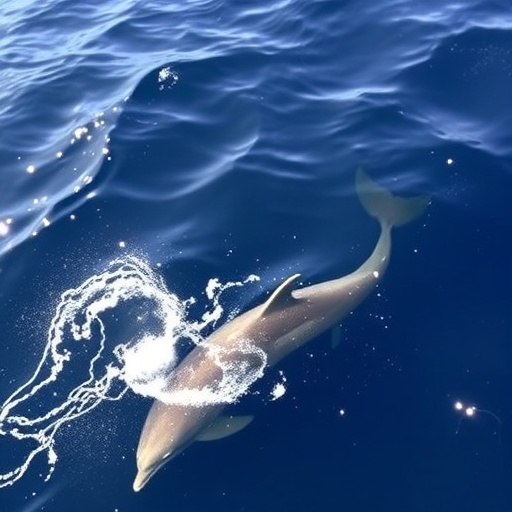
In a groundbreaking study conducted along the Sea of Japan, researchers from Kyoto University have deployed passive acoustic monitoring to unveil new insights into the elusive behaviors of small odontocetes—particularly dolphins and porpoises—frequenting Wakasa Bay and Aso Bay. This pioneering effort marks a significant advance in marine mammal science by capturing vocalizations that illuminate how these cetaceans navigate and communicate within complex coastal soundscapes.

The Sea of Japan, hemmed in by Japan’s archipelago and the Eurasian continent, has undergone rapid environmental changes that have blurred previous scientific understanding of its marine inhabitants. While dolphin sightings and incidental captures have been sporadically reported, comprehensive ecological data concerning small toothed whales remained scarce. Motivated by local fishermen’s observations, the team sought to clarify which species were present and how they utilized these coastal waters.

Between January 2022 and November 2024 in Wakasa Bay, and from March 2023 through October 2024 in Aso Bay, scientists deployed underwater acoustic recorders designed to capture the high-frequency echolocation clicks and signature whistles typical of odontocetes. These devices passively listened to the underwater soundscape, providing continuous, non-invasive recordings. A unique feature of the study was direct collaboration with local communities who assisted with equipment deployment and contributed sighting reports alongside photographic evidence.

Despite low detection rates—approximately one acoustic event every ten days—the monitoring yielded crucial acoustic profiles of the dolphins’ whistles. Notably, sounds recorded in Aso Bay, distinguished by a noisier ambient environment, exhibited distinct whistle characteristics compared to the quieter Wakasa Bay. Although it remains uncertain whether these acoustic variations stemmed from environmental soundscapes or intrinsic differences among the animals, the collected data strongly suggests the presence of Indo-Pacific bottlenose dolphins in these areas.

This research not only establishes baseline knowledge on the temporal and spatial occurrence of small odontocetes along the Sea of Japan’s coast but also underscores the efficacy of passive acoustic monitoring as a vital tool in marine ecology. Traditional observational methods often falter with infrequently sighted species, whereas acoustic techniques can detect elusive animals continuously and remotely.

Looking forward, the team’s work opens the door to enhanced, long-term ecological monitoring that could prove instrumental in detecting shifts in marine biodiversity due to environmental stressors, climate change, or human activity. Such insights are crucial for informing conservation strategies and ensuring the sustainable management of coastal marine resources in collaboration with local populations.

First author Satoko S. Kimura emphasized the symbiotic relationship fostered between scientists and fishers, noting, “By listening to the sea with the community’s support, we are beginning to unravel the hidden lives of dolphins in waters familiar to us all.” The study offers hope for integrating traditional knowledge with cutting-edge science to better protect marine ecosystems sharing the Sea of Japan’s dynamic coasts.

Subject of Research: Animals
Article Title: Occurrence and Whistle Characteristics of Small Odontocetes in Two Coastal Regions of the Sea of Japan
News Publication Date: 25-May-2026
Web References: http://dx.doi.org/10.1111/mms.70200
Image Credits: Chihiro Kinoshita
Keywords: odontocetes, Indo-Pacific bottlenose dolphins, passive acoustic monitoring, marine mammals, Sea of Japan, echolocation, whistle characteristics, coastal ecology

Tags: Collaboration between scientists and local fishermenDolphins in Sea of JapanEcological insights into dolphins and porpoisesEcological significance of dolphin sightings in JapanImpact of environmental changes on marine life in JapanMarine mammal behavior in Japanese coastal watersNon-invasive marine mammal research methodsOdontocete vocalizations and communicationPassive acoustic monitoring of marine mammalsSmall cetaceans in Wakasa Bay and Aso BayUnderwater soundscape analysis of Sea of Japan
Share26Tweet16
Previous Post

Astronomers Discover Four Nearby White Dwarf Stars Hidden in Space

Next Post

International Team Synthesizes Unexpectedly Stable Strongly Bent Sandwich Molecule

Related Posts

KAIST converts seawater carbon dioxide into stone for permanent marine storage
Marine

KAIST converts seawater carbon dioxide into stone for permanent marine storage

August 4, 2026
Portland State biologist wins NSF CAREER Award studying ocean’s most abundant microbe
Marine

Portland State biologist wins NSF CAREER Award studying ocean’s most abundant microbe

August 3, 2026
Scientists Investigate the World’s Most Powerful Clickbait Phenomenon
Marine

Scientists Investigate the World’s Most Powerful Clickbait Phenomenon

August 3, 2026
Whale Diving Alters the Structure of Its Song
Marine

Whale Diving Alters the Structure of Its Song

August 3, 2026
Variable-scale domains unify continuous and patchy carbon dynamics across river networks
Marine

Variable-scale domains unify continuous and patchy carbon dynamics across river networks

August 3, 2026
Geological Evidence Challenges Agulhas Leakage’s Role in Atlantic Ocean Circulation
Marine

Geological Evidence Challenges Agulhas Leakage’s Role in Atlantic Ocean Circulation

August 3, 2026
Next Post
International Team Synthesizes Unexpectedly Stable Strongly Bent Sandwich Molecule

International Team Synthesizes Unexpectedly Stable Strongly Bent Sandwich Molecule

  • Mothers who receive childcare support from maternal grandparents show more

    Mothers who receive childcare support from maternal grandparents show more parental warmth, finds NTU Singapore study

    27656 shares
    Share 11059 Tweet 6912
  • University of Seville Breaks 120-Year-Old Mystery, Revises a Key Einstein Concept

    1061 shares
    Share 424 Tweet 265
  • Bee body mass, pathogens and local climate influence heat tolerance

    682 shares
    Share 273 Tweet 171
  • Researchers record first-ever images and data of a shark experiencing a boat strike

    546 shares
    Share 218 Tweet 137
  • Groundbreaking Clinical Trial Reveals Lubiprostone Enhances Kidney Function

    531 shares
    Share 212 Tweet 133
Science

Embark on a thrilling journey of discovery with Scienmag.com—your ultimate source for cutting-edge breakthroughs. Immerse yourself in a world where curiosity knows no limits and tomorrow’s possibilities become today’s reality!

RECENT NEWS

  • NICE Versus BOADICEA for Breast Cancer Risk Assessment in Women Under 50
  • Mapping Pancreatic Cancer’s Tissue Architecture with Computational Pathology
  • Study examines links between mother-to-child HIV exposure and neurodevelopmental disorders
  • Compositionality Continuum Offers Framework for Studying Intelligence’s Neural Basis

Categories

  • Agriculture
  • Anthropology
  • Archaeology
  • Athmospheric
  • Biology
  • Biotechnology
  • Blog
  • Bussines
  • Cancer
  • Chemistry
  • Climate
  • Earth Science
  • Editorial Policy
  • Marine
  • Mathematics
  • Medicine
  • Pediatry
  • Policy
  • Psychology & Psychiatry
  • Science Education
  • Social Science
  • Space
  • Technology and Engineering

Subscribe to Blog via Email

Success! An email was just sent to confirm your subscription. Please find the email now and click 'Confirm Follow' to start subscribing.

Join 5,147 other subscribers

© 2025 Scienmag - Science Magazine

Welcome Back!

Login to your account below

Forgotten Password?

Retrieve your password

Please enter your username or email address to reset your password.

Log In
No Result
View All Result
  • HOME
  • SCIENCE NEWS
  • CONTACT US

© 2025 Scienmag - Science Magazine
