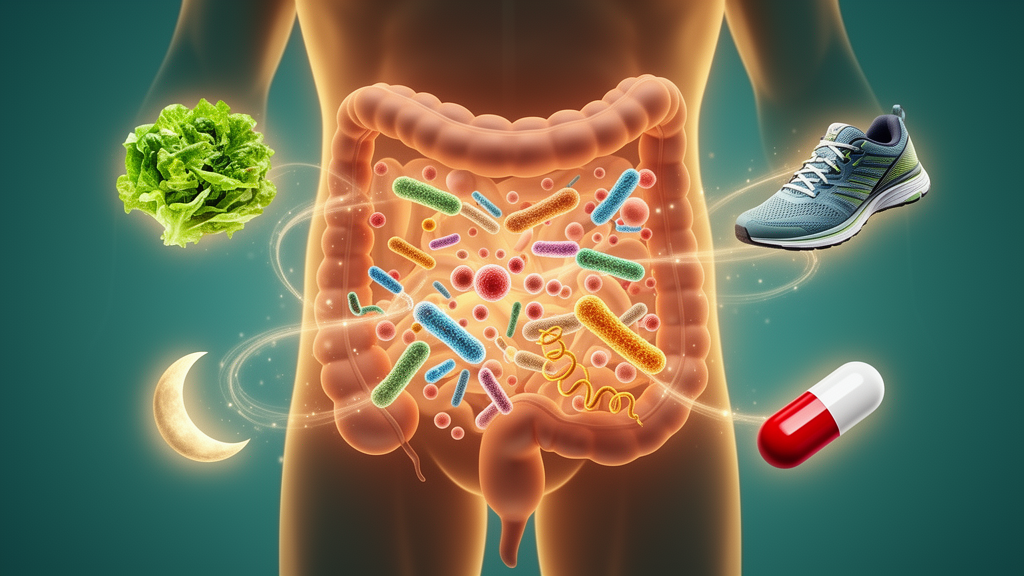
The trillions of microbes living in the human gut are not a fixed inheritance but a dynamic ecosystem that responds continuously to what we eat, how we move, when we sleep, how we age, and which medications we take. A new narrative review published in Frontiers in Microbiomes synthesizes evidence from more than two decades of research to map how dietary patterns, specific food components, physical activity, circadian rhythms, aging, and antibiotic exposure jointly modulate gut microbial composition and function. Its central message is striking: the same intervention can produce markedly different microbial and metabolic responses in different people, and this interindividual variability is not a nuisance variable but the defining feature of microbiota-host interactions.
The review, led by Alma Haydee Astorga Gaxiola and Saraid Mora Rochín at the Universidad Autónoma de Sinaloa in Mexico, draws on peer-reviewed literature published between 2000 and 2026, compiled through searches of Scopus, ScienceDirect, PubMed, and Google Scholar. The authors argue that most existing reviews examine dietary, lifestyle, environmental, or host-related determinants in isolation, despite their substantial interdependence. By integrating these factors into a single framework, the review aims to distinguish relatively consistent associations from context-dependent responses and to clarify what this means for the emerging field of personalized nutrition. The stakes are high: the gut microbiota contributes to nutrient metabolism, immune development, intestinal barrier integrity, and communication between the gastrointestinal tract and distant organs, including the brain.
Diet emerges as the strongest and most dynamic lever over the gut ecosystem. Dietary patterns rich in plant-derived foods and complex carbohydrates supply substrates for microbial fermentation and the production of short-chain fatty acids such as acetate, propionate, and butyrate, metabolites that support epithelial energy metabolism, tight-junction regulation, and immune homeostasis. In contrast, Western dietary patterns characterized by high intakes of saturated fat, refined sugars, sodium, and ultra-processed foods have been associated with reduced microbial diversity, depletion of fiber-associated taxa such as Faecalibacterium prausnitzii and Roseburia, and increased production of metabolites linked to animal-protein and fat metabolism, including trimethylamine N-oxide precursors and secondary bile acids. A randomized controlled feeding study in healthy adults found that higher-fat diets were associated with lower microbial alpha-diversity and reductions in taxa such as Faecalibacterium, whereas lower-fat diets were associated with greater diversity. Notably, the frequently cited Firmicutes-to-Bacteroidetes ratio should not be treated as a universal marker of dysbiosis, because findings vary substantially across experimental models, populations, and interventions.
The Mediterranean diet occupies a particularly favorable position in this landscape. Characterized by high consumption of fiber-rich fruits, vegetables, olive oil, nuts, legumes, and whole grains, together with moderate fish, poultry, dairy, and egg intake, greater adherence to this pattern has been associated with higher concentrations of microbial short-chain fatty acids, enrichment of taxa involved in carbohydrate fermentation such as Prevotella, Faecalibacterium prausnitzii, Bifidobacterium, and Lactobacillus, and more favorable inflammatory and cardiometabolic risk profiles. One study reported that high adherence was associated with reduced Escherichia coli counts and an increased Bifidobacteria-to-E. coli ratio, suggesting that adherence can influence specific taxa even when broader community composition remains relatively stable. However, the authors caution that intervention studies do not consistently show substantial changes in overall community composition, and differences in intervention duration, baseline microbiota, dietary adherence, host characteristics, and methodology contribute to this variability.
At the level of individual food components, the review highlights remarkable substrate specificity. Dietary fiber is a major fermentation substrate, but different chemical structures selectively enrich different microorganisms: inulin fermentation strongly enriches Bacteroides taxa closely related to Bacteroides uniformis and B. caccae, whereas apple pectin selectively enriches a distinct set of species including B. cellulosilyticus, B. eggerthii, B. ovatus, B. stercoris, B. thetaiotaomicron, and B. vulgatus. Polyphenols, abundant in tea, coffee, cocoa, berries, and red wine, are poorly absorbed in the upper gut and undergo extensive colonic biotransformation; the microbiota converts flavan-3-ols into phenyl-γ-valerolactone and phenylvaleric acid derivatives, and anthocyanin consumption has been associated with enrichment of Bacteroidetes and increased short-chain fatty acid production. A key concept here is metabolic convergence: structurally distinct polyphenols can be transformed into overlapping metabolites, contributing to shared biological effects despite differences in the parent compounds. Fermented foods and probiotics are also addressed, with the authors emphasizing that only specific strains meeting established criteria and demonstrating health benefits qualify as probiotics, and that probiotic effects are strain-, dose-, and context-dependent rather than universal corrections for dysbiosis.
Proteins, vitamins, minerals, and lipids each add further layers of complexity. Colonic protein fermentation generates metabolites such as ammonia, branched-chain fatty acids, phenols, indoles, and hydrogen sulfide, some of which participate in host signaling while others may adversely affect epithelial physiology at elevated concentrations. The balance between saccharolytic and proteolytic fermentation depends critically on the availability of fermentable carbohydrates, meaning protein effects must be interpreted alongside fiber intake. Vitamins participate in a bidirectional relationship with the microbiota: gut microorganisms synthesize vitamin K and several B vitamins, while vitamins such as D act as signaling molecules that regulate epithelial integrity, antimicrobial peptides, and immune responses through the vitamin D receptor. Iron supplementation has been associated with reductions in Bifidobacterium and, under some conditions, expansion of facultative anaerobes such as Enterobacteriaceae, illustrating host-microbe competition for micronutrients. Dietary lipids influence the microbiota indirectly through community structure, bile acid metabolism, and substrate availability, and microbial conversion of primary to secondary bile acids modulates host receptors such as FXR and TGR5, linking microbial activity to glucose and lipid homeostasis.
Beyond diet, the review examines lifestyle determinants with growing scientific traction. Physical activity has been associated with enrichment of short-chain fatty acid-producing taxa including Akkermansia, Faecalibacterium, Roseburia, and Veillonella, although more than half of the studies in a recent systematic review reported no significant effect on overall microbial diversity, suggesting that exercise remodels community structure and functional capacity rather than uniformly increasing diversity. Human intervention evidence suggests that moderate- to high-intensity exercise performed for approximately 30 to 90 minutes at least three times per week, or 150 to 270 minutes weekly, for eight weeks or longer can produce measurable changes in gut microbiota composition. The relationship is dose-dependent: regular moderate activity may support intestinal barrier homeostasis, whereas acute strenuous exercise can transiently increase intestinal permeability through reduced splanchnic blood flow, hyperthermia, and oxidative stress, potentially enhancing exposure to microbial products such as lipopolysaccharide.
Sleep and circadian rhythms add a temporal dimension to microbiota-host interactions. The gut microbiota exhibits diurnal fluctuations in abundance, gene expression, and metabolic activity coordinated with the host circadian system, which is governed by clock genes such as CLOCK, BMAL1, PER, and CRY. While the central clock in the suprachiasmatic nucleus is entrained primarily by light, peripheral clocks in the gastrointestinal tract are strongly influenced by feeding-fasting cycles, making meal timing a key regulator of intestinal circadian physiology. Circadian misalignment from shift work, jet lag, irregular meal timing, or nighttime eating may initially disrupt the rhythmicity of microbial activity, altering the timing of short-chain fatty acid, secondary bile acid, and tryptophan-derived metabolite production before broader changes in community composition become evident. Sleep deprivation has been associated in experimental models with altered short-chain fatty acid production, disrupted clock gene expression, inflammatory signaling, and impaired barrier integrity. Interestingly, a two-week sleep extension trial in chronically sleep-deprived adults did not significantly alter gut microbial diversity or composition, suggesting that improving sleep alone may not rapidly restore microbial homeostasis. This has fueled interest in chrononutrition and time-restricted eating as strategies to realign feeding-fasting cycles with peripheral clocks, although human microbiota responses remain heterogeneous.
Aging and antibiotic exposure represent two further powerful modifiers. Age-associated microbial changes are highly heterogeneous and better understood as alterations in microbial ecology and function than as a universal loss of beneficial bacteria; microbial diversity may remain relatively preserved in healthy older adults, whereas marked alterations occur in the context of frailty, multimorbidity, institutionalization, or polypharmacy. Studies of long-lived adults aged 90 to 98 years with preserved physical function have reported enrichment of microbial pathways related to branched-chain amino acid biosynthesis and greater abundance of taxa including Roseburia hominis, Eubacterium rectale, and Eubacterium eligens, alongside enrichment of Akkermansia and Bifidobacterium in some cohorts, although longevity-associated microbial features vary across populations and causal relationships remain unestablished. Antibiotics, meanwhile, are among the most potent external modifiers of the gut ecosystem. Broad-spectrum agents and prolonged or repeated exposure generally produce more extensive perturbations than short courses of narrower-spectrum drugs, and microbial recovery is often incomplete or heterogeneous, with some alterations persisting months or years after exposure. Antibiotic treatment also exerts selective pressure on the gut resistome, the collection of antimicrobial resistance genes within the microbial community, and can enrich resistant populations through ecological restructuring and horizontal gene transfer even after the original antibiotic is discontinued.
Woven through all of these determinants is the challenge of interindividual variability, which the authors identify as the central feature of microbiota-host interactions. Factors such as age, sex, metabolic status, habitual diet, medication history, baseline microbiota, and microbial functional capacity influence both the magnitude and direction of responses to similar exposures. A particularly illustrative example comes from polyphenol metabolism: only a subset of individuals converts soy isoflavones into equol, and the production of urolithins from ellagitannins depends on the presence and activity of specific microbial communities. This has given rise to the concept of metabotypes, which classify individuals by their capacity to generate specific microbial-derived metabolites rather than solely by taxonomic composition. Functional redundancy further complicates prediction, because taxonomically distinct communities can exhibit overlapping metabolic functions, while individuals with similar taxonomic profiles may differ in gene expression and metabolite production. Machine learning approaches that integrate microbiota composition, microbial genes, metabolites, dietary information, and host characteristics show promise for predicting individual responses, but their performance must be validated in independent populations before clinical application.
The review concludes that personalized nutrition represents a promising but evolving framework rather than a fully established clinical paradigm. The evidence supports integrating gut microbiota data with host, dietary, metabolic, and lifestyle characteristics, but further prospective and longitudinal studies are required to determine which microbial and metabolic features can reproducibly predict clinically meaningful responses. Standardizing analytical methods, externally validating predictive models, and demonstrating improved clinical outcomes will be essential before microbiome-informed dietary recommendations can be broadly implemented. The authors also emphasize that microbiome-informed nutrition should not aim to define a single optimal microbiota or prescribe diets based solely on microbial composition; rather, the goal should be to identify reproducible host-microbiota functional signatures that can predict and modulate individual responses. Future research priorities include longitudinal human studies, standardized methodologies, multi-omics integration, repeated sampling, and prospective validation of microbiome-informed interventions, including stratified randomization, crossover designs, and N-of-1 trials that directly evaluate within-person responses. Until then, the most defensible takeaway for readers is that diet quality, regular physical activity, consistent sleep and meal timing, prudent antibiotic use, and attention to individual context collectively shape a gut ecosystem whose responses are as unique as the person harboring it.
Subject of Research: Dietary, lifestyle, and host determinants of microbiota-host interactions
Article Title: Dietary, lifestyle, and host determinants of microbiota-host interactions
Article References: Astorga Gaxiola, A. H., Sánchez Magaña, L. M., León López, L., Reyes Moreno, C., & Mora Rochín, S. (2026). Dietary, lifestyle, and host determinants of microbiota-host interactions. Frontiers in Microbiomes, 5, Article 1975060. https://doi.org/10.3389/frmbi.2026.1975060
Image Credits: AI Generated
DOI: 10.3389/frmbi.2026.1975060
Keywords: Dietary, lifestyle, host, determinants, microbiota-host, interactions, scientific research
Cite Scienmag News
Morgan Morrow. (October 15, 2026). Diet, Sleep, Exercise and Antibiotics Shape Your Gut Microbes. Scienmag. https://scienmag.com/diet-sleep-exercise-and-antibiotics-shape-your-gut-microbes/
Morgan Morrow. "Diet, Sleep, Exercise and Antibiotics Shape Your Gut Microbes." Scienmag, 15 October 2026, https://scienmag.com/diet-sleep-exercise-and-antibiotics-shape-your-gut-microbes/. Accessed 15 October 2026.
Morgan Morrow. "Diet, Sleep, Exercise and Antibiotics Shape Your Gut Microbes." Scienmag. October 15, 2026. https://scienmag.com/diet-sleep-exercise-and-antibiotics-shape-your-gut-microbes/