


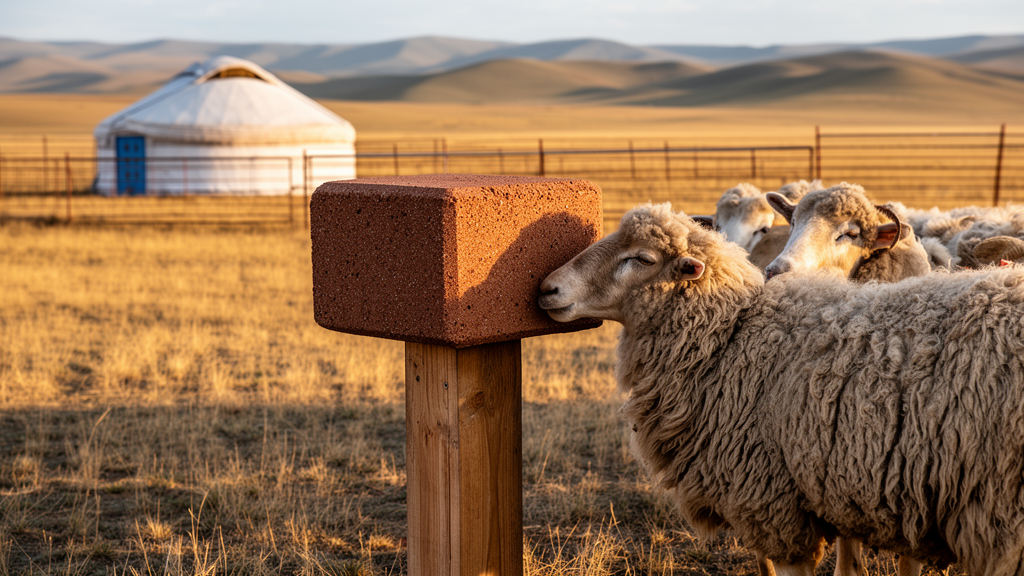
Sheep that compulsively chew on wool, lick iron fences, or eat soil are exhibiting a strange syndrome known as pica, a depraved appetite that has long puzzled farmers and veterinarians alike. Now a team of researchers at Inner Mongolia Agricultural University and China Agricultural University reports that a lick block combining essential trace minerals with a traditional Mongolian five-herb formula can significantly rebalance the blood chemistry of pica-affected rams, restoring trace-element status, boosting antioxidant defenses, and easing the endocrine hallmarks of chronic stress. The study, published in Frontiers in Veterinary Science, offers one of the most detailed physiological portraits yet of what happens inside an animal suffering from pica—and what happens when the underlying deficits begin to heal.
Pica is far more than an odd behavioral quirk. In sheep production systems it manifests as the persistent ingestion of non-feed substances: geophagia, trichophagia, urine drinking, fence licking, and even plastic chewing. Beyond disrupting normal feeding, it raises the risk of gastrointestinal injury, impaired nutrient absorption, parasitic infection, and lost productivity. Although the full etiology remains unresolved, researchers have long considered pica a multifactorial disorder rooted in nutritional imbalance, metabolic disturbance, and environmental stress, with mineral deficiency or imbalance widely recognized as a major driver. Shortages of elements such as phosphorus, copper, iron, zinc, and selenium can undermine antioxidant defenses and metabolic homeostasis, potentially pushing animals into the abnormal oral behaviors that define the syndrome.
Simple mineral supplementation has shown promise before—earlier work on wool-eating lambs found that dosing with iron, copper, and zinc sulfate salts raised blood mineral levels and produced complete recovery within eight weeks. But the picture is complicated by the fact that pica may also involve oxidative stress, endocrine dysregulation, and metabolic dysfunction. Moreover, whether supplemented minerals actually reach the bloodstream depends on their chemical form, antagonistic interactions among minerals, the rumen environment, and the intricacies of gastrointestinal absorption. This is where the new study departs from convention: instead of relying on minerals alone, the researchers combined them with Shariga-5, a traditional Mongolian multi-herb formula derived from local ethnoveterinary practice and rich in bioactive flavonoids and phenolic acids.
The Mongolian herbal–mineral supplement, or MHMS, was manufactured into solid 5-kilogram lick blocks containing target concentrations of calcium, phosphorus, copper, iron, manganese, zinc, selenium, and cobalt, along with vitamins D3 and E. Embedded within the mineral matrix were five medicinal herbs of the Mongolian Plateau: turmeric rhizome (Shariga), forsythia fruit (Saolong-Jimusi), clove flower buds (Gaoletu-Baori), chebulic myrobalan fruit (Arula), and gardenia fruit (Zhurula). Widely targeted metabolomic profiling of the individual herbs identified 1,427 metabolite annotation records, with phenolic acids accounting for nearly 39 percent and flavonoids another 32 percent—two chemical classes renowned for free-radical scavenging, metal-ion chelation, and anti-inflammatory activity. The design logic was synergy: trace elements supply the cofactors for antioxidant enzymes, while plant secondary metabolites provide complementary redox support.
To test the formula, the team screened East Friesian rams over seven consecutive days, enrolling only animals that showed five to ten instances of pica behaviors per observation day. Twenty rams, averaging about 1.5 years of age and 42.6 kilograms, were randomly split into two groups of ten, each housed in its own pen. The control group received only a basal diet of corn silage, oat hay, alfalfa, and Leymus chinensis hay; the treatment group received the same diet plus continuous free-choice access to an MHMS lick block. After a 14-day adaptation and a 60-day experimental period, blood was drawn before morning feeding, and serum from six animals per group underwent mineral, biochemical, antioxidant, hormonal, and untargeted metabolomic analyses.
The mineral results were strikingly selective. Serum copper roughly doubled, rising from 4.86 to 9.55 micromoles per liter, while zinc climbed from 10.62 to 15.29 and selenium from 0.43 to 0.59 micromoles per liter. Yet calcium, phosphorus, magnesium, sodium, potassium, iron, and manganese remained unchanged. This selectivity, the authors argue, suggests the supplement primarily restored the trace elements most closely tied to redox defense, metalloenzyme activity, immune regulation, and metabolic homeostasis. Copper underpins mitochondrial respiration and iron metabolism, zinc is a structural and catalytic factor for countless enzymes and supports epithelial barriers, and selenium is an essential component of glutathione peroxidase, a key peroxide-removing selenoprotein. The pattern also echoes previous work showing that mineral responses in ruminants are shaped not just by dose but by body reserves, absorption efficiency, and antagonistic interactions among elements.
The downstream physiological shifts extended well beyond minerals. Total antioxidant capacity in serum rose significantly, even though the individual enzyme activities of superoxide dismutase, glutathione peroxidase, and catalase did not change—an indication that the improvement came from the composite, largely non-enzymatic antioxidant pool, plausibly driven by the herbal polyphenols. Biochemical markers told a similar story of de-escalation: serum glucose fell from 4.44 millimoles per liter, sitting at the upper edge of the ovine reference range, to 3.60, a healthier mid-range value, and aspartate aminotransferase activity dropped from 160.70 to 125.35 units per liter, returning from above the normal range to within it. Because AST reflects hepatic metabolic burden and tissue injury—and pica-affected calves have previously shown elevated transaminases linked to copper deficiency—this normalization suggests the supplement eased tissue metabolic stress in the treated animals.
Perhaps the most dramatic changes appeared in the endocrine panel. Serum triiodothyronine, thyroxine, insulin-like growth factor 1, and growth hormone all rose significantly, signaling enhanced metabolic rate and activated anabolic growth signaling, while cortisol—the primary stress hormone of the hypothalamic–pituitary–adrenal axis—fell markedly, from 943 to 746 picograms per milliliter. The authors note that the supplement’s selenium, copper, zinc, and vitamin E all carry antioxidant functions that could plausibly dampen the HPA axis burden imposed by chronic nutritional stress and oxidative pressure. Previous studies lend support to the mechanism: curcumin supplementation has raised thyroid hormones and lowered cortisol in goats, and vitamin E and selenium combinations have reduced cortisol in transportation-stressed dairy heifers.
The untargeted metabolomics added an exploratory molecular layer. Out of 1,062 putatively annotated serum metabolites, 112 differed significantly between groups—51 higher and 61 lower in the supplemented rams. Pathway analysis ranked porphyrin metabolism, the biochemical route for heme synthesis, as the top candidate pathway, with glycine abundance more than doubled and porphobilinogen reduced to less than half of control levels. Because glycine is the starting substrate for heme biosynthesis and also a precursor for glutathione, the body’s master intracellular antioxidant, its rise fits a scenario of improved antioxidant substrate supply. The drop in porphobilinogen, an early heme precursor that can accumulate abnormally when the pathway falters, correlated positively with serum AST, hinting that reduced accumulation of this intermediate accompanied the easing of tissue metabolic pressure. The authors are careful to flag that this pathway enrichment did not survive multiple-testing correction and the metabolites lack validation against authentic standards, so these findings are hypothesis-generating rather than definitive.
The study also candidly acknowledges its limits: individual lick-block intake was not recorded, the composite design cannot separate the effects of minerals from herbs or their synergy, the sample was modest, and rumen fluid and microbiota were not examined. Even so, the overall picture is compelling—a traditional Mongolian herbal formula fused with trace-element nutrition appears to shift pica-affected rams from a stress-laden, oxidatively burdened metabolic state toward physiological balance, with elevated thyroid and growth hormones, subdued cortisol, stronger antioxidant capacity, and a metabolome inching back toward order. For a condition as old as animal husbandry itself, the remedy may lie partly in knowledge herders on the Mongolian Plateau have carried for generations, now given rigorous, molecule-by-molecule confirmation.
Subject of Research: Effects of a Mongolian herbal–mineral supplement on serum minerals, antioxidants, hormones, and metabolomics in rams with pica
Article Title: Free-choice Mongolian herbal-mineral supplementation improves serum mineral, antioxidant, endocrine, and metabolic indices in rams with pica
Article References: Man, D., Chen, L., Ao, X., Zhang, W., & Na, R. (2026). Free-choice Mongolian herbal-mineral supplementation improves serum mineral, antioxidant, endocrine, and metabolic indices in rams with pica. Frontiers in Veterinary Science, 13, Article 1946016. https://doi.org/10.3389/fvets.2026.1946016
Image Credits: AI Generated
DOI: 10.3389/fvets.2026.1946016
Keywords: pica, sheep, herbal-mineral supplement, trace minerals, antioxidant capacity, cortisol, thyroid hormones, serum metabolomics, porphyrin metabolism, Mongolian ethnoveterinary medicine, ruminant nutrition, oxidative stress
Cite Scienmag News
William Thompson. (October 15, 2026). Ancient Mongolian Herbal Lick Blocks Restore Stressed Rams Driven to Eat Soil and Wool. Scienmag. https://scienmag.com/ancient-mongolian-herbal-lick-blocks-restore-stressed-rams-driven-to-eat-soil-and-wool/
William Thompson. "Ancient Mongolian Herbal Lick Blocks Restore Stressed Rams Driven to Eat Soil and Wool." Scienmag, 15 October 2026, https://scienmag.com/ancient-mongolian-herbal-lick-blocks-restore-stressed-rams-driven-to-eat-soil-and-wool/. Accessed 15 October 2026.
William Thompson. "Ancient Mongolian Herbal Lick Blocks Restore Stressed Rams Driven to Eat Soil and Wool." Scienmag. October 15, 2026. https://scienmag.com/ancient-mongolian-herbal-lick-blocks-restore-stressed-rams-driven-to-eat-soil-and-wool/


